The Fairies of the Caves
1. Main Inhabitants of Caves and Their Wonders

Caves are among the dwellings of mountain fairies, and more rarely of certain woodland fairies. But above all, they constitute the quintessential abode of rustic fairies . Until relatively recent times, peasants believed that many caverns—of varying sizes and significance—located in isolated places, yet close to villages, had been inhabited by supernatural ladies, both powerful and mysterious. From one end of France to the other, many caves still bear names associated with fairies. These names testify to the importance of these beliefs in popular culture.
Several legends tell of visitors who returned to recount what they had seen. Thus, a hunchbacked hunter, lost one evening, entered the lair of Bourrut, near Loubières, in the Ardèche. The cave appeared to him entirely illuminated. The moss had turned to gold, and at the center stood a richly laid table, at which he took his place. After his meal, he saw golden skittles fall, followed by a golden ball—which turned out to be the body of a fairy. She began to sing, “Monday, Tuesday,” while dancing. With a gesture, she removed his hump and placed it on the mantelpiece before disappearing without a trace. Back home, he told of his adventure. As often happens in this type of tale, another hunchbacked hunter tried his luck. He witnessed the same wonders, but made a mistake: he added “Wednesday” to the fairy’s refrain. To punish him, she planted a second hump on his chest. This story was recorded by Martial Séré in Les Incantats de la tuto dé Bourrut by Léjando de Loubieros (1877), published in Fouich. It is likely that the motif of the hunchbacks and the days of the week was added to an older version, the current legend blending several elements of different origins.
One could reach the fairies of Landaville through wide openings hidden beneath hawthorn stumps. Their dwelling lay deep within the cave. Inside, visitors described a multitude of chambers, each more sumptuous than the interior of a church. Light was everywhere, more dazzling than at high noon, thanks to countless multicolored stars suspended in the air. The walls were covered with sparkling mirrors, so brilliant that it was impossible to look at them directly. The fairies spent their time there singing and playing. In fine weather, they would go out at night through the trous de Fosse. Their nature was elusive: so light that they did not touch the ground, they seemed almost transparent, letting the light pass through them.
Ordinairement, les grottes habitées par les fées possédaient une entrée identifiable. Mais il arrivait qu’elle soit si bien cachée qu’elle devenait invisible — inaccessible sans un talisman. Dans le Pays basque, un récit raconte qu’une jeune fille d’une grande beauté se présenta chez la maîtresse de la maison Gorritépé pour lui demander assistance auprès d’une femme en train d’accoucher. Toutes deux se rendirent dans un bois. Là, la jeune fille lui remit une baguette et lui demanda de frapper le sol. À cet instant, un portail s’ouvrit. Derrière cette ouverture apparut un château d’une magnificence exceptionnelle, baigné d’une lumière aussi éclatante que celle du soleil. Dans la plus belle des chambres se trouvait une Lamigna, prête à accoucher. Autour d’elle, une multitude de petites créatures immobiles entouraient la scène, comme figées dans une attente silencieuse. Après avoir accompli sa tâche, la visiteuse fut invitée à manger. On lui offrit également un morceau de pain d’une blancheur éclatante, qu’elle décida de conserver pour le montrer à sa famille. Mais au moment de quitter les lieux, un obstacle inattendu survint. Arrivées devant le portail, aucune des deux femmes ne parvint à l’ouvrir. La jeune fille demanda alors si la visiteuse emportait quelque chose. Lorsqu’elle apprit qu’un morceau de pain avait été conservé, elle lui demanda de le restituer. Dès que cela fut fait, la porte s’ouvrit aussitôt. Avant de la laisser partir, la jeune fille lui remit une poire d’or, avec une consigne précise : la placer dans son bahut et n’en parler à personne. Si elle respectait ce secret, elle trouverait chaque matin, à ses côtés, une pile de louis.
2. Fairies Delivered by Women
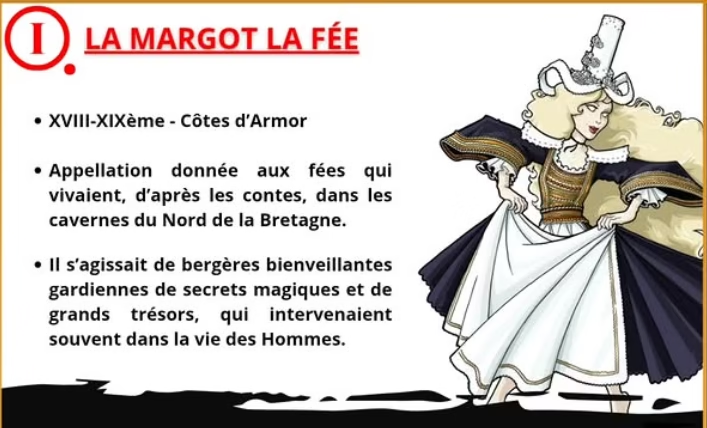
Les dames des grottes, tout comme celles des « houles » du bord de la mer, faisaient appel aux services de femmes humaines lorsqu’elles étaient sur le point d’accoucher. En Upper Brittany, the Margot-la-Fée faisaient ainsi venir des sages-femmes dans leurs cavernes. Mais cette intervention n’était pas sans conséquence. Si la matrone portait à son œil — avant de l’avoir lavée — la main qui avait servi à l’accouchement, elle acquérait alors un pouvoir singulier : celui de reconnaître les fées, même lorsqu’elles se dissimulaient sous des apparences ordinaires. L’une de ces femmes, ayant surpris le mari d’une Margot-la-Fée en train de voler du grain, ne put s’empêcher de s’écrier : « au voleur ! ». Découverte, elle fut immédiatement punie. La fée lui demanda avec quel œil elle avait vu — puis le lui arracha sans hésitation.
A similar tale is found near Accous (Basses-Pyrénées). The husband of a fairy living in the Fairies’ Cave came to fetch a midwife in Bedous. The woman agreed to follow him. When they reached a certain place, he ordered a rock to open, revealing the entrance to the cave. Inside, she carried out her task and helped the fairy give birth. As a reward, she was allowed to take whatever she wished—provided she declared it. But, tempted, she secretly hid in her pocket a piece of bread of exceptional whiteness, similar to the one she had been served. When she tried to leave the cave, she found herself unable to pass through the exit. The fairy immediately understood: “You have taken something.” The woman at first denied it, but eventually had to admit that she had hidden bread beneath her clothes. Once the bread was returned, she was given another—this time with permission—and she was finally able to leave.
3. Caves with Two Entrances
Un épisode similaire à celui évoqué précédemment se retrouve dans une légende du Pays basque. Une Lamigna vivant dans une caverne près de Goetin fit appel à une sage-femme pour l’aider à accoucher. En récompense, elle lui proposa de choisir entre deux pots à feu : l’un recouvert d’or, l’autre de miel. La femme, séduite par l’apparence du premier, choisit celui couvert d’or. Mais à sa grande déception, il ne contenait que du miel. À l’inverse, le pot qu’elle avait dédaigné — celui recouvert de miel — était en réalité rempli d’or. Ce motif, fréquent dans les récits féeriques, rappelle que les richesses véritables se dissimulent souvent sous des apparences modestes, tandis que l’éclat trompeur peut conduire à la perte.
The fairies living in these caves often formed true communities. They were not alone: male figures were also present alongside them. However, like the “fétauds” (the male counterpart of the fairy) of the sea caves, their role remained very discreet. Some of these fairies imposed strict rules regarding human presence—and particularly that of men—in their dwellings. Thus, those of the Creux d’Enfer, near Panex, lived without admitting any men. Yet they had children, whose origin remained unknown.
These fairies raised their children themselves. But this motherhood had a striking physical consequence: their breasts became loose and lengthened to such an extent that they became cumbersome. To manage this, they would throw them back over their shoulders.
4. Fairies Who Steal Children

Selon une croyance très répandue en Europe, les fées enlèvent les enfants qui leur plaisent et les remplacent par les leurs. Ces substituts sont généralement décrits comme noirs, laids et dotés d’un air étrangement vieilli. En Upper Brittany, lorsqu’un enfant présente ces caractéristiques, on dit encore qu’il s’agit d’un « enfant des fées ». Les nourrissons enlevés par les dames des grottes, comme ceux qu’elles déposent à leur place, sont le plus souvent des garçons. Toutefois, certaines exceptions existent : en Vendée, une jolie fille aurait été enlevée et remplacée par une enfant d’une laideur effrayante. Des récits similaires apparaissent également sur les bords de la Manche et chez les Margot-la-Fée of Côtes-d’Armor.
In some regions, humans try to thwart these abductions. Thus, the fairies of Montravel, in Auvergne, abducted little boys without making any exchange. A mother, deprived of her child, followed the advice of a benevolent fairy: she placed at the entrance of the cave small clogs, carefully polished. A little fadou came out, fascinated by these objects. As he tried them on, he stumbled and fell. He was then seized, and was only returned after the fairies had given back the peasant woman’s child. (see the legend on Monde légendaire)
In the Livradois, a tradition reverses the usual pattern. This time, it is said that humans began by abducting the children of the fairies. In retaliation, the fairies then carried off all the Christian newborns. When the mothers came to beg for their children to be returned, the fairies would reply:
Randa nou noutri Fadou
Vou randran voutri Saladou.
(Give us back our Fade
We will give you back your Salted one.)
This phrase refers to the salt of baptism, an essential Christian symbol.
In the area around Royat, a similar version circulates, although the starting point differs. There, it is said that the fairies are the ones who abduct the children of the region. The men then decided to capture the children of the fairies in return. When the fairies came to demand them back, a similar formula was spoken:
Randa noutri fadou
Qui es fadaou,
Vou rendren lon saladou
Give us back our little fadou
Who is enchanted,
We will give you back your little salted one
6. How to Recognize Changelings and Force Fairies to Return the Switched Children

Most often, fairies abduct human children and leave their own in their place. Those left by the Margot-la-Fée of the Côtes-d’Armor are said to be insatiable: they eat more than adults. The inhabitants knew a foolproof way to expose these little fétauds. One simply had to place eggshells filled with water in front of the fire. At this sight, the child, astonished, would exclaim:
J’ai bientôt cent ans,
Je n’ai jamais vu tant de petits pots bouillants.
I am nearly a hundred years old,
I have never seen so many little boiling pots.
This speech revealed an abnormal age, incompatible with that of an infant. Once the changeling had been identified, it was sometimes enough to pretend to beat it for the Margot-la-Fée to immediately bring back the child they had abducted.
A particularly close variant exists in the valley of Aosta, a French-speaking region on the other side of the Alps. A fairy of great beauty, living in a cave in the valley of Réchanté, had exchanged her son—sickly, hunchbacked, and mute—for a child from the village. Despite the care he received, the child did not grow. On the advice of an old woman, eggshells were placed around the fire and the child was set before the hearth. To everyone’s surprise, he spoke for the first time:
Té vu tre cou prà, tre cou tchan, tre cou arbrou gran, e jamé vu tan dé ballero d’otor dou fouec.
(I have seen meadows three times, fields three times, and great trees three times, and never have I seen so many little amusements around the fire!)
Once the deception had been revealed, the dwarf was carried near the cave and whipped. Drawn by his cries, the fairy rushed in, allowing the parents to enter the cavern and take back their child. This story is curious in more ways than one: ordinarily, fairies, instead of abandoning their offspring and relying on people’s pity to raise it, place it in the very cradle of the child they have stolen. The formula spoken by the changeling closely resembles that recited, at the sight of eggshells, by a little fétaud from Upper Brittany: “I have seen the forest of ArJenne, / All in rye and in (oats), / The forest of Bosquen / All well (under cultivation), etc.”
This type of test is found in several regions: in Normandy, in Guernsey, in the Bresse, and probably in Vendée, where it has evolved. In the latter region, the practice is no longer used to identify the changeling, but to bring about its return. A mother would place thirteen eggs under the ashes before going to bed—and would find her child again in the morning.
In other regions, the recognition of changelings relies on the experience of elderly women. At a glance, they are said to be able to identify these “fayons.” The most common method then consists of making the child cry. In Forez, it is said that an infant may be replaced by a kind of little Hercules, ravenous despite having no teeth. The village gossips then advise carrying the child to the entrance of a cave and whipping it until it cries loudly. This cry attracts the fairy, who returns to exchange the children, declaring: Keep yours, give me back mine!
A final tale, set in Panex, illustrates another form of restitution. A woman, busy weeding her field, had left her child in its cradle. When she returned, she found a small black creature in its place. On the advice of an old woman, she came back the next day without having fed the child. The creature began to cry. Drawn by these cries, the fairy appeared, brought back the real infant, and took her own back into the cave.
7. Men Abducted by Fairies
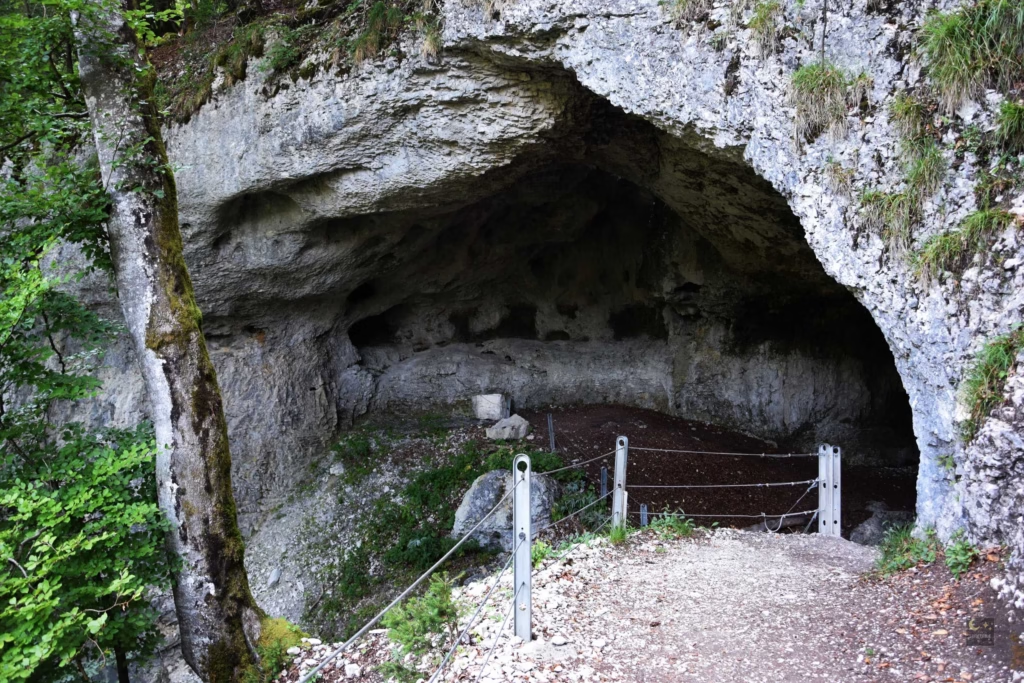
Legends report, without always going into detail, that adults could be taken by fairies into their underground dwellings, sometimes by force, sometimes with their consent. In the Pyrenean region, black fairies abducted young cowherds who neglected their herds to go in search of white partridge nests. The Margot-la-Fée, for their part, also kept men in their caverns—but without constraint. Those who stayed there enjoyed it so much that time seemed to pass twice as fast as it did in reality.
Sometimes these relationships went as far as marriage. But, as in many traditions, such unions were subject to strict conditions. A fairy of the Fairies’ Cave of Vallorbe agreed to marry a blacksmith, on the condition that he would see her only when she chose, and that he would never venture into the other parts of the cave. For fifteen days, everything went smoothly. But on the sixteenth day, driven by curiosity, the blacksmith slightly opened the door of a neighboring room. There he caught sight of his wife asleep, her dress lifted to reveal feet like those of a goose. Discovered—the fairy, alerted by the barking of her dog—immediately drove him away and threatened him with severe punishment if he revealed what he had seen. Unable to keep the secret, he told the story to his companions. As proof, he showed them the purses she had given him. But they had changed: the gold coins had become willow leaves, and the pearls, juniper berries. Shortly afterward, the fairies disappeared. It was said that they had withdrawn into the deep caves of Montchérand, near the town of Orta, though no one ever dared to verify it.
A similar motif appears in tales from Corsica. A fairy lived near the river of Rizzanèse, where she was seen washing her clothes. Rumor held that whoever managed to seize her by the hair would become her husband. A young man succeeded in capturing her. Despite her attempts to dissuade him, she agreed to marry him, on one condition: that he should never try to see her bare shoulder. The marriage was celebrated, and they had six children. But one day, taking advantage of her sleep, the husband gave in to temptation and uncovered her shoulder. A piercing cry rang out. The fairy then showed him a wound revealing her bones, before fleeing with her daughters. The husband never saw her again. Another Corsican legend, involving a lake-dwelling fairy, ends in a similar way.
Les hommes qui épousaient les Margot-la-Fée in Upper Brittany ne semblaient pas soumis à de telles interdictions. Cependant, ils restaient vivre dans la grotte, adoptant entièrement le mode de vie des fées — comme s’ils avaient définitivement quitté le monde des humains.
8. Occupations of Fairies in Their Dwellings or Nearby
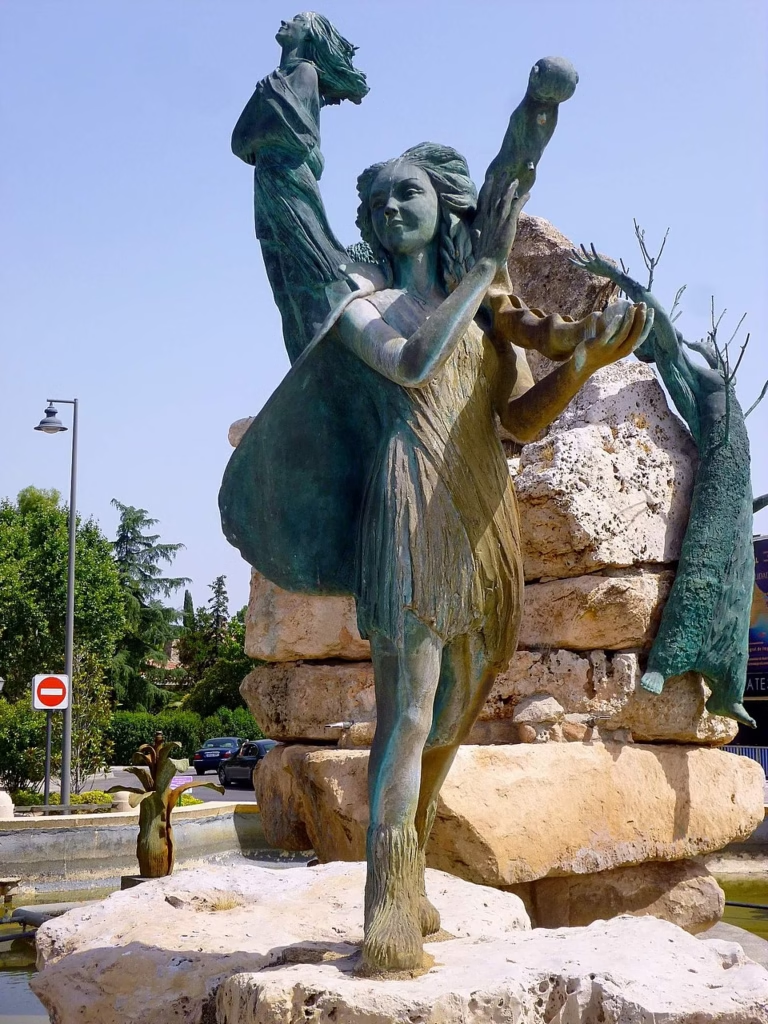
Legends that evoke the beauty of caves also describe, sometimes in detail, the occupations of their inhabitants. Like the “houles ” of the cliffs, these fairies engage in domestic tasks similar to those of the housewives of the surrounding area. They bake, make their bread, and skillfully spin wool. They are also seen washing their laundry, either by the river or in nearby ponds. This linen, of dazzling whiteness, has become proverbial in popular tales.
In Saintonge, peasants referred to the fairies seen along the banks of the Charente, near the caves of la Roche-Courbon, Saint-Savinien, and the Arcivaux (listen to the podcast dedicated to the Fades of La Roche-Courbon) as “Fades” or “Bonnes.” They appeared at night, in the moonlight, often taking the form of old women and usually moving in groups of three. Endowed with the power to foretell the future and cast spells, they were also called Filaudières, because of the spindle and distaff they constantly carried.
The fairies of Aï, who lived in the Pertuis, were reputed to be good housekeepers. They carefully maintained their caves, sweeping and attending to various kinds of work. In Leyzen, it was said that, in a heap of sweepings found beneath the cave of the Pertuis, tiny objects had been discovered: thimbles, small pairs of scissors, scraps of fabric—so many traces of an invisible yet very real activity.
In the mountains of the Pyrenees, the hades (or hada) and the blanquettes, inhabitants of the caves, would sometimes let their golden hair appear, shining brilliantly in the sunlight at the entrance to their dwelling. But this vision was a trap: those who tried to approach or reach them would lose their footing and tumble into the precipices.
9. Their Laundry
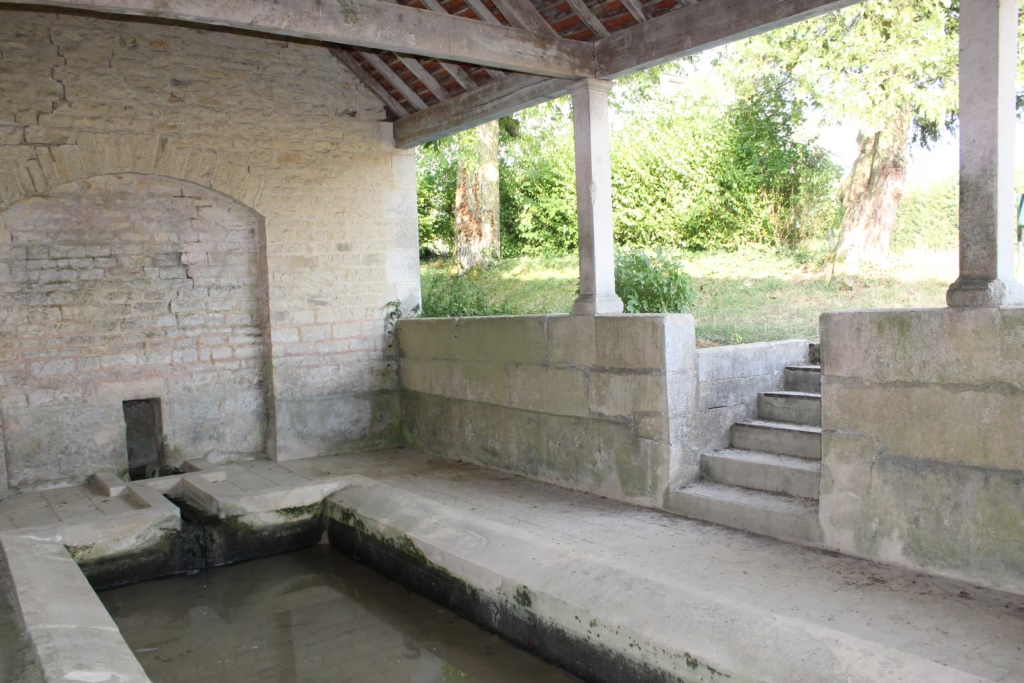
The fairies of the caves, like those of springs and lakes, washed their own laundry. Yet even when they did so after sunset, their task had nothing gloomy about it, unlike the washerwomen condemned to atone for their sins. In Forez, on calm nights, one could clearly hear the ladies of the Grotte des Fayettes beating their linen. It was described as of extreme fineness, almost woven from clouds and edged with rays of moonlight. At daybreak, if a curious onlooker caught them still at their work, they would immediately vanish, like leaves carried off by the wind. Yet it sometimes happened that, in their hurried flight, one of them would leave behind on the heath a solid gold washing bat.
In the Ariège, the enchanted women also washed their linen in a cave, beating the fabrics with a golden washing bat. When they suddenly disappeared with the establishment of the good law, they left this object at the bottom of the wash basin—where it is said to remain to this day. But no one dares to go and retrieve it. A strict condition must be met: to hope to find it, one would have to go there alone, at midnight, and without any light.
In the Dauphiné, the fayules chose foggy days to spread their linen, almost immaterial, over the rocks. Peaceful in ordinary times, they became formidable if anyone dared to disturb them. In an instant, everything would vanish—and a curse would fall upon the reckless intruder, bringing misfortune upon his household within the year.
In Upper Brittany, the Margot-la-Fée faisaient également leur lessive, souvent près des doués, parfois même en plein jour, mais plus fréquemment au crépuscule. À l’image des lavandières de nuit, elles pouvaient se montrer cruelles : ceux qui tentaient de les aider à tordre le linge risquaient de voir leurs bras brisés.
10. Their Baths and Their Dances
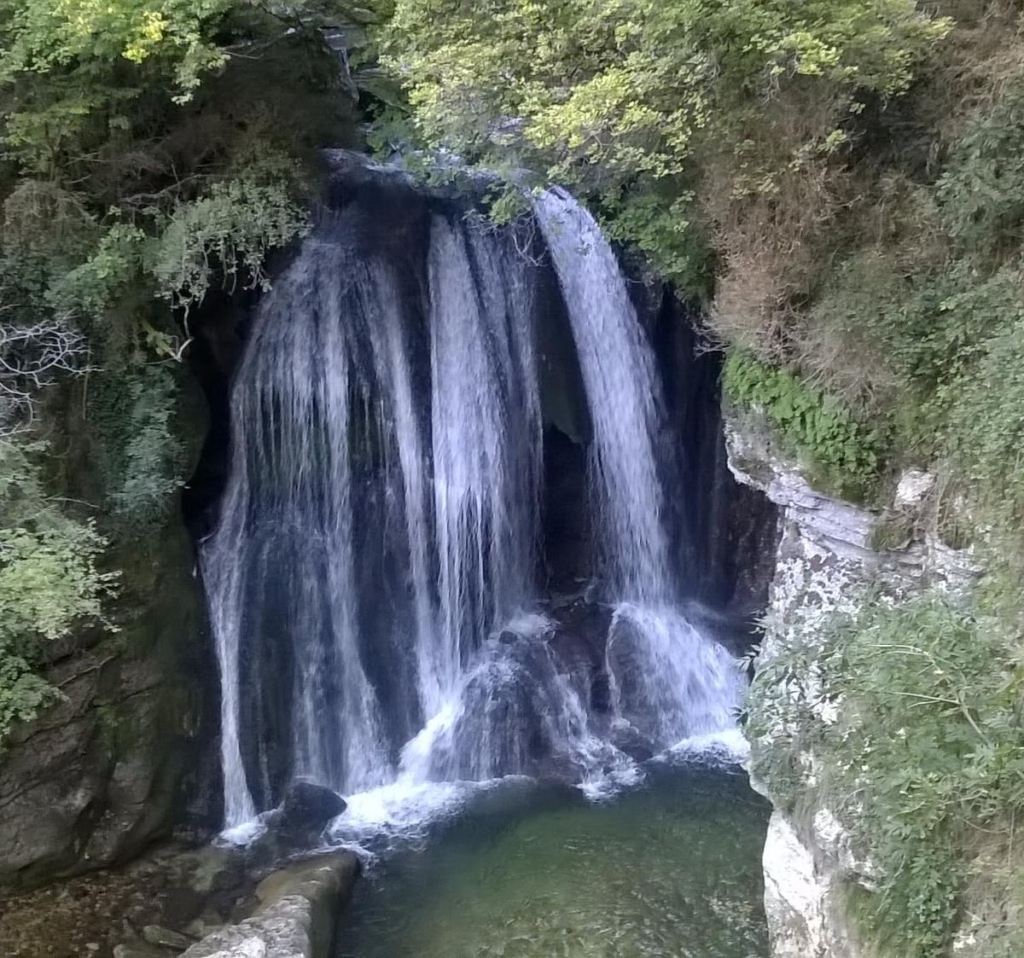
The fairies were fond of bathing in springs and rivers. But some also had, at the very heart of caves, true natural basins. Thus, Mélusine indulged in the pleasures of bathing in the Sassenage basins. Likewise, the tante Arie would come to cool herself during the burning days of summer in the clear-water basins of the Milandre caves. Before entering the water, she would place her diamond crown on the edge. Then, as a precaution, she would transform herself into a vouivre—a serpentine creature—in order to frighten anyone who might be tempted to seize her treasure.
A bold young man, having glimpsed the tante Arie before her transformation, fell madly in love with her. Refusing to give in to the temptation of the diamonds, he dared to seize the vouivre itself. Tradition remains silent on the outcome of this adventure, leaving a mystery hanging over the fate of this man and the reaction of the fairy.
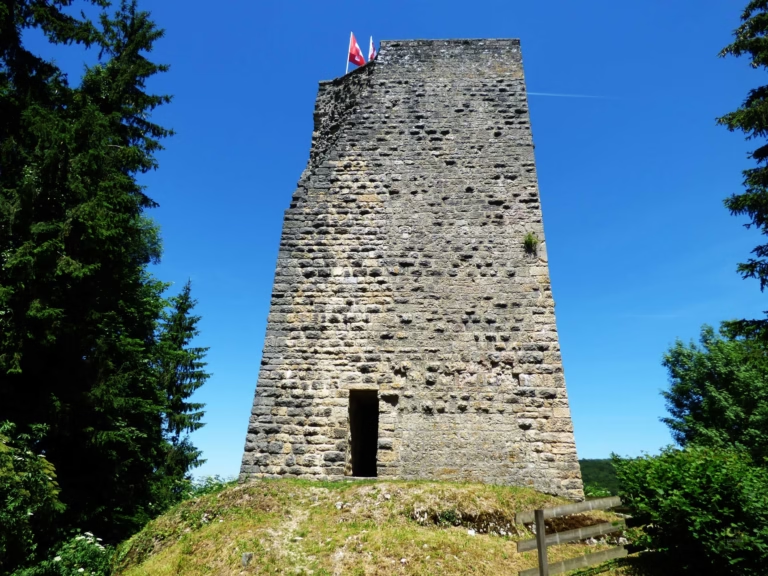
Another legendary figure is said to haunt the place: a White Lady, appearing every hundred years at the top of the tower of Milandre. To regain her youth, she descends into the cave and immerses herself in one of the basins. Those who wish to catch a glimpse of her must stand, on that very evening, at the entrance of the Baume—at the precise moment when the visible and invisible worlds brush against one another.
Legends of dancing fairies, whose dwelling is clearly located in caverns, are particularly widespread in eastern France. Near the cave of the Chapelle des Fées at Censeray, one can see, in the moonlight, white ladies dancing before going to quench their thirst at the river. In the cavern of Talent, the fairies would form, at midnight, circles around the Split Rock, in an atmosphere both solemn and mysterious.
In the Dauphiné, the fairies that inhabit the rock fissures known as the Pierres des Fayules remain invisible during the day. But at dusk, they appear to form silent circles near their caves. These dances, devoid of sound, heighten their unreal quality, as if they belonged to a parallel world.
The fairies of the vast two-level cavern of Vallorbe were also renowned for their musical talents. It was said that they could be heard singing at the edge of waters and precipices, their voices echoing through the space like a sound from another world.
11. How They Return Underground
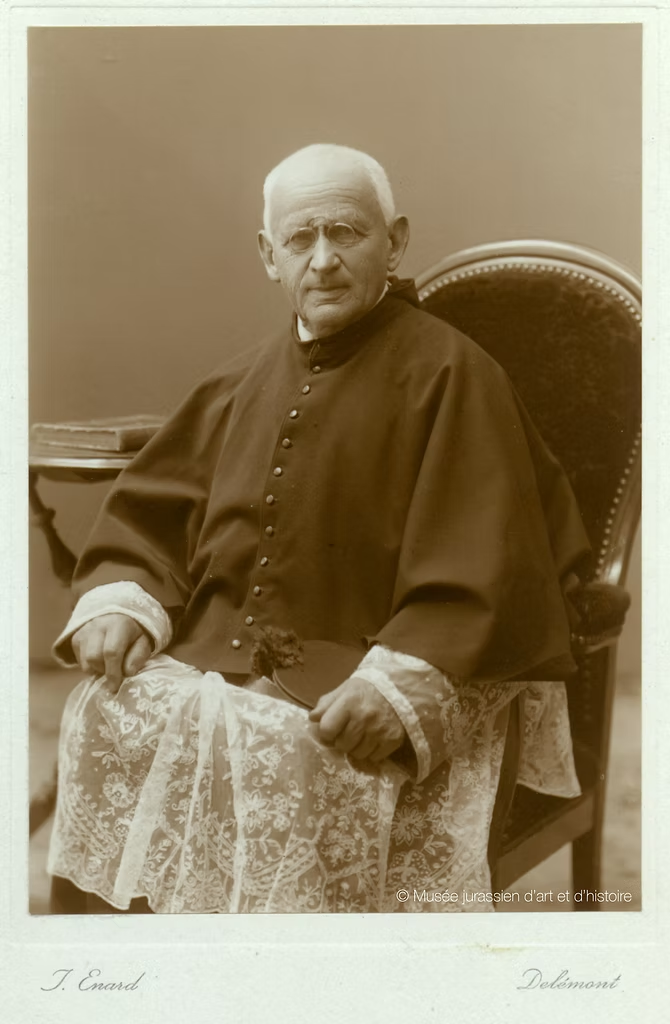
Les bonnes dames, même lorsqu’elles se montraient en plein jour, pouvaient regagner leur demeure de différentes manières : soit par l’entrée visible de leur grotte, soit en disparaissant soudainement, sans laisser le moindre indice. Un témoignage ancien rapporté par Noël du Fail évoque un paysan, Robin Leclerc, qui affirmait avoir observé les fées. Curieux, il les suivit jusqu’à leurs « caverneux rocs ». Mais à peine s’approchaient-elles d’une simple motte de terre qu’elles s’évanouissaient aussitôt. Un autre récit de Upper Brittany décrit une scène similaire : des fées surgissent de terre pour récupérer un objet perdu, puis disparaissent à nouveau sans que le témoin comprenne par où elles sont reparties.
When fairies moved away from their cave, they could take on the appearance of simple peasant women. In Corsica, where belief in them still endures, they sometimes emerge from their caverns in disguise, adopting the features of familiar people. They mingle with the inhabitants, speak with them, and are referred to by the name of the cave from which they come. It is said that anyone who managed to capture one would have their fortune assured—a sign of the fascination and power attributed to them.
In other regions, fairies did not even bother to conceal themselves. In Vallorbe, in the canton of Vaud, the ladies of the Baume des Fées would come, in winter, to warm themselves behind the furnaces of the forges of Laderrain. A rooster, which accompanied them, warned them an hour before the workers returned.
Some fairies unwittingly left traces of their passage. The tante Arie, who lived in a cave in the Bernese Jura, would go in the evening to nearby houses to encourage the work of spinners. Young people, eager to uncover her secret, scattered ashes along her path. The next day, they discovered her footprints: she had the feet of a goose. This detail is reported by Arthur Daucourt in the Swiss Archives of Folk Traditions (volume VII). A similar observation was made in Alsace concerning little men.
In the Limousin, the Fanettes would leave their caves during long evenings to visit farms. They amused themselves by playing tricks on housewives, multiplying mischievous pranks. Likewise, the fairy of the Chamber of the Green Lady, in the woods of Andelot, would regularly leave her cave to wander about. She took pleasure in mocking those who tried to court her.
13. Benevolent Fairies Toward Girls and Local People
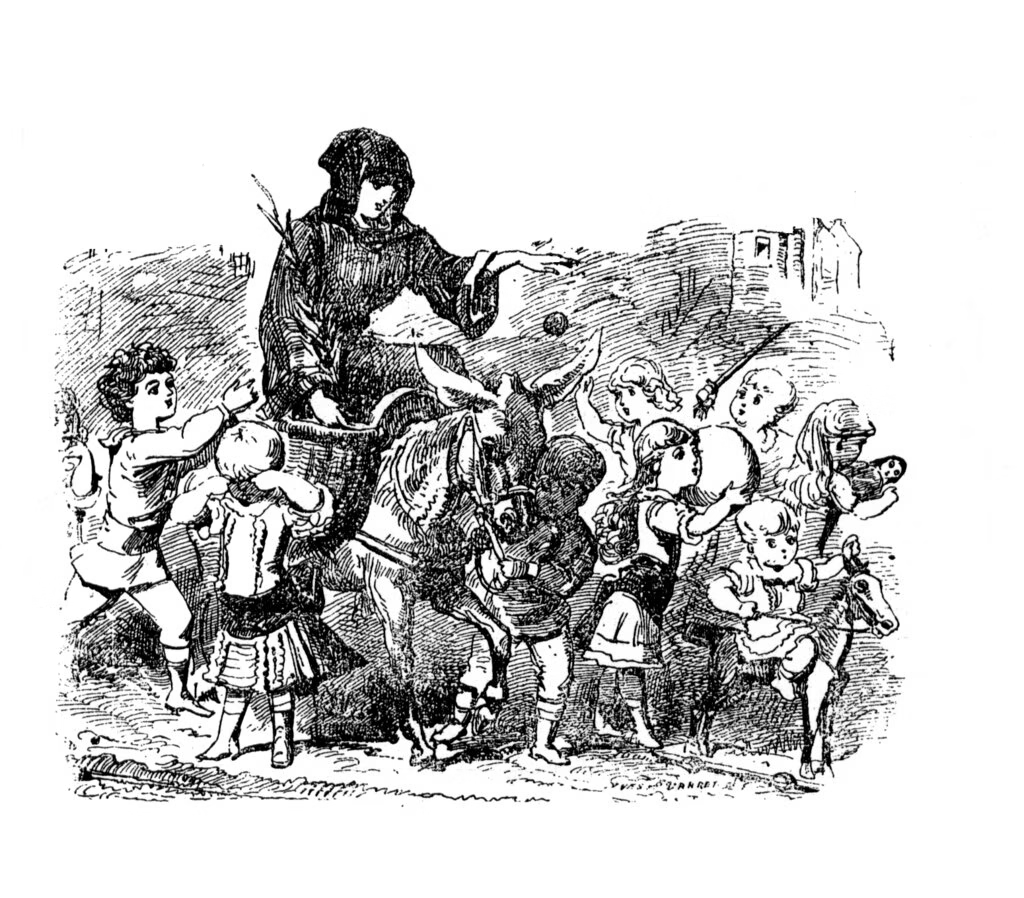
Popular tales generally portray the ladies of the caverns as favorable toward humans. The inhabitants of the Fairies’ Cave of Puy de Préchonnet thus bestowed many benefits upon the local people: they watched over births, encouraged unions, and always responded to requests. The tante Arie, a well-known figure of the Elsgau (Bernese Jura) and of Franche-Comté, lived in a cave of the Roche de Faira, difficult to access. She protected hardworking women, but punished the negligent by tangling their distaff. At Sancey-le-Grand, three fairies living in the Fairies’ Cave ensured the prosperity of the families who invoked them. They also granted good husbands to young girls who made offerings to them and promised to behave irreproachably. But when one of these young girls broke her word, the villagers’ mockery reached the fairies themselves. Hurt, they left the region forever.
Un passage de Noël du Fail suggère qu’au XVIe siècle, the fées of Upper Brittany veillaient aussi sur la conduite des jeunes filles. Après un épisode de frayeur causé par des lumières mystérieuses, certains affirmèrent qu’il s’agissait des fées, irritées de voir les filles sortir la nuit. Toutefois, ces mêmes fées pouvaient se montrer compatissantes. Près des grottes de Riubanys, elles recueillirent une jeune fille en pleurs, sur le point d’accoucher, et l’aidèrent à mettre son enfant au monde. Une tradition similaire existe en Upper Brittany, où des fées cachent dans leur « houle » une pêcheuse enceinte qui souhaitait se noyer, lui offrant ainsi protection et secours.
At the beginning of the 19th century, in the Ain, fairies were described as wise women living in caves. They taught young girls how to sew and spin. To reward the most diligent, they gave them small folded papers meant to be used to purchase ornaments—on the condition that they not be opened before returning home. But curiosity got the better of them. On the way, the girls opened the packets… and found nothing inside but boxwood leaves.
In the Valais, near Mont Brûlé, the fairies of the cave of Arpales were also known to help the inhabitants. One winter, the village of Comoire found itself without fire. An old woman was sent to the fairies, who asked her to hold out her apron. They placed embers in it, warning her neither to look nor to touch them before returning home. The old woman resisted the temptation. Once back, she poured the coals into her hearth—and they turned into a magnificent ingot of gold.
14. Fairies Guarding or Protecting Herds or Rendering Aid

The fairies living in a cavern near Panex would come down into the fields to protect the crops and to indicate to the mountain people the most favorable times for sowing. At Sancey, those of the Fairies’ Cave went even further: they controlled the rain and the sunshine according to the needs of the farmers. In the Vosges, at the fairies of Landaville, they also helped livestock keepers. When a sheep or a cow went missing, they would bring it back during the night to its owner’s home. Their generosity did not end there: during the Lenten chores, they brought pies to the workers, and during the harvest, they offered plums.
A fairy living in the Trou-aux-Fades, near Notre-Dame de Pouligny carefully watched over the sheep of the Bos estate. Each day, she led them out to pasture and then brought them back to the fold. The farmers, trusting her, eventually stopped tending to them themselves. Thanks to the Fade, the flock prospered: the wool was abundant, of a fineness and whiteness comparable to the threads of the Virgin. The Margot-la-Fée provided similar services. It was enough to indicate, near their dwelling, where the animals to be watched were located. They would sometimes even go so far as to feed them within their own caves.
Certaines grottes étaient réputées pour accomplir des tâches à la place des humains. Près du sommet du Bergons, le lin déposé à l’entrée d’une grotte se transformait en fil durant la nuit. D’autres récits évoquent des merveilles similaires. En Upper Brittany and in Trou aux Fées du Hainaut, the fées blanchissaient parfaitement les draps laissés devant leur demeure, à condition d’y joindre quelques provisions en offrande.
The fairies also had their own herds, sheltered within vast caverns. They would sometimes lend their oxen to the inhabitants, but imposed strict conditions. Most often, it was forbidden to make them work before sunrise or after sunset. If this rule was broken—even to plow a furrow after dusk—the animals would die immediately, and the fairies would come to curse the offenders. According to other accounts, these oxen, capable of working on their own from evening until morning, would disappear at sunrise.
The fairies also had their own livestock, which left their underground dwelling each morning to graze before returning at dusk. The oxen and cows of the Margot-la-Fée thus roamed the hills, sometimes even venturing into neighboring fields. To prevent damage, the good ladies would sometimes hire herdsmen to watch over their animals. Similar accounts exist in the Ardennes and in Lorraine, showing how widespread this belief was.
About two hundred years ago, a fairy lived alone in the Trou-Boué, near Condé-les-Autry, with as her only wealth a cow from which she drew her milk. Each day, a child would come to fetch the animal and lead it to pasture, without ever seeing the fairy herself. As payment, she would hang each month a small sealed bag at the end of a rope, containing the sum owed to the young shepherd. At Saint-Aignan, the fairies also owned cows that mysteriously appeared among the communal herd in the morning, then vanished at night. On the last day of the season, one of them carried on its horn a bag containing the shepherd’s wages.
In the Vosges, a shepherd tended a black cow belonging to an invisible master. Having never been paid, he decided one day to follow the animal. He saw it enter the hole of the Crevée and, clinging to its tail, let himself be drawn inside. There, he discovered a room where two old women were cooking. Demanding his due, he was told to hold out his bag. A shovelful of embers was poured into it. Disappointed, he fled in haste. But once outside, looking into his bag, he discovered that it actually contained a gold louis.
The fairies did not merely own livestock: they could also tend to it themselves. In Vallorbe, on Palm Sunday, a fairy, taking on the role of a shepherdess, would lead out a goat on a leash. The color of the animal foretold the coming year:
- white: an abundant harvest
- black: a difficult year
15. Caverns Whose Existence Is Revealed by the Sounds of Their Inhabitants ; the Cakes and Ovens of the Fairies

Some caverns, inaccessible to humans, were known only through the sounds that came from them. Passersby, walking above, could clearly hear voices or activity, as if underground life were rising to the surface. These caves were sometimes so close to the ground that it became possible to exchange a few words with their inhabitants, without ever seeing them.
In the region of Giromagny, not far from Belfort, fairies were said to live just beneath the ground, at a shallow depth. Farmers, while plowing their fields, often heard the fairies scraping their kneading trough, as if they were preparing bread or cakes. It sometimes happened that the peasants, amused or trusting, would call out to them:
“Good fairy, little fairy, give us some of the cake you are making!”
At these words, an appetizing cake would appear at the other end of the field, as if offered in response to their request.
In the Bernese Jura, a farmer and his servant were plowing near the cave of Tante Arie when they were drawn by the smell of a cake coming out of the oven. Expressing aloud their desire to taste it, they found, at the end of the furrow, a cake placed on a cloth, along with a knife to share it. But when the servant, after eating, tried to keep the knife, the irritated voice of Tante Arie rang out. Frightened, he was forced to abandon the stolen object.
Au-dessus des grottes des Margot-la-Fée of Côtes-d’Armor, les paysans entendaient parfois les fées s’activer : réclamer du bois ou annoncer que la pâte devait être enfournée. Celui qui demandait poliment un pain recevait une réponse immédiate : au bout du sillon apparaissait une galette encore chaude ou un pain fumant, posé sur une serviette avec un couteau. Ce motif se retrouve dans de nombreuses régions : Upper Brittany, Normandy, Vosges, Ardennes. Il a notamment été relevé par Paul Sébillot and Jean Fleury. On en retrouve même un écho dans le conte Riquet-à-la-Houppe of Charles Perrault (biographie en podcast), où la princesse entend sous ses pieds une activité mystérieuse :
While she was walking, deep in thought, she heard a muffled sound beneath her feet, like several people coming and going and at work. Listening more closely, she heard it said:
“Bring me that pot.” The other:
– “Give me that cauldron.” Another: “Put wood on the fire.”
At the same moment, the ground opened, and she saw beneath her feet what looked like a great kitchen full of cooks, kitchen boys, and all sorts of attendants needed to prepare a magnificent feast. A group of twenty or thirty spit-roasters came out and set themselves in an avenue of the wood, around a very long table, and all of them, with a larding needle in hand and a fox’s tail tucked behind the ear, began to work in rhythm, to the sound of a harmonious song.”
In some places, physical phenomena reinforced belief. In Saint-Aignan, deep fissures leading to a cave released, in damp weather, a dense vapor. The inhabitants saw in it the smoke from the kitchens of the fairies. Several caverns, moreover, bear the name “Fairies’ Oven,” often because of their shape. Near Thillot, a cavity hollowed out of the rock was said to have once served for baking cakes and sweets. On the banks of the Doubs, near Ville-du-Pont, a cave with an arched entrance was considered a fairy communal oven, where the fairies came to bake their preparations. A similar account also exists in Sassenage (Isère), where the oven of the fairy is still mentioned in local tradition.
It is rare for cave-dwelling fairies to be described as fundamentally malevolent. In the valley of Aosta, certain beings accused of theft and misdeeds, though called fairies, resemble witches (podcast version) more than benevolent figures. In most French-speaking regions, fairies become hostile only in reaction to human actions. Thus, in the Livradois, they began to ravage crops only after humans had destroyed their retreats to recover the stones. Some isolated accounts from central France, however, describe malevolent fairies without apparent cause. Yet these beings no longer correspond to the traditional image of the beautiful and graceful fairy. They have undergone a transformation, partial or complete, bringing them closer to the animal world. In the valley of the Vienne, near Saint-Victurnien, a cave was inhabited by creatures known as Fanettes—that is, malevolent fairies. Half women, half animal, they withdrew by day into the surrounding forests. They were blamed for the destruction of crops: ravaged fields, mutilated horses. Yet the peasants avoided accusing them openly, for fear of drawing their anger.
In the Forez, the Fayettes of the caves were sometimes said to take the form of moles in order to attack fields and gardens. This belief even went so far as to explain a physical detail: moles were thought to have such delicate little hands precisely because they were, in reality, transformed fairies.
Some caverns are even described as “ruined,” as if their decline had followed that of their mysterious inhabitants. In most cases, this departure does not seem to have been directly caused by local populations. The fairies are said to have withdrawn of their own accord, leaving behind a world emptied of their presence. However, some traditions recount forced departures. In the valley of Aosta, the inhabitants are said to have tried to rid themselves of malevolent fairies. At the Balma des orchons, above the lake of Vargno, there lived a cruel fairy with her children, the orchons, whom she sent to steal from neighboring villages. Another fairy, settled near the lake of the Barma, shared in these raids. On the advice of an old woman, the inhabitants devised a plan: they offered the children two loaves containing fennel. After eating them, the children died. Realizing that they had been poisoned with this so-called “holy” herb, the fairy, overcome with grief, left the region with her companion.
Another tale tells how a man freed the village of Marina from a malevolent fairy, who lived with her children in a cave called Lo Barmat de la Teugghia. One day, finding her splitting wood, he offered his help and asked whether she had wedges to split the logs. The fairy, eager to display her strength, placed her own hands as wedges and invited the man to strike. Seizing the opportunity, he delivered a powerful blow. The fairy’s hands became trapped in the wood. Taking advantage of her helplessness, he tipped the log into a precipice, dragging the fairy down with it. Her children, terrified, disappeared in turn.
16. Other Causes of Their Departure

In the Limousin, it is said that the Fanettes disappeared following a sudden and violent event: one night, the waters rose and flooded their underground dwelling. Since that episode, they were never seen again, as if their world had been swallowed along with them.
In the Ariège, the disappearance of the Encantades is linked to a shift in religious order. They vanished with the end of the “bad law,” that is, the era of non-Catholic religions. This motif reflects a recurring idea: the world of fairies cannot coexist with certain spiritual or social transformations.
Other tales attribute their departure to a human fault—sometimes trivial in appearance, yet heavy with consequences. The fairies of Lake Aï, like many Alpine fairies, abandoned their caves and ceased watching over the herds after an act considered offensive. A shepherd had rubbed, with the foul-smelling root of primma, the tub intended to receive their share of milk. This gesture, seen as a profanation or a sign of contempt, permanently broke the bond between the fairies and the inhabitants.
17. Transformed Fairies
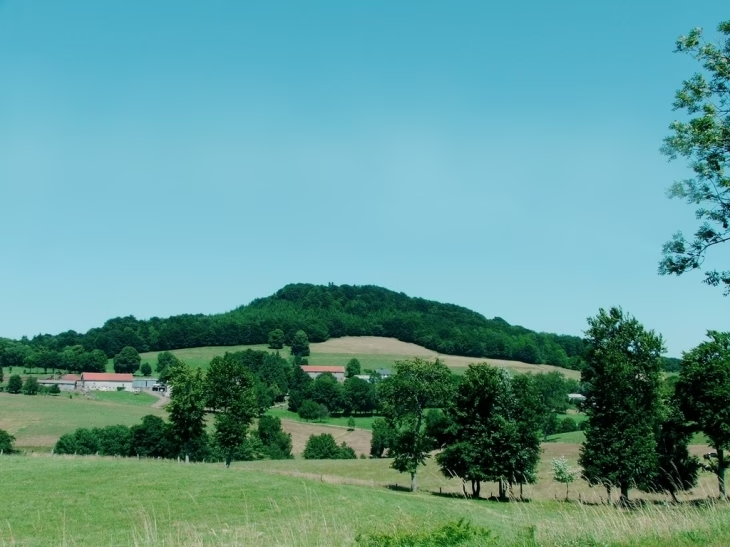
In Auvergne, the fairies of the Fairies’ Cave of Puy de Préchonnet never left their dwelling. They were condemned to remain there… in another form. Humiliated to see their mountain overshadowed by the majestic Puy-de-Dôme, they held council and made a bold wish: to lower this rival peak and raise their own to the rank of the highest. But this ambition was judged excessive. As punishment for their pride, the fairies were transformed into bats. As punishment for their pride, the fairies were transformed into bats.
18. The Goblins and the Fairies