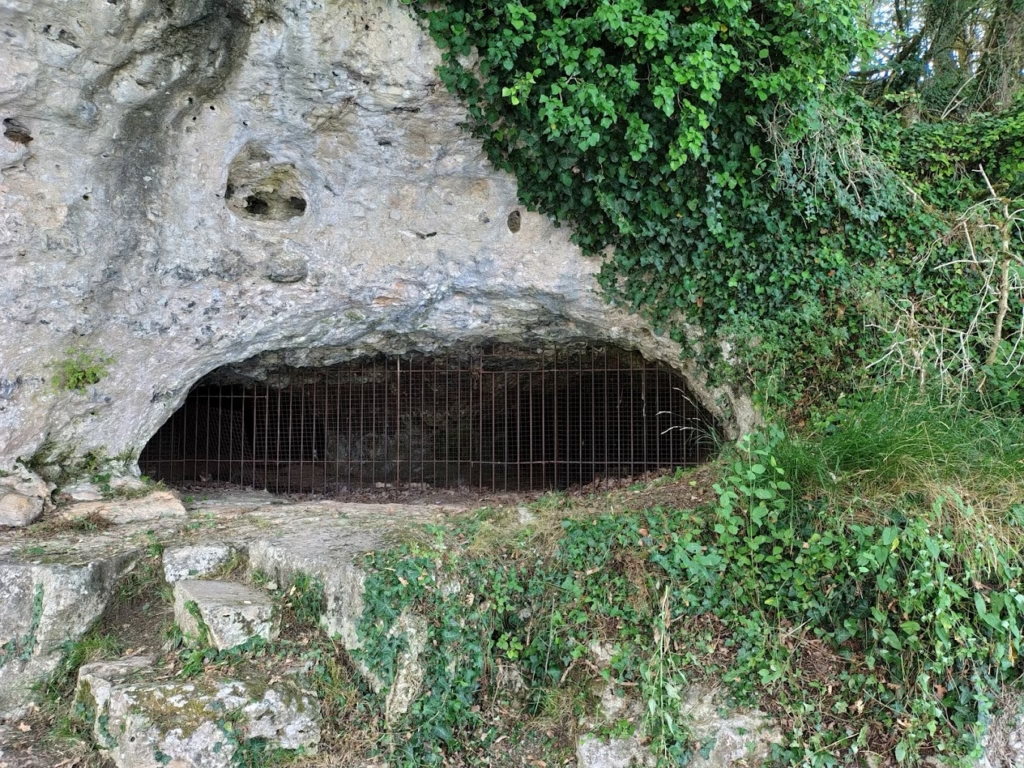
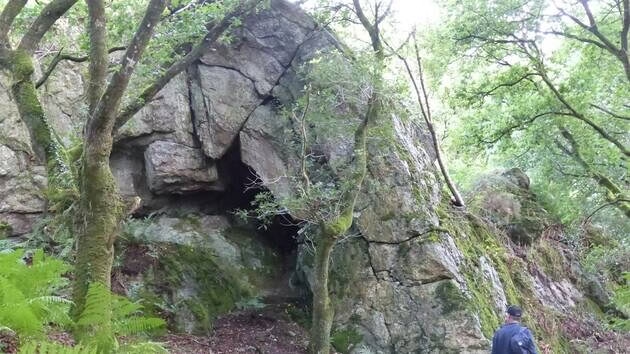
Many caverns carry names that clearly indicate they have been, or still are, associated with small-sized creatures belonging to the large family of sprites. Among these places, one can mention:
the Cavern of the Fadets, near Lussac-les-Châteaux (Vienne)
the Hole of the Farfadets, not far from the castle of Saint-Pompain (Deux-Sèvres)
the Rock of the Fadets, a vast cavern near Verruyes
the Hole of the Nutons in Furfooz (Walloon Belgium)
the Pits of the Lutons in Essomes (Aisne)
Ty ar Corriket, the “House of the Dwarves”, in Lopérec (Morbihan)
2. Sprites of Lower and Upper Brittany; Fadets of Poitou
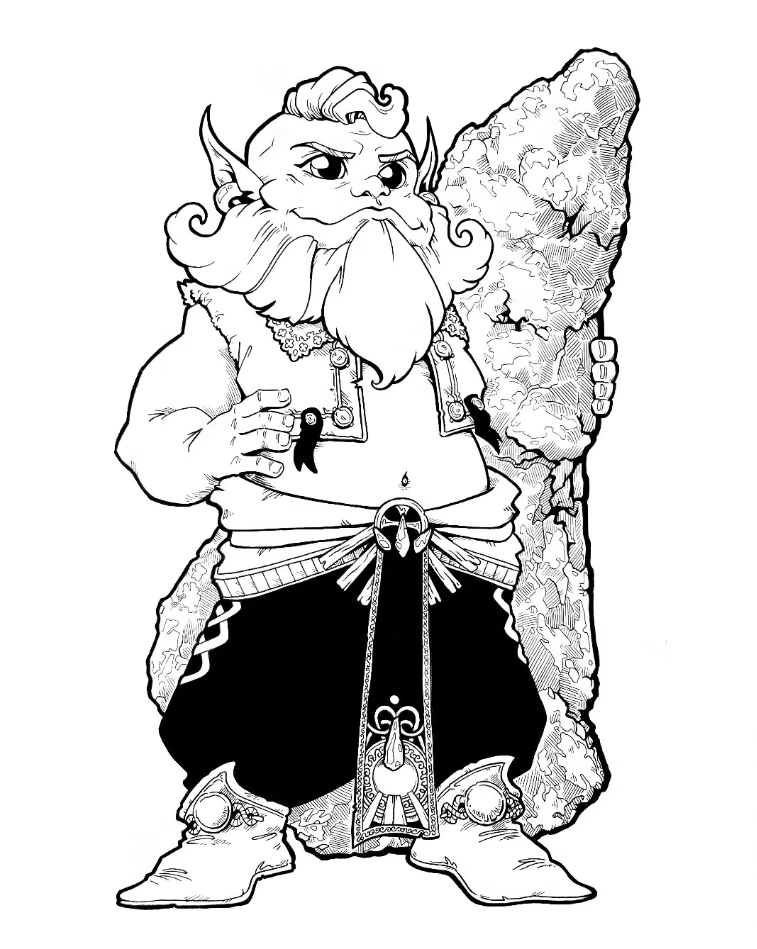
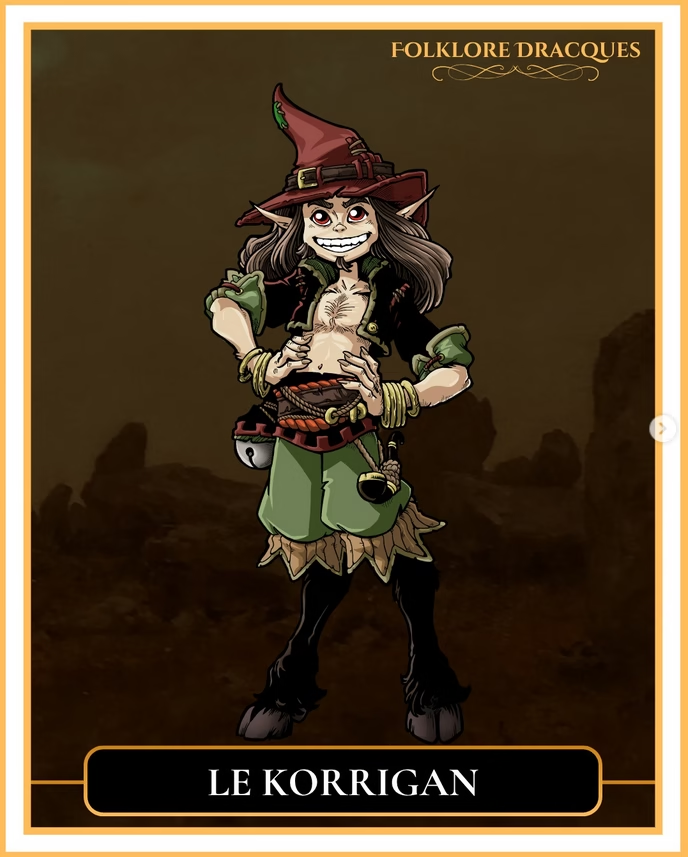
A Jetin, drawing from Folklore Dracques
In the Breton-speaking regions, natural caverns located inland are, like those of the Armorican coast, inhabited by sprites, whereas in French Brittany, both types of caverns have as their main inhabitants fairies. In the Finistère and in the Morbihan, dwarvesreside not only in these excavations but also in kinds of underground passages, almost like burrows, which open beneath large stones in isolated heaths; they live there underground like rabbits, rarely leaving during the winter.
In Upper Brittany, la situation diffère nettement : les grottes sont majoritairement associées aux fées, et les gobelins y sont beaucoup plus rares. Les seuls exemples notables se situent près de la Rancemaritime. À Pleurtuit, sous le pont aux Hommes nés (noirs), se trouvait une Cache à Fions, habitée par de minuscules créatures appelées fions. Ces êtres vivaient également dans les « houles» maritimes, souvent dans une forme de dépendance vis-à-vis des fées.
Not far from there, in Saint-Suliac, the Jetins, sprites barely half a foot tall, occupied the Bec-Dupuy Cave. This cavern was also associated with a legendary fairy. However, while the fairy had a direct connection to the waters, the Jetins mainly appeared in the surrounding countryside. According to Paul Sébillot, these creatures could be of minuscule size, sometimes reduced to just a few centimeters.
In Poitou, the Fadetsinhabited several caves, one of the best-known being that of Biarre, commune of Moussac, which was called the Rock of the Fadets. These dwarves were a kind of wildlings, sometimes depicted as very ugly and very hairy; but they were not malevolent. For the Poitevin peasants, the Fadetsand the Fadettesare not spirits, but men who occupied the land before them and remained in the rocks.
3. Dusiens of Valais; Little Men of Armagnac
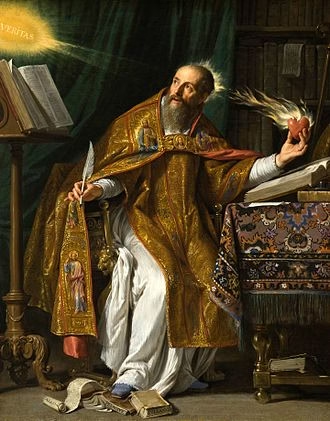
Saint Augustine of Hippo, painting by Philippe de Champaigne
In the Bernese Jura, near Montsevelier, caverns located in a kind of pass served as a retreat for small beings called Dusiens or Hairodes. These creatures lived in seclusion, in hard-to-reach places, reinforcing their elusive nature. The Dusiens, Duses, or Hairodes were described as small, black, and hairy, reminiscent of certain sprites mentioned earlier—but with a darker dimension. They could be malevolent, or at least unpredictable, which set them apart from the more benevolent figures encountered elsewhere. These beings are not limited to local traditions. Their name evokes older figures, such as the Dusiens (Dusii), incubus demons mentioned by Saint Augustine in The City of God (De Civitate Dei) (Book XV – Chapter XXIII). They can also be linked to the Dux or Dusik, Breton sprites, suggesting a broader lineage among different European traditions.
« Toutefois l’Écriture témoigne que les anges ont apparu aux hommes dans des corps tels que non-seulement ils pouvaient être vus, mais touchés. Il y a plus : comme c’est un fait public et que plusieurs ont expérimenté ou appris de témoins non suspects que les Sylvains et les Faunes, appelés ordinairement incubes, ont souvent tourmenté les femmes et contenté leur passion avec elles, et comme beaucoup de gens d’honneur assurent que certains démons, à qui les Gaulois donnent le nom de Dusiens, tentent et exécutent journellement toutes ces impuretés, en sorte qu’il y aurait une sorte d’impudence à les nier, je n’oserais me déterminer là-dessus, ni dire s’il y a quelques esprits revêtus d’un corps aérien qui soient capables ou non (car l’air, simplement agité par un éventail, excite la sensibilité des organes) d’avoir eu un commerce sensible avec les femmes.«
In Armagnac, people once spoke of the Little Men, creatures not exceeding a foot in height. They lived underground or in the hollows of rocks, away from humans, in spaces that were invisible and hard to access. These beings were distinguished by their appearance:
wearing hairy caps
with long hair and long beards
wearing silver clogs
armed with sabers and spears
The Little Men were not considered part of the Christian race. Their existence followed different laws: they were not to die until the end of the world and would not be resurrected to be judged. This peculiarity places them outside the usual religious cycle, as if they belonged to a parallel order. In the past, they still appeared from time to time. But today, these encounters have ceased. They are no longer spoken of, as if this people had withdrawn permanently, leaving behind only the memory of their passage.
4. Acts Common to Fairies and Sprites
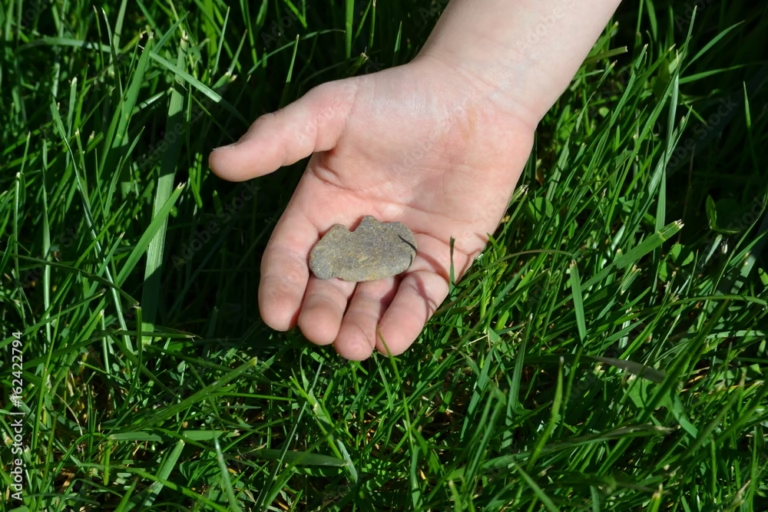
The folklore of dwarvesof the caves remains less clearly defined than that of fairies, although these two creatures often share the same locations, notably caverns. Yet, their characteristics frequently overlap, sometimes even blending with those attributed to the “good ladies.” A story recounted by René-François Le Menillustrates this troubling proximity well: A midwife, called to assist a Korriganin childbirth, receives a round stone to rub the newborn’s eye. Out of curiosity, she also applies the stone to her own right eye. Through this, she gains the ability to see the invisible. But after imprudently revealing to a Korriganthat she had seen her fly at the fair, the creature tears out her eye.
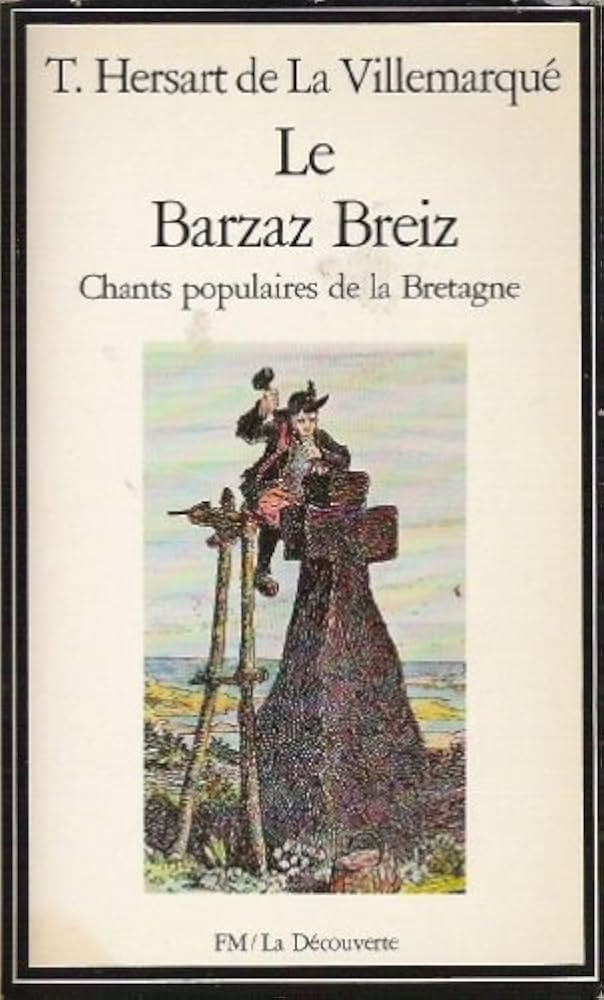
In his writings published in the Revue Celtique, René-François Le Men specifies that he literally translates “Korrigan” as “dwarves” and not as “fairy.” He emphasizes their appearance: the Korriganis always described as a hideous creature, unlike the fairies, often endowed with supernatural beauty. Even Théodore Hersart de La Villemarqué, who imagines them harmoniously proportioned, assigns them only two feet in height in the Barzaz-Breiz (popular songs of Brittany). Finally, the dwarvesmentioned by René-François Le Men are not systematically associated with caverns, contrary to what one might think.
Like the fairies, the dwarves of certain traditions abduct human children to replace them with their own deformed offspring. In Lower Brittany, this practice is even more often attributed to them than to the fairies. To unmask these creatures, a peculiar method was used: eggshells filled with porridge or water were placed in front of the fire. This ruse would prompt the little being to speak—thus revealing its true nature.
The Jetins, too, were reputed to abduct Christian children “to have their race”, leaving one of their own in their place. Again, the eggshell test allowed them to be identified. Once unmasked, the little Jetin expressed its surprise through a strange phrase. The locals would then go near the underground dwelling of these creatures, threatening to kill the substituted child. This ruse prompted the parents to immediately return the abducted infant. In Poitou, the Fadetsfollowed a similar logic. It was enough to place the child at the entrance of their rock and make it cry to secure the return of the real child.
The cave creatures also maintained ambivalent relationships with humans. The fions, settled near the Rance in small caverns called “caches,” possessed mysterious ovens. One day, some ploughmen heard them blow into a horn to call the oven. Intrigued, they asked for bread. At the end of their work, they discovered a tablecloth laid with a cake and knives. But when one of them tried to take one, the tablecloth vanished instantly with all its contents. The Jetins, in the same region, could also offer food—bread, sausages, lard—but any attempt to claim their objects was punished: the offender was pinned to the ground until the items were returned. In the Bernese Jura, the Dusiens—also called Hairodes—were notable for their gentleness. Living near Montsevelier, they willingly offered cakes baked in their “Oven of the Hairodes.” They were cheerful if their gifts were accepted, but became aggressive if refused. Their society followed strict rules. Each year, they held a ritual race: the last to arrive, deemed the weakest, was sacrificed on a pyre.
Like Margot-la-Fée and the ladies of the marine “houles,” these beings also owned livestock. The fionsof the Pont aux Hommes Nées thus tended a black cow that they grazed nearby.
One day, the animal damaged a field of buckwheat. The owner, coming to complain, heard a voice respond to her:
« Tais-toi, ton blé noir te sera payé. »
“Be quiet, your buckwheat will be paid for.”
Shortly after, the fionsoffered her a small measure of grain with extraordinary properties: the cakes she made from it never ran out, provided she shared them only with her family—a common rule in such supernatural gifts. As for the cows of the dwarvesof Lower Brittany, they seemed ungraspable: visible from a distance, they disappeared as soon as anyone tried to approach them.
5. Benevolent Sprites
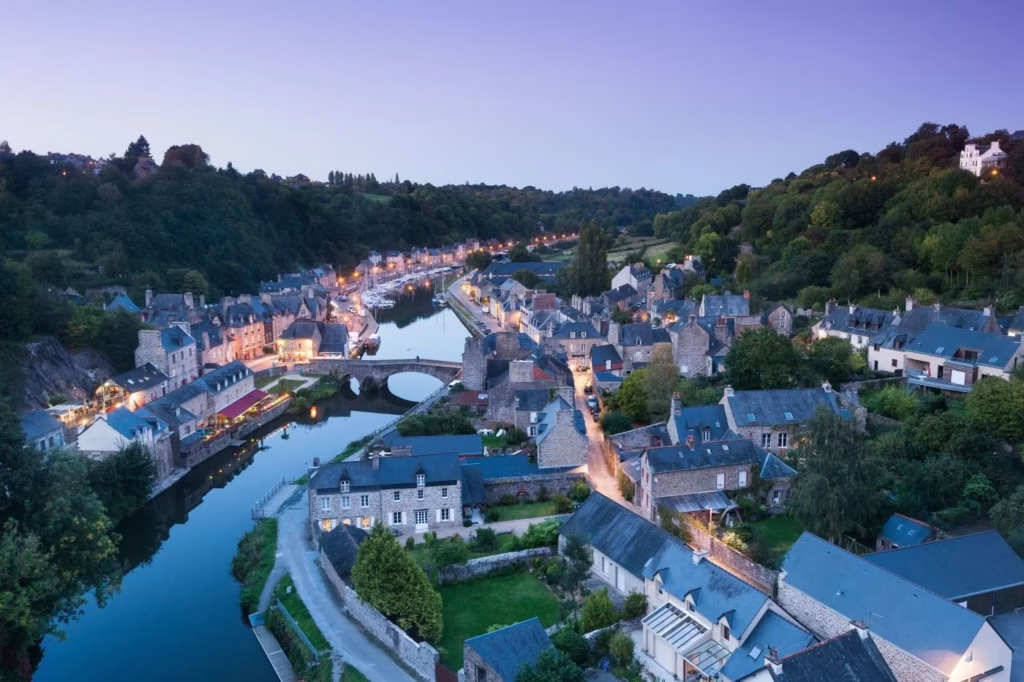
Dinan and the Rance Valley
Contrary to the sometimes frightening image of underground creatures, the dwarvesof the caves are rarely associated with truly malicious acts. Their behavior leans more toward mischief than cruelty—even though some of their pranks could seriously annoy the local inhabitants.
Thus, the Jetins along the Rance were accustomed to leaving their refuge each evening to venture into the countryside and even into villages. There, they indulged in their mischief: tangling the tails of horses, frightening the pigs, and opening the chicken coops, causing chaos as sudden as it was inexplicable.
In the Southwest, the Gascon Little Men enjoyed a much more favorable reputation. They were said to be helpful and benevolent, always ready to render assistance. Yet, the accounts remain vague regarding the exact nature of their help—unlike other traditions where the actions of dwarves are described in detail.
Among the most generous figures in folklore, the Fadetsof Poitou hold a special place. Their intervention was discreet but valuable: each night, they led the sheep of the tenant farmers to the fields. Thanks to their care, the flocks prospered in an exceptional manner. It was said that nowhere else could be found sheep as beautiful and as healthy as those entrusted to their nightly guardianship.
In the North and East of France, many legends portray the dwarvesof the caves in a different light: as industrious beings. Far from being limited to pranks or occasional interventions, they are described as practicing a trade, or even engaging in a form of barter. These accounts support a hypothesis often proposed by folklorists: that these creatures may be the transformed memory of ancient peoples. Populations that may have disappeared, who once lived in these regions and mastered specific skills—notably metalworking. Over time, their memory gradually merged with the collective imagination, giving rise to these underground dwarves, both skilled artisans and mysterious beings.
6. Dwarves Mending Tools
In certain regions, the dwarvesof the caves did not limit themselves to observing or playing tricks: they carried out genuine crafts, sometimes even organized like a trade. In Houmont, in Luxembourg, tradition holds that these underground spritesonce conducted an important flint trade. They were credited, in particular, with those found in large numbers at a site called the Thier du Tirifin, as if they had themselves shaped and brought these artifacts. Further south, the Nichet Cave in Fromelennes was reputed to house dwarves called Nutons, invisible, specialized in repair. Each evening, the locals would bring damaged tools or shoes. By morning, everything was restored—provided one respected an essential rule: payment in kind, never in money.
In the same vein, a mysterious figure was known as Nutons. This nocturnal sorcerer, associated with the caves of Montigny-sur-Meuse, never appeared during the day. Objects to be repaired were placed at the entrance of his dwelling, and then retrieved at night, leaving in exchange various provisions. Again, any monetary payment was strictly excluded.
the East of France, several accounts emphasize the formerly close relationship between humans and these artisan dwarves. For a long time, the latter took pleasure in rendering service, responding to the needs of the locals with efficiency and discretion. But this understanding rested on a fragile balance. Like the Korrigansof Brittany, these beings gradually ceased all contact after being subjected to ingratitude or disrespect. Some stories recount inappropriate gestures, mockery, or attempts at deception that permanently broke this bond. Near Amancey, the cave called La Lutinière perfectly illustrates this ancient alliance. When a horseshoe or a ploughshare needed repair, it was enough to leave it at the entrance in the evening, accompanied by a small cake topped with butter or jam. By morning, the result was always the same: the cake had disappeared… but the tool was perfectly repaired. This simple ritual, based on exchange and respect, testifies to a time when humans and underground creatures still coexisted—each honoring the unseen rules that made this collaboration possible.
7. Their Departure Caused by Humans
The Trou-Manto Cave in Lovegnée/Ben-Ahin-Huy
Despite their benevolence and the many services they provided, the dwarves of the caves were not indifferent to human behavior. Their gradual withdrawal from human relations is often explained by acts of disrespect, sometimes even by simple jokes… but with irreversible consequences. Near Amancey, the cave called La Lutinière, everything functioned according to a simple and respectful exchange. Yet one day, a mischief-maker decided to subvert this ritual. He left an old horseshoe accompanied by a cake… but instead of jam, he spread cow dung on it. This coarse act provoked the anger of the mysterious underground blacksmiths. From that moment on, even though they continued to strike their hammers in the hidden forge, it was never again to assist the inhabitants of Amancey.
Not far from Ben-Ahin-les-Huy, the Lutons of Trou-Manteau maintained a special relationship with a villager. Each evening, they came to the threshold of his house to collect the objects to be repaired, as well as the gifts he generously offered them. But this harmony was broken by malice. The man’s wife, described as wicked, decided to sabotage this relationship. In secret, she replaced the offerings: salt instead of flour, ground tannin in place of coffee, and moldy slices of bread. The next day, the punishment was immediate. Her kitchen had been completely emptied. Upon going outside, she discovered all her objects carefully arranged… on the roof of the house. When her husband retrieved them, he found in a bucket the fake gifts she had given to the sprites. Furious, he punished her severely. But the damage was done: he never saw the Little Men again.
In Alsace, the break took a different form—mockery. In the Caverne aux Loups (Wolfloch Cave) lived an entire people of dwarves. They led a peaceful existence, living in united couples, without aging or offspring. Close to the villagers, they participated in their work and ceremonies, where they even held a place of honor. A mystery, however, intrigued the villagers: these dwarveswore long trailing robes that concealed their feet. Driven by curiosity, young girls devised a trick. Before dawn, they spread fine sand at the cave entrance, then went to hide and observe. When the dwarvesemerged, their footprints revealed their secret: they had goat feet. The girls burst into laughter. Discovered and humiliated, the dwarvesreturned to the cave, visibly saddened. From that day on, they disappeared forever, ending all relations with the villagers.
8. Sprites Displaying Their Riches
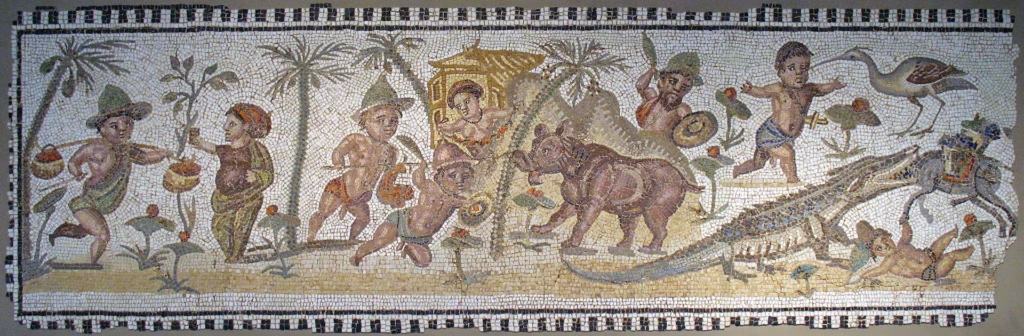
Nilotic scene depicting Pygmies, a mosaic believed to originate from Roman Africa
Some dwarvesand sprites of the caves resemble the mine spirits: guardians of underground treasures, they have a fascinating connection with gold and precious metals. But unlike purely secretive creatures, they sometimes take pleasure in displaying their wealth in plain sight—always according to their own rules.
In Saint-Gilles-Pligeaux, a female dwarf would occasionally emerge from a cave perched on the side of a hill to spread her coins directly on the grass, as if inviting passersby to try their luck. Beneath the castle of Morlaix, at the end of the 18th century, lived dwarvesabout a foot tall, who walked while striking small basins. These mysterious beings displayed their gold in the sun, letting it dry before sharing it with humans: those who modestly reached out received a handful of metal, but anyone who came with a bag or greedy intentions was turned away, and sometimes even mistreated. This delicate balance between generosity and punishment reveals how these creatures regulated their interactions according to a precise code, blending opportunity and prudence.
In Gascony, a particular ritual took place on New Year’s Eve. The Little Men would emerge from their caves to spread the gold they kept underground for an hour. This treasure, without such nightly exposure, would have rotted and taken on a reddish hue. But these appearances were rare. Legends suggest that these dwarvesmay have left the region, or that they no longer dared to show themselves in broad daylight. Two main reasons are proposed: the malice of humans and the fear of geese, natural enemies of these little beings, just as cranes were enemies of the Pygmies.
9. Sprites of the 19th Century
In the 19th century, the presence of sprites of the caves became increasingly discreet. They were mostly spoken of in the past tense, as if these creatures were gradually fading from the human world. Yet, some local traditions attest to their persistence. In the Deux-Sèvres, around the middle of the 19th century, it was said that the spriteshad not abandoned their old residences. The women of the Sèvre Valley would gather in the evenings to spin or knit in excavations dug during stone extraction. These cavities, temperate and pleasant, avoided the need to maintain a fire for warmth.
But cohabitation with the farfadetswas not always peaceful. These small beings, accustomed to ruling these caves, found themselves invaded by the female crowd. In the half-darkness, they avenged themselves in their own way: misplaced spindles, tangled thread, or suddenly extinguished light—all mischievous tricks to remind the intruders that the cave remained their domain.
10. The Basque Lamignak: Male Dominance over the Female
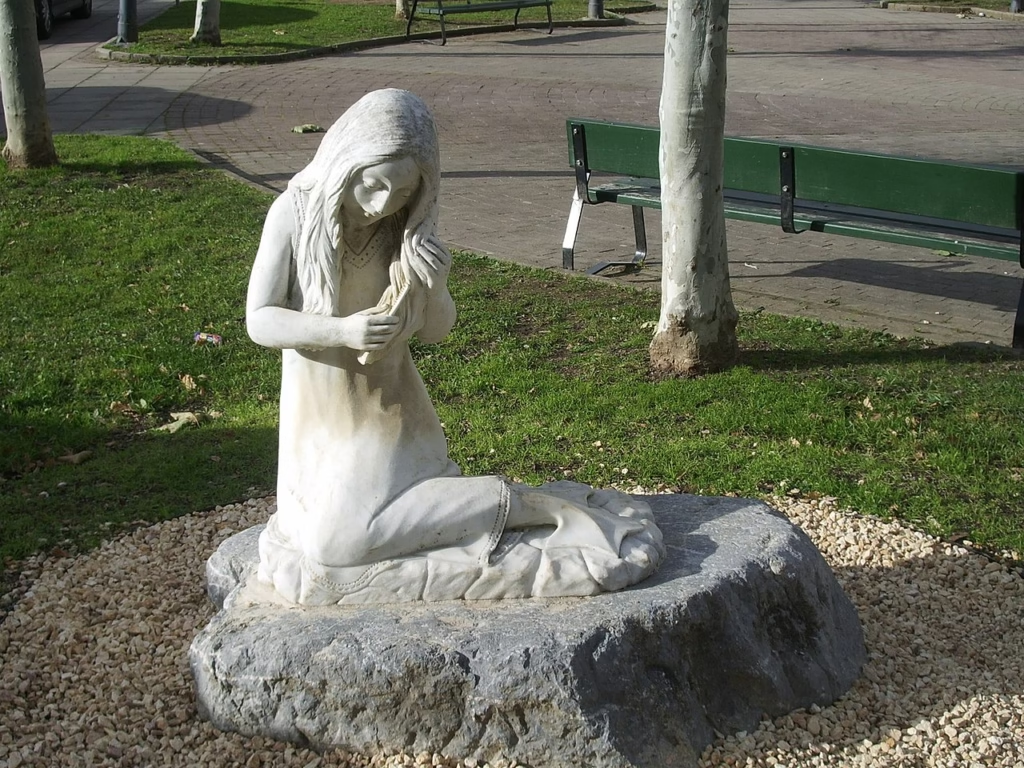
Statue depicting a lamigna in the Garagartza district of Arrasate (Guipuscoa), Spain
In Basque folklore, caves are almost always associated with the Lamignak (lamigna in the singular), which the linguist Julien Vinson (Légendes et récits populaires du Pays basque – p. 31), (works) describes as a kind of rustic genius. These creatures exist in both sexes, but the males clearly dominate in traditional tales. In the earliest legends collected by Jean-François Cerquand, only the male Lamignakappear, which initially made the researcher hesitant to compare them to fairies. It was only with other accounts that he discovered these beings also lived in families, husband and wife, and could have children.
The female Lamignakoften perform actions similar to those of traditional fairies. This is why some of their acts were mentioned in the previous section on spritesand dwarvesof the caves. But where the comparisons end is with the male Lamignak. Their power far exceeds that of the “féetauds” of the maritime caves—the only husbands or brothers of fairies whose actions are recorded with some precision.
Fishermen’s accounts show a clear distinction: while the féetauds of the coasts willingly leave the management of the household to their companions and allow themselves to be guided, the male Lamignakimpose their dominance. The role of their female partners is erased, while the acts attributed to the males recall those of former lords: authority, violence, and control. Some stories even report that they forcibly detain peasant women in their underground dwellings, demonstrating their power and imperious nature. Thus, the Lamignakembody a predominantly male figure in Basque folklore, combining power, terror, and authority within the caves they inhabit.
In Basque folklore, the Lamignakwere not only powerful and authoritative creatures: some accounts recount that they abducted young girls to hold them in their caves, creating stories blending enchantment, danger, and the marvelous.
One day, while a young girl was tending her flock in the mountains, a Lamignaappeared and carried her off on his back. Despite her desperate cries, she was taken to the cave of the Lamignac of Aussurucq, where she spent four years. There, she was fed snow-white bread and other dishes of exceptional quality, prepared by the Lamignak themselves. During her captivity, she had a three-year-old son with her abductor. One day, while the Lamignakhad gone to the Mendi heath to amuse themselves with wild men called Maures—tall, strong, and wealthy—she found herself alone with her son. Being prudent, she told him to remain silent, then took advantage of their absence to escape. She ran to her home, where her parents had difficulty recognizing her, so much had the years and the ordeal transformed her.
Another account tells of a woman held against her will in the underworld, similar to princesses locked in enchanted castles: she could only be freed at a specific time of year, and under strict conditions. One day, a shepherd discovered, in the cave of Mount Ohry, a young lady combing her hair with a golden comb. She offered him:
“If you want to carry me on your back out of this cave on St. John’s Day, I will give you everything you desire. But whatever you may see along the way, you must not be afraid.”
The shepherd promised, and on St. John’s Day, he carried the young lady on his back to liberate her. But along the way, he saw beasts of all kinds and a dragon breathing flames. Overcome with fear, he abandoned his task and fled. Desperate, the lady let out a terrible cry:
“Cursed be my fate! I am doomed to live another thousand years in this cave!”
12. The Grooming of the Lamignak
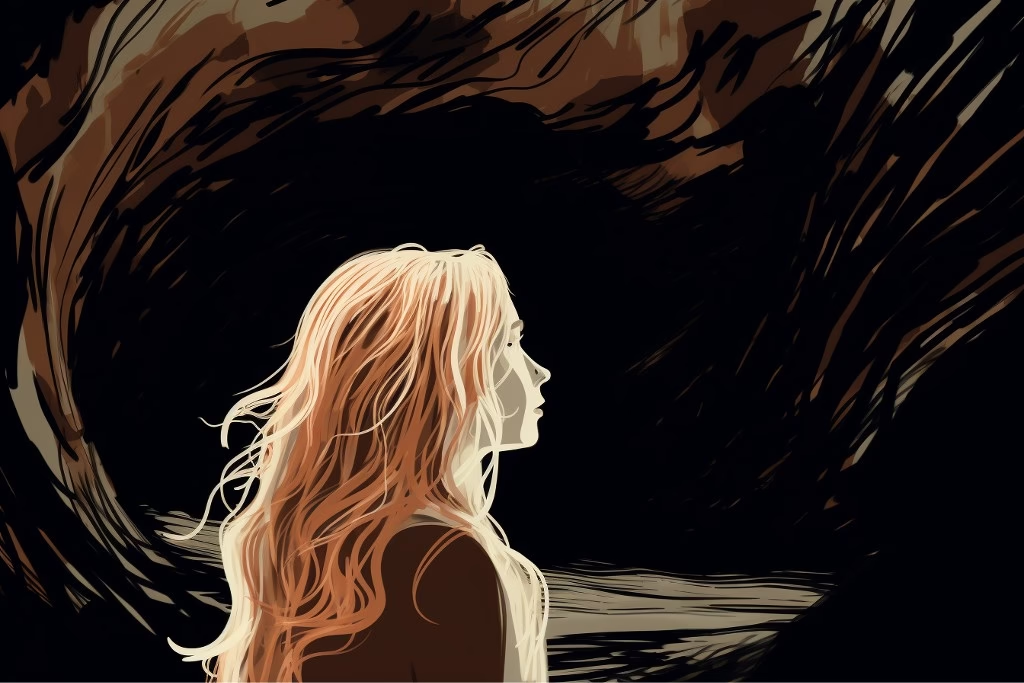
In the Cave of the Lamignak. Source: Midjourney, Monde Légendaire
It sometimes happened that the Lamignakcombed themselves at the entrance of their cave. One day, a man observed a young Lamigna untangling her hair, accompanied by a basket filled with gold. Normally, the female Lamignak would perform this grooming in the privacy of their underground dwelling, but this time, the scene took place in the open air.
Another account tells of a boy who, passing near a cave, dared to peek over a stone and saw a Lamigna with yellow hair, of striking beauty, combing her hair. Driven by curiosity, he made a joke at her. The young Lamigna, offended, began to chase him. The boy, terrified, fled and jumped into a sunlit area. There, the lady could not follow him: her domain seemed limited to the shade and the interior of the cave. To punish him, she threw her golden comb, which pierced the boy’s heel.
13. The Horned Men: They Abduct Women
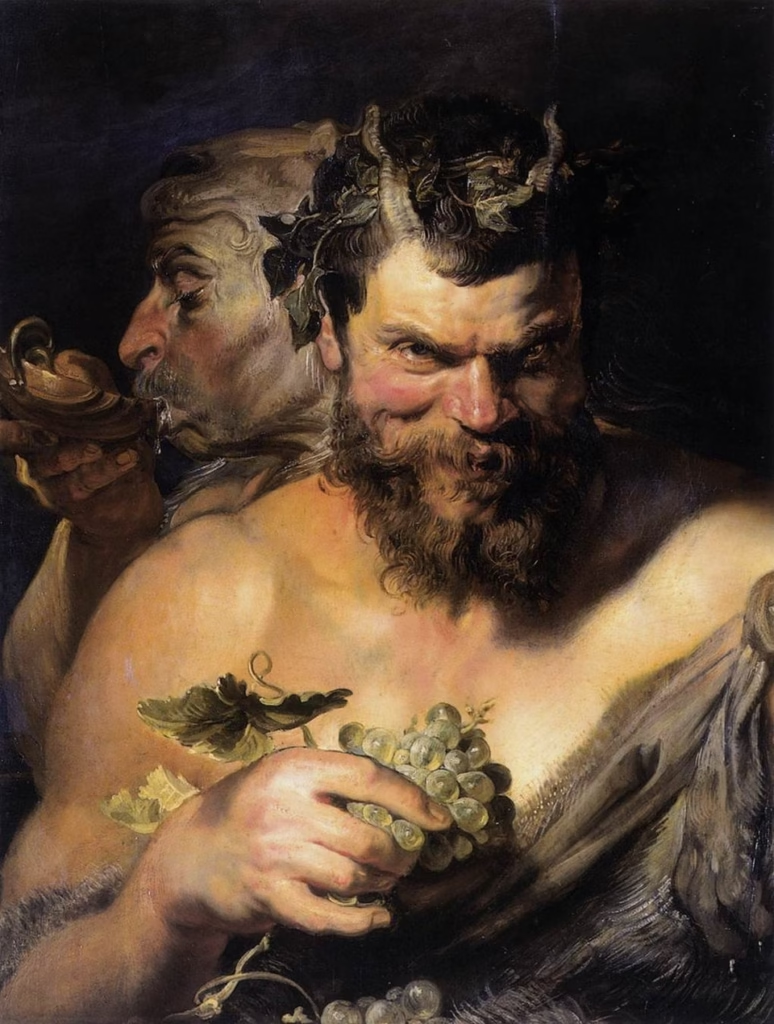
Two Satyrs, painting by Pierre Paul Rubens, 1618–1619
In the folklore of Gascony, another category of underground creatures was particularly feared: the Horned Men. These beings, who lived underground among the rocks, were distinguished by striking features: a tail and hairy legs like those of goats, while the rest of their body resembled that of humans. Even though their habitats were known, they were spoken of only in the past tense. According to tradition, the Horned Men had left the region to live elsewhere, their destination remaining a mystery. Their description closely resembles that of the Greek satyrs.
But during the period when they inhabited Gascony, these creatures had the reputation for abducting the most beautiful young girls of the region, similar to the Lamignak, because there were no horned women to accompany them into their underground world.
Furthermore, they were accused of leaving their retreats at night to steal in the fields, taking provisions to survive. Their image thus combines fascination and fear: half-human beings, powerful and independent, who commanded respect and caution from the locals.
14. Giants and Enchanters
Cave leading to the portal of Merlin the Enchanter
In certain mountainous regions of Eastern France, vast and impressive caves provide an ideal setting for imagining the residence of gigantic creatures. Yet, few are associated with mythological heroes or giants in local traditions.
In Brittany, the tale The Adventures of Monsieur Tam-Kik, written by Ernest du Laurens de la Barre (1819–1882), tells of an adventurer who fell into the hands of an enormous Rounfl, a man-eating ogre. The creature carried him off to cook and eat him in a cave hollowed out of the mountain wall, a cavity so high it was compared to a church. This story illustrates the fascination of folklore with the confrontation between humans and colossal beings, blending danger, boldness, and the marvelous.
Near Le Quillio, in the Morbihan, one could see the entrance to the cave where the enchanter Merlin resided, an emblematic figure of Breton tradition. Not far from the Château de la Roche-Lambert, another cave was associated with Gargantua, the colossal hero of popular literature. It seems to be the only cave identified as his dwelling, highlighting the rarity of giant residences in local accounts.
Further on, in French-speaking Switzerland, an immense being is said to have lived in relatively recent times in the Tanna of the giant Pâtho, within the cave that bears his name. Local traditions preserve the memory of his size and strength, leaving these caverns with an enduring aura of mystery and fascination.
15. Monsters of the Caves
Beyond the sprites, Lamignakand giants, certain caves in France are associated with mysterious and unsettling creatures, often described as monsters or ill-defined beings. These accounts reflect the fascination and fear inspired by the underground depths among local inhabitants.
Near Verdun (Cher), the cave known as the Porchas Oven owes its name to an enchanter who is said to have lived there. His stories, particularly his legendary gallantries toward women, have been passed down through generations, blending magic and seduction in local folklore.
In the caves of the Bugey, people spoke of an enigmatic figure, nicknamed the Outcast of the Bugey (chapter XV). According to some traditions, he is still alive, while others believe he has long since disappeared. In the past, bowls of milk were left at the entrance of these caverns, intended to sustain this mysterious resident. Despite these offerings, the outcast remained melancholic and distant, wandering with his head bowed and retreating into the depths of his lair to avoid any contact with his benefactors. Some caves were reputed to shelter far more terrifying creatures.
In Périgord, a cave was said to be the lair of a monster that fed on the flesh of passersby.
In Auvergne, on the Rez de Sol mountain, a ferocious being, half man, half beast, terrorized the surrounding countryside. Legend has it that a valiant Templar, known as the Knight of the Walls, slew it in single combat with a stroke of his sword, thus freeing the population from its terror.