Did Mairiacs and Fols live in caves?

1. The Saracens
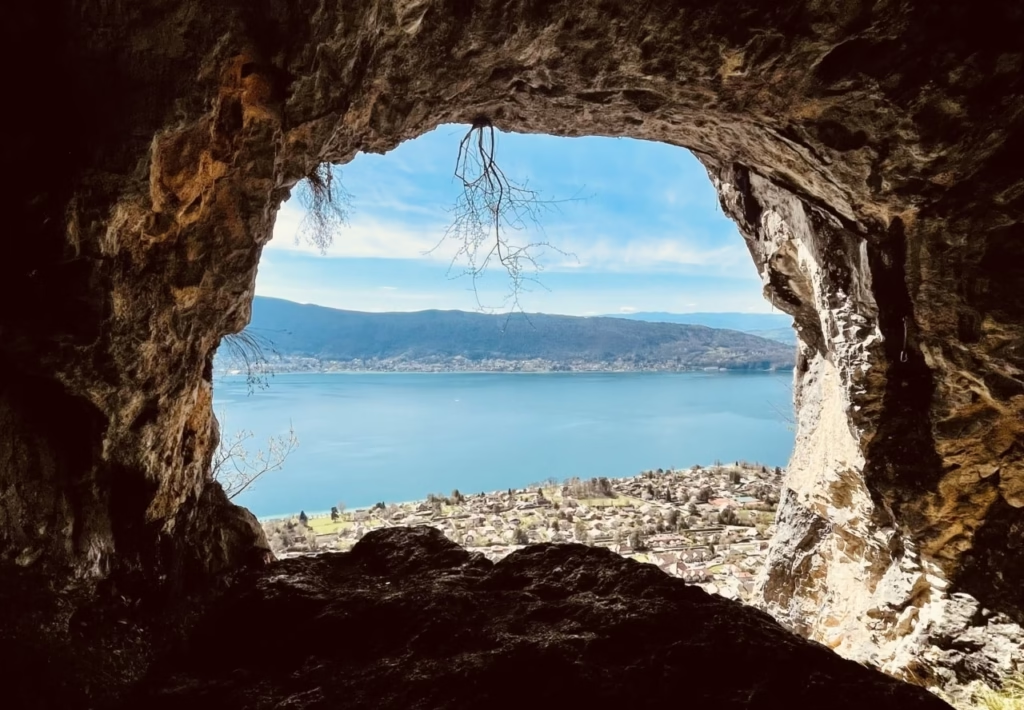
Saracens’ Cave, Annecy

The memory or name of invading or persecuted peoples is associated with certain caverns; however, the legends they imply have not always been recorded.

The inhabitants of Allevard (Isère) say that the Saracens long inhabited feared caves. In Mantilly, a cavern is called the House of the Saracens; in former times, people did not dare pass nearby because a black bull was said to hide in its depths. Cavities in the rocks are quite often referred to in Hainaut as Saracen Holes. Popular tradition recounts that the Saracens were iron smelters traveling from place to place. They possessed portable furnaces, and country people point to the slag these nomads supposedly left behind, known as “creyas de Sarrasins.” It is quite likely that these were, as with the Fols, actually Romani metalworkers; in several regions of France, they are still referred to by the name Saracens, in various dialectal forms.

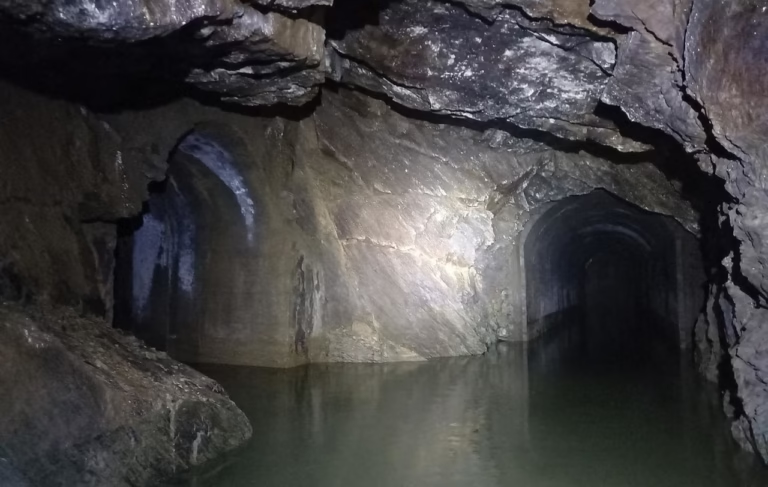
In Annecy, there is a Saracens’ Cave whose name comes from local legends claiming that it served as a refuge for the Saracens, a term used during the Middle Ages by European Christians to designate Muslims. According to these accounts, during the Arab invasions of the 8th century, the invaders supposedly used the cave as a hiding place. It is quite likely that here again, as in the following story, the term actually referred to Romani metalworkers; in several regions of France, such wandering smiths were still designated by the name Saracens, often in dialectal forms.

2. The Fols
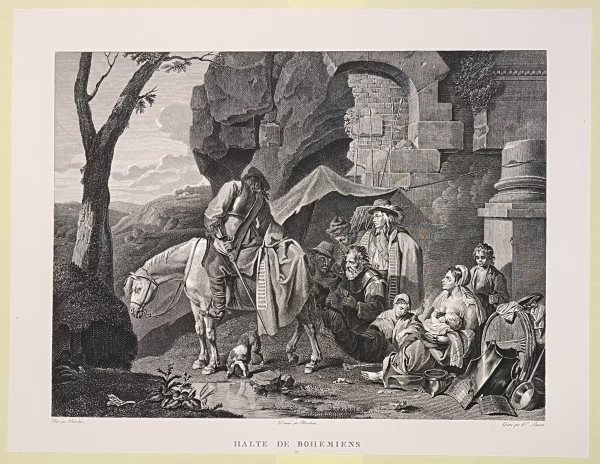
Gypsies’ Halt, after Sébastien Bourdon, engraving by Laurent, circa 1840

People who had nothing in common with the respectable Christians of the surrounding area lived, long ago, in the cave of the Mad Stone of Besson. The men did not work, while the women went begging through the countryside, and people gave them alms out of fear of their spells. The Fols, as they were called, did not resemble the local inhabitants; they had swarthy complexions and straight black hair. The women were said to have such long breasts that they threw them over their shoulders to move more easily. The last Fols are said to have disappeared toward the end of the 18th century. It is likely that some tribe of Gypsies had settled in this isolated place; several of the physical characteristics attributed to the Fols closely resemble those associated with certain groups of Roma or Romani people.

3. Mairiacs or Moors
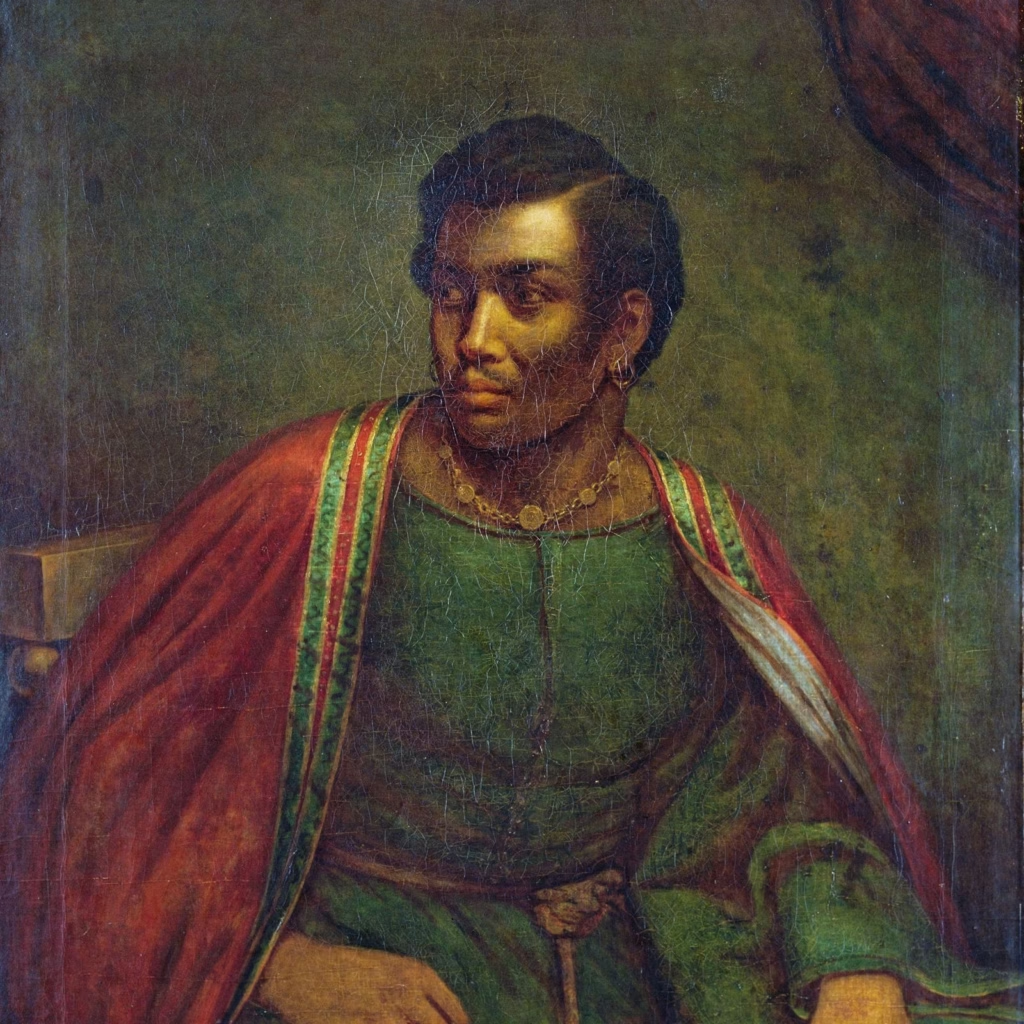
Painting depicting the actor Ira Aldridge portraying Othello, the Moorish general of the Venetian army in the play of the same name.

The Mairiacs, whose name has been translated as Moors, and which indeed seems to designate this invading people, transformed by legend, inhabited caverns. They were described as handsome, tall, and strong, though rather poorly defined, and were portrayed as associated with the Lamignak ; however, they were considered far more wicked than the latter. It was Roland who drove them away—but not entirely, since it was said that every year, whenever the paladin’s horse appeared on the Spanish Bridge and let out its tremendous neigh, they would flee back into their caves.

4. Outcasts Taking Refuge in Caves

According to tradition, the Baouma de las Doumaiselas, in the Hérault, served as a refuge for the Reformed Protestants, who may also have found shelter in the three caves of Lascelle (Puy-de-Dôme), known as the Huguenots’ Chambers. Certain caverns sheltered outcasts during the French Revolution. A farmer from the Norman Bocage hid two gentlemen in the Fairies’ Cave, a small excavation visible among the rocks of the Vère Valley. One evening, a glow was seen there, and alarm spread through the surrounding countryside. Fortunately, the farmer, familiar with local superstitions, attributed these mysterious lights to the fairies , and no one dared approach the place again. The Marquis of Segrée-Fontaine was likewise hidden by one of his servants in the Fairies’ Cave of the Roches d’Oitre. A noble family found refuge for several months in a kind of cave in the middle of the woods of Châtelier, known as the Lady’s Chamber, because it was said to be haunted by spirits and by a fairy.

5. Thieves and Counterfeiters; Sepulchral Caves

According to the peasants living near Dolaison in the Haute-Loire, Mandrin had chosen natural caverns in which to produce counterfeit money. The beautiful La Balme Cave (Isère) was believed to have served as a refuge for thieves and smugglers; the memory of Mandrin was also associated with it. People even said in 1890 that this figure had arranged to meet General Boulanger and Don Carlos there (Revue des Traditions populaires, vol. V, p. 434). This association of figures from different eras is scarcely more extraordinary than Breton legends depicting Caesar conversing with Anne of Brittany. The deepest of the caves opening at the base of the Roc de Chère on Lake Annecy is called the Grand Pertuis. Various legends describe its inhabitants as fairies, Saracens, and counterfeiters. According to tradition, the latter had divided it into two levels. The cave of Pommiers in the Beaujolais had allegedly served the same criminal industry. One could still see benches carved into the rock, supposedly used to chain the prisoners of neighboring lords, as well as very strange drawings.

Up to now, only a relatively small number of names connected with the clearly sepulchral purpose of many caverns have been recorded. In the Ariège, there was a Cave of the Dead Man; in the Gard, a Cave of the Dead, near Durfort, was said by local tradition to contain the bones of the Camisards.