What Lies in the Depths of the Earth?
1. General Ideas
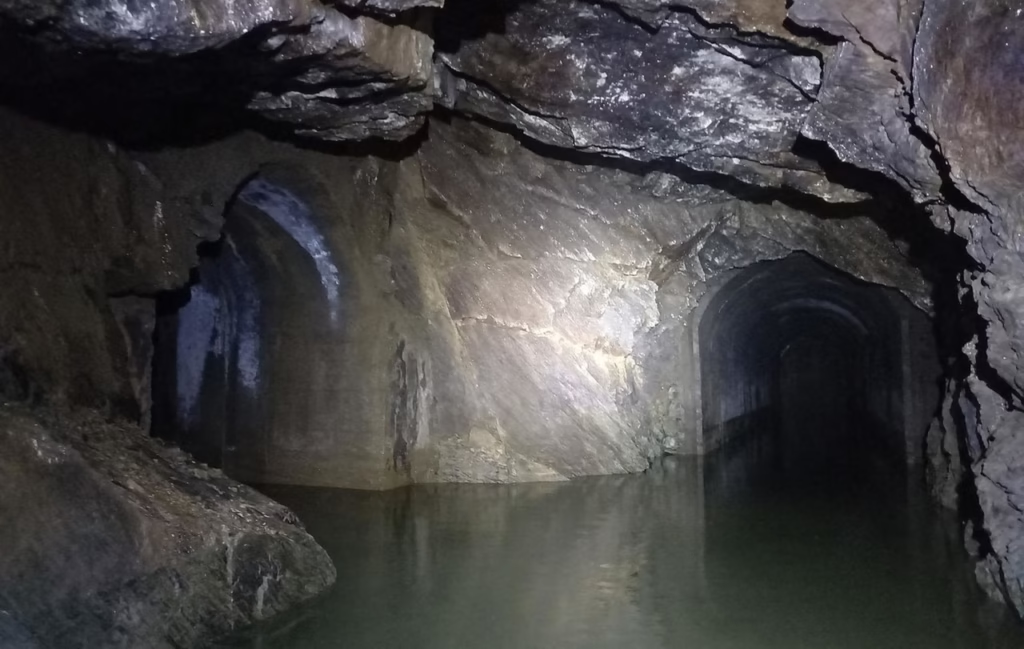
Collected in France, Wallonia, and French-speaking Switzerland, these legends suggest that the ground beneath our feet is not a solid mass, but a complex system of cavities, tunnels, and multiple depths:
- the ground would be pierced with holes that are sometimes shallow,
- or with very deep passages,
- leading to veritable underground microcosms.
In some cases, these passages are even said to lead to truly organized worlds, located at different levels beneath the surface. It is important to note that these ideas do not form a uniform system. No tradition offers a complete and structured description of these underground worlds. Rather, one observes:
- common elements, such as the presence of caves or tunnels,
- but also local particularities, limited to a region, or even to a single place.
Some beliefs have been recorded only in two or three regions, while others seem to be entirely absent elsewhere. Some beliefs have been recorded only in two or three regions, while others seem to be entirely absent elsewhere.
Some of these ideas bear similarities to the beliefs of classical antiquity, particularly those that evoke underground worlds or invisible realms. Others, more difficult to connect with known traditions, may be remnants of ancient cultures or very early religious conceptions, possibly predating the historical period.
It is possible that these accounts constitute:
- survivals of vanished systems of thought,
- fragments of ancient cosmogonies (mythological accounts that describe or explain the formation of the world),
- or traces of worldviews that have since been forgotten.
2. Table of Popular Conceptions of the Interior of the Earth
The depths of the earth can be divided into two main categories:
- solid sections, hollowed out with cavities and compartments;
- a watery section
- a central igneous section, likened to a region of fire, close to hell.
Paul Sébillot envisions a vertical cross-section of the earth, extending from the surface down to the deepest depths. He chooses the sea level as the dividing line, considered a zero point. This idea is based on certain traditions according to which the earth floats on the waters, and in which the sea plays an important role in underground narratives. From this line, he distinguishes two major zones:
- formations close to the surface,
- the worlds located in the depths.
The cavities between the surface and sea level include the most accessible forms, or those closest to the visible world.
A) The mardelles, known especially in Berry, are shallow depressions. They are connected to the underground world only through the beliefs and hauntings that surround them.
B) Caves, found almost everywhere, generally open in rocky slopes. Some are small, others are said to be immense, and may even be regarded as the entrance to another world.
C) There are also said to be invisible underground passages, whose access is unknown. Their presence is revealed only by mysterious sounds or voices, attributed to their inhabitants.
D) Certain kinds of slanting shafts descend into the ground, sometimes forming structures comparable to natural amphitheaters. In French-speaking Switzerland or the Basque Country, these openings are believed to lead to caverns inhabited by supernatural beings.
E) The sea is thought to extend beneath the earth in the form of branching inland bays, covered by a rocky vault. These spaces form intermediate zones between the terrestrial world and the depths.
Below this symbolic line lie underground microcosms, often more distant and more mysterious.
F) Underground passages carved by gigantic animals that are said to gnaw at the interior of the earth. These tunnels could reach considerable depths while sometimes coming close to the surface.
G) At an indeterminate depth, but close to the center of the globe, lies the region where giants responsible for earthquakes are said to dwell.
H) Some tales describe a complete and enchanted underground world, with its own sky, sun, and an environment similar to that of the surface.
I) Another belief speaks of a subterranean sea of the dead, deep and hidden, located near the igneous region. The dead are said to cross it by boat to reach their final destination, though it is unknown how they gain access to it.
J) Finally, traditions place hell in the deepest depths: a vast region of fire likened to a blazing furnace, sometimes connected to the surface by shafts or openings from which smoke escapes.
3. The Subterranean Sea; Its Proximity to the Earth’s Crust
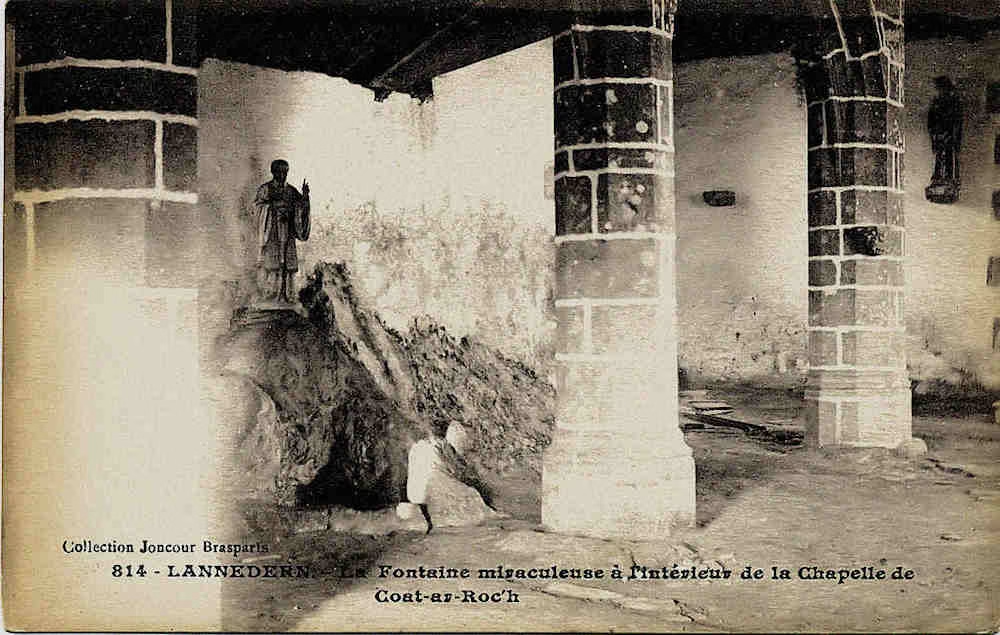
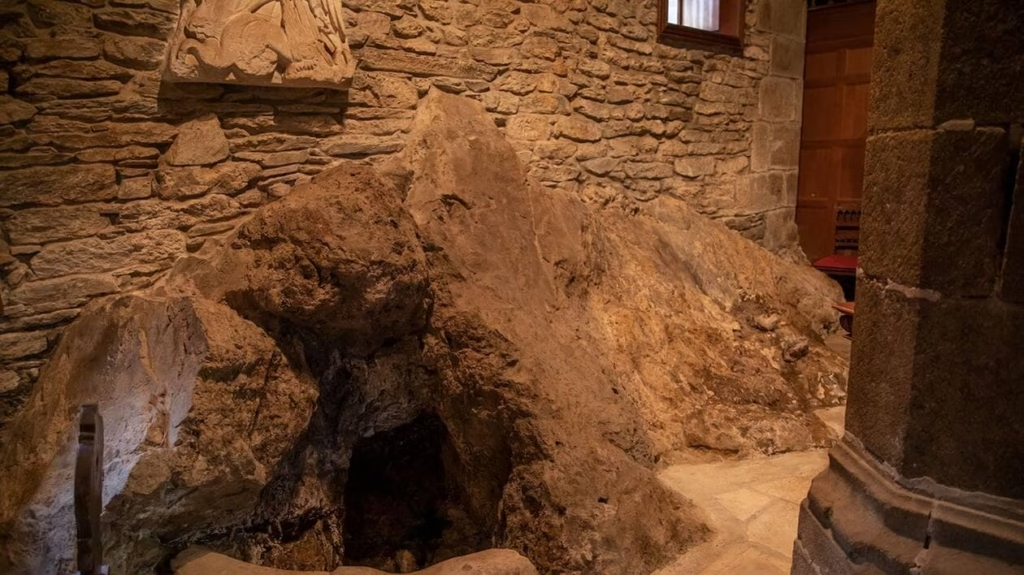
In the tradition of Celtic Brittany, the Armorican peninsula is believed to rest upon an underground ocean. Several accounts are put forward as evidence. One of the most famous concerns the spring of Coat ar Roc’h: a duck is said to have been thrown into it and to have reappeared one week later in the river at Landévennec, at the bottom of the Brest harbor (Anatole Le Braz in The Breton Saints According to Popular Tradition in Cornouaille).
Dans plusieurs régions de Upper Brittany, on affirme que la mer pénètre sous la terre en formant de véritables bras souterrains. Cette idée apparaissait notamment lorsqu’on rencontrait des eaux difficiles à évacuer lors de travaux : on expliquait alors le phénomène par l’ouverture accidentelle d’une « veine de mer ». Selon ces croyances :
- salt water does not always completely fill the cavities,
- a thin rocky vault may cover them,
- and it could give way under excessive weight.
An anecdote illustrates this fear: a Duchess of Rohan, traveling by carriage through an area near the source of the Gouessant, about thirty kilometers from the sea, is said to have asked her coachman to hurry, convinced that an arm of the sea ran beneath the road.
While Brittany offers the clearest examples, the belief in a subterranean sea also exists elsewhere in France. In Gascony, a tradition holds that the sea extends beneath the church dedicated to Saint Caprasius in Agen. Sailors are said to have heard, while passing beneath it, the sound of the organ and the voices of choirboys. In the Orne, near the menhir of Mesnil-Briouze, locals believe that the stone communicates with the ocean. By placing their ear against the menhir, they say they can hear the sound of the sea.
Some traditions go even further by attributing to certain places the power to hold back or release the sea. Near Dinan, the site of Saint-Samson is regarded as the key to the sea. It is said that if this key were ever removed, the sea would flood all of France. The legend speaks of three keys:
- one held by a woman from Brittany with the help of the devil,
- another located in distant lands,
- and that of Saint Samson.
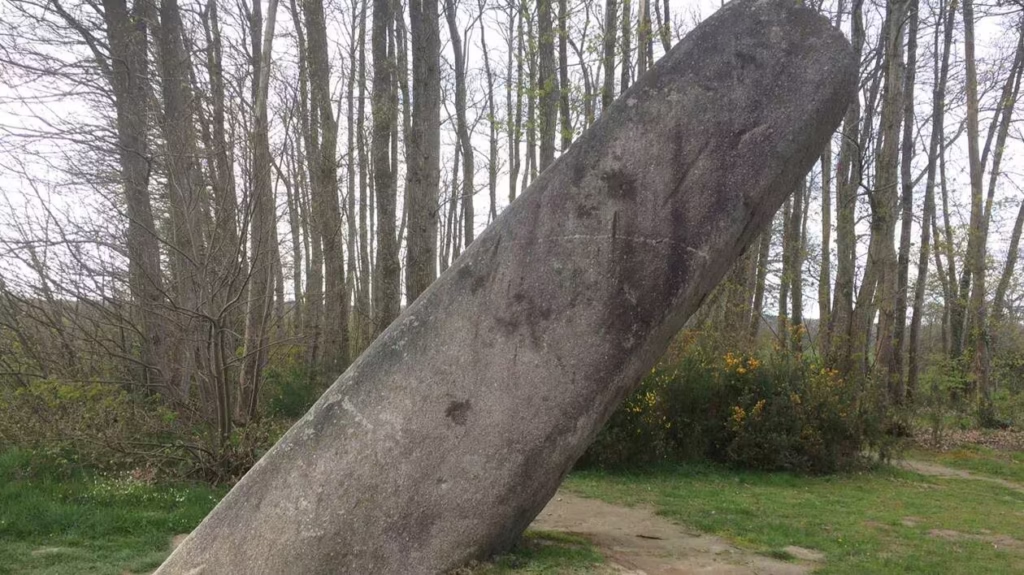
In the Morbihan, a tradition holds that the Blavet once had its source in a place called the “eye of the sea”, described as a bottomless pit. Before it was contained and reduced, this place was considered dangerous for the inhabitants. It was believed to connect both to the infernal regions and to the ocean through underground passages.
4. The Sea Crossed by the Dead
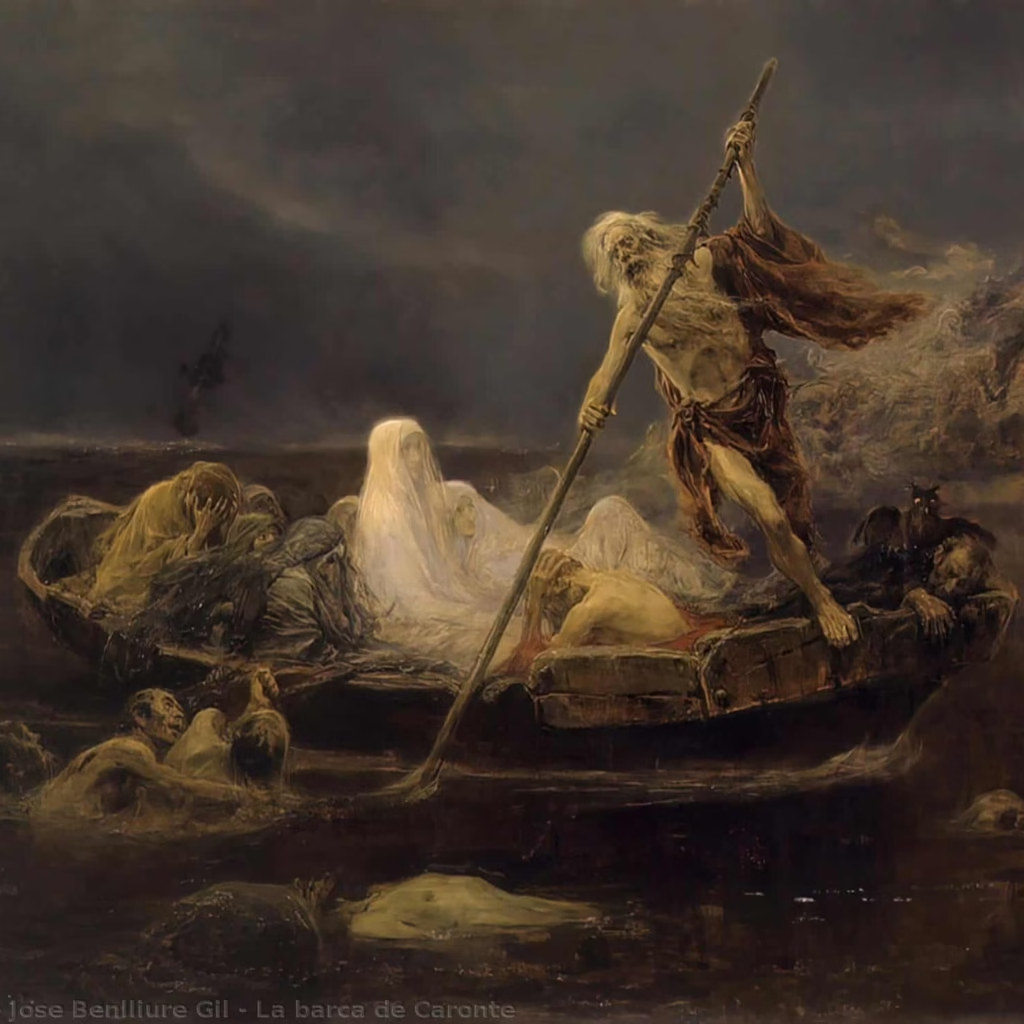
Accounts speak of a “sea that lies beneath us”, distinct from the subterranean sea connected to the ocean. Its characteristics are quite specific:
- it is located at a great depth,
- it does not connect with the ocean,
- no living person can sail upon it,
- it is accessible only to the souls of the dead.
The shores of this sea are home to a place called the “Passage of the Dead”, whose very name suggests an extreme distance from the world of the living. The deceased must cross this sea aboard a boat, comparable to that of the mythical ferryman Charon, though described more vaguely in Breton traditions. However, the accounts do not specify how the dead reach this shore. This point remains unclear, unlike in other traditions where visible boats come to collect souls and carry them across the ocean to mysterious islands.
The reality of this posthumous crossing is reinforced by several funerary customs. In certain communes around Dinan, a piece of blessed bread from the churching rite was placed in the coffin, intended to nourish the deceased during the journey across the subterranean sea. Other practices recall the payment for the crossing: in Bugey, a coin was placed in the hand of the dead (per to barquo), and in several regions of the Gironde, this custom still persists, the coin being used to pay for the passage.
Once the crossing is complete, some accounts describe a singular journey for souls destined for hell. They follow a flower-lined path, marked by ninety-nine inns where they may drink freely. But the hundredth stop is fatal:
- it is the house of the devil,
- marking the entrance into the place of torment,
- from which no one returns.
This tradition of the 99 inns is also known in Lower Brittany, notably through the accounts collected by Anatole Le Braz in The Legend of Death. According to the versions, these inns may also appear along the path to Paradise.
In the regions where this belief has been observed, all the dead seem required to make this crossing. However, the accounts remain unclear on several points: what becomes of the souls destined for Purgatory? How do those promised to Paradise reach their destination? It is possible that, in the past, these traditions formed part of a broader vision in which the underground world constituted a kind of center of the destinies of the dead. This idea recalls ancient conceptions of Hell as a realm of shadows, as described by Homer or Virgil.
Despite its richness, this tradition remains geographically limited and fragmentary. No precise description clearly situates Purgatory or Paradise within the depths of the earth.
5. Hell and Its Location
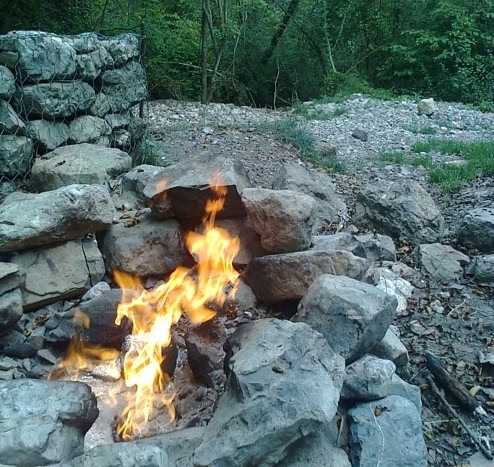
Hell occupies a central place in representations of the underground world. Often described as a region of fire located at the heart of the earth, it is both distant and inaccessible… yet sometimes surprisingly close. According to the most widespread belief among rural populations, hell lies within the globe of the earth, at a great depth. In the 18th century, in Brittany, it was said to be located: at the center of the earth, about 1,250 leagues beneath the surface.
Hell is generally described as a blazing furnace, which links it to natural phenomena associated with subterranean heat. Certain visible manifestations at the surface were interpreted as signs of its presence:
- hot springs,
- lakes with high temperatures,
- or even emissions of burning gases.
These elements reinforced the idea that infernal fire could, in certain places, rise up toward the surface of the earth. Despite its supposed remoteness, several traditions assert that hell is sometimes close to the earth’s crust, or at least that it communicates with it. In the Alpes-Maritimes, the Laghi d’Inferno are believed to be in direct connection with hell. Near Grenoble, in Saint-Barthélemy, the Burning Spring provided another striking example: flames would emerge from it at certain times. According to belief, these flames came either from Purgatory or directly from Hell. In reality, these are natural sources of flammable gas (naturally emitted from the ground), whose flame is self-sustaining or can be easily reignited.
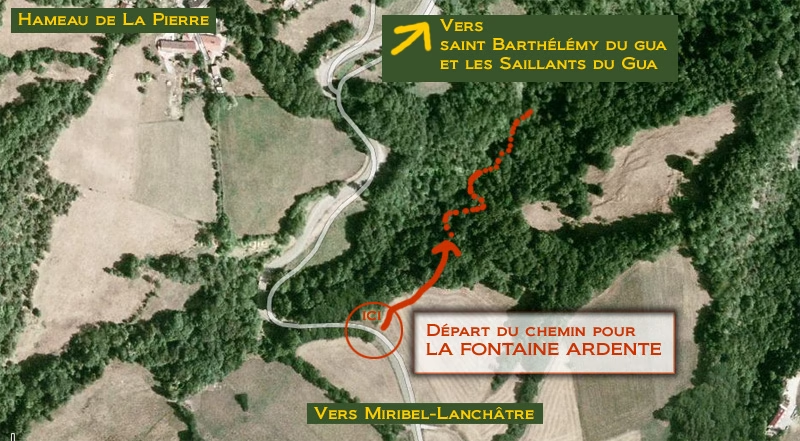
6. Connections with the Outside World: Shafts and the Keys of Hell
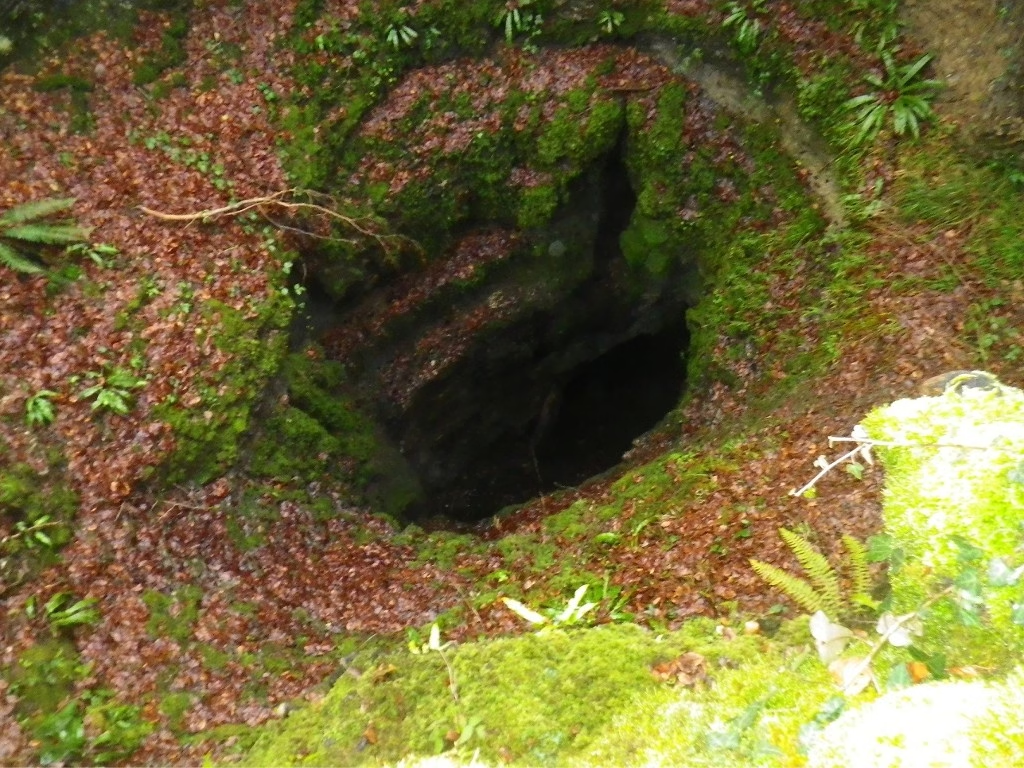
Certain excavations are considered to be direct access points to hell or its surroundings. In the Doubs, the Poudry Shaft is believed to communicate with the infernal world. A legend tells of a young woman, driven from her home after being seduced, who encountered the devil there. He persuaded her to throw herself into the shaft to escape dishonor. She agreed, but, seized by repentance at the moment of her fall, she was condemned not to hell, but to undergo a thousand years of purgatory within the shaft. Since then, it is said, when a passerby throws a stone into it, the sound heard is the lament of the penitent, struck by the stone.
In Landebia (Côtes-d’Armor), a circular hole is pointed out, said to be bottomless. The inhabitants claim that: stones thrown into it produce no sound as they fall, and vapors sometimes escape from it. These phenomena reinforce the belief that it is a vent of hell, an opening through which signs of the underground world rise to the surface.
In the forest of Longboël (Seine-Inférieure), before land clearing, there existed a place called the Saint Patrick’s Hole, considered an entrance to eternal torment. In Lower Brittany, several accounts also mention the well of hell, without always specifying whether it is: a passage leading to hell, or hell itself. These may be linked to the religious image of the Puteus abyssi (“the pit of the abyss”), often used in sermons to evoke the punishment of sinners.
Des croyances ne se contentent pas d’évoquer des ouvertures : elles parlent aussi de clés capables de fermer ou d’ouvrir l’enfer. En Upper Brittany, le menhir de Saint-Samson, déjà considéré comme une clé de la mer, est également vu comme l’une des clés de l’enfer. Une légende raconte que le diable tenta de s’en emparer afin d’ouvrir plus largement l’accès au monde infernal et y précipiter davantage de pécheurs. Mais saint Samson, aidé de saint Michel, parvint à repousser le démon et à préserver cette clé.
7. The Earth That Opens Beneath the Damned and the Cursed
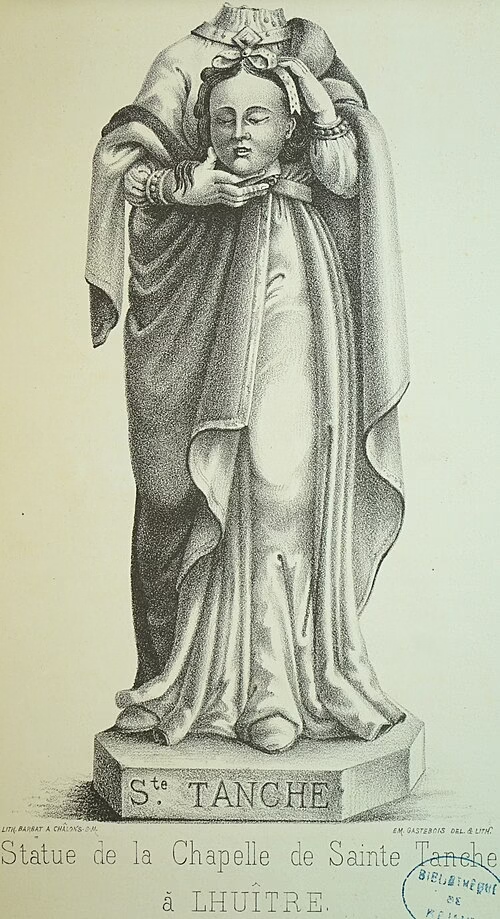
Plusieurs légendes décrivent une sanction instantanée : la terre s’ouvre au moment même du crime ou du sacrilège. Dans l’Aube, un valet de Ramerupt, n’ayant pu triompher de la vertu de sainte Tanche, lui trancha la tête. Pour ce crime, il fut englouti sur le lieu même. En Upper Brittany, des danseurs qui continuaient leur divertissement lors du passage du Saint-Sacrement furent également punis : la terre s’ouvrit sous eux et les fit disparaître.
Ailleurs, la terre ne se contente pas d’engloutir : elle devient une porte vers l’enfer, s’ouvrant pour laisser passer les damnés. En Upper Brittany, une revenante condamnée invite son fiancé à un repas nocturne. Lorsque le moment arrive, la terre s’ouvre et elle disparaît dans les profondeurs. Un autre récit breton raconte qu’une femme, à l’agonie, demande pardon à sa sœur, qui refuse. Après sa mort, elle revient entourée de flammes, poursuit sa sœur, et lorsque celle-ci est atteinte, la terre s’ouvre et les engloutit toutes deux. Dans une variante, une jeune fille maltraitée maudit sa sœur avant de mourir. Revenue d’entre les morts, elle l’entraîne avec elle dans une chute vers « le puits de l’enfer », criant leur destin.
After being tormented by the Marquise of Trévarez, Ar Loncheghez Coz, or the Old Glutton, the inhabitants call upon an exorcist. Once the revenant has been “conjured”, the earth opens to swallow her forever. This type of account shows that the earth acts as a means of restoring order, sending disruptive spirits back to the underground world. Other stories feature faults that are less spectacular, yet still serious in popular morality. In Lorraine, a young girl who had stolen a sheet from a cemetery sees the earth open beneath her feet at the very moment she tries to return it.
8. Penance Between the Surface and Hell for Swallowed Figures or Cities
In the Landes, legend tells that the miser Vidau de Bourns, swallowed up for having refused to help the poor, continues to lament beneath the earth. His cries are accompanied by the barking of his dogs, who are also condemned to share his fate. His punishment is without appeal: he must atone until the end of the world, in this intermediate space, neither fully hell nor truly purgatory.
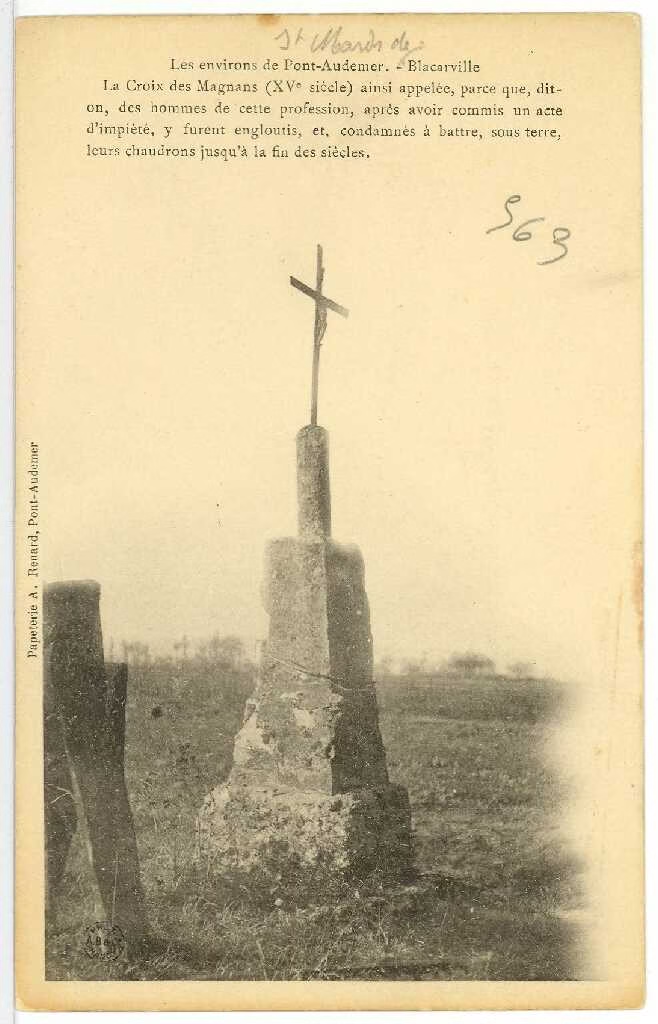
Other accounts describe groups condemned to continue their activity indefinitely, as a form of penance. Near Pont-Audemer, the Croix des Magnants recalls the story of itinerant tinkers who vanished after an act of impiety. According to tradition, one can still hear beneath the earth the steady sound of their hammers, which they must continue to wield until the end of time. In Berry, a similar legend tells of pit-sawyers punished for having sawn the Mocked Cross. In the silence of the night, one can still perceive the back-and-forth motion of their saw, a sign of their eternal punishment.
Some traditions do not concern individuals alone, but entire groups or even cities. In Lower Brittany, the procession of Saint Mona is said to have sunk beneath the earth following a forgotten misdeed. However, it is not condemned forever: if certain ceremonies were performed, it could return to the surface, with its banners and its rector. This situation recalls that of the famous city of Ys, also submerged, but regarded as asleep rather than destroyed. In the Côtes-d’Armor, near Corseul, a tradition speaks of an ancient city that disappeared beneath the ground, called the Abbey. White vapors with strange shapes sometimes escape from it. According to belief:
- the city is not dead,
- it is simply asleep,
- and it will one day awaken, transforming the land into a place comparable to the earthly Paradise.
The accounts do not concern humans alone: the earth may also swallow animals or objects, often as punishment for a forbidden act. In a Corsican legend, the oxen and plow of a man working on Christmas Day disappear beneath the ground at the final stroke of the noon bell. In a Breton gwerz, the witch Jeanne claims that to destroy a curse, it must be placed in the middle of a field: the earth will then open and swallow it.
9. Descents of the Living into Hell
The routes leading to hell are rarely described in detail, but certain elements appear repeatedly. The characters pass through: long, dark galleries, narrow underground passages, or subterranean corridors that seem endless. After hours of walking in the darkness, they emerge into striking places: vast halls filled with boiling cauldrons, spaces where fire-heated seats serve as instruments of torment, or even structures resembling castles in flames. In these accounts, hell is an organized space, inhabited by active demons. They tend the fire, stir the embers, and watch over the places of punishment. Their presence reinforces the idea of a structured world, where punishment is administered continuously.
A striking example is provided by a tale from the region of Menton. A young woman marries a man who turns out to be the devil himself. He leads her into a deep cave, a true gateway to the infernal world. There, she discovers: boiling pots, set over a blazing fire, a classic image of the torments inflicted on the damned.
Unlike the dead, the living who descend into hell seem to reach it only in exceptional circumstances: by accident, through deception, or following a pact or a supernatural encounter. These accounts often serve as warnings, illustrating: the dangers of evil, the consequences of human choices, and the possible nearness of hell.
10. Goblins and Fantastic Creatures of the Earth’s Interior
In Lower Brittany, it was said that the realm of the kourils extended beneath the earth, far beyond seas and rivers. In these depths, the interior of the globe was also believed to harbor a mysterious people: the cornandons.
According to a belief recorded at the beginning of the 19th century in the same region—and rarely mentioned elsewhere—our planet is said to be crisscrossed by underground passages. These tunnels would not be natural, but dug by fantastic animals. In some areas, it was even claimed that the interior of the Earth was inhabited by gigantic rats. Their size would be such that a man on horseback could enter their tunnels without difficulty.
Popular belief went even further: if one could reach the depths of these tunnels, immense riches would be discovered there. The gigantic bones found in certain regions were, moreover, attributed to these colossal creatures. But this legend does not stop at fascination. It also carries a troubling dimension: these rats, multiplying endlessly, would eventually gnaw away at the very center of the Earth. One day, according to this vision, the surface of the world would open up, causing the Earth to collapse and swallow humankind.
11. Giants and Earthquakes
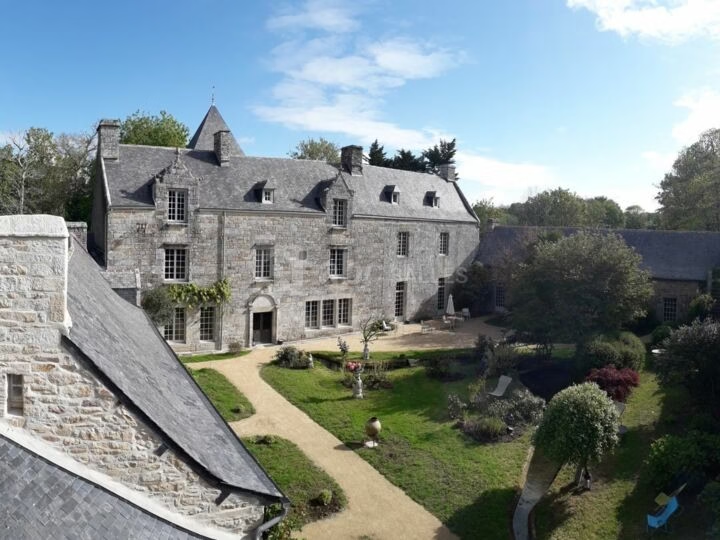
In Belgian Luxembourg, an old tradition tells that, in former times, giants endowed with extraordinary strength lived in the depths of the world. These colossal beings engaged in frequent battles, so violent that many perished. However, some are said to have survived. Among them, two giants hold a special place in the imagination: one resides in the north, the other in the south. Both are said to move slowly toward one another, carrying a gigantic mountain upon their shoulders. According to the legend, their meeting is inevitable. The day these two giants finally confront each other, they will engage in a merciless struggle. This titanic battle would then bring about the destruction of the globe itself.
The legend does not end with this prophecy. It also offers an explanation for natural phenomena. In the area around Lesneven, in Brittany, another popular interpretation exists. Although earthquakes are rare there, local farmers attribute these events to occult forces. According to them, these tremors are caused by the blows exchanged, in the midst of battle, by evil spirits and sorcerers dwelling in the underground passages of the Lesneven castle.
12. A Marvelous Underground World
Legends associated with terrestrial caves and marine caverns sometimes evoke the existence of true hidden microcosms. These mysterious worlds are said to be accessible to those who dare venture into the depths. However, most of these underground realms remain close to the surface, as if they were simply concealed beneath our feet. In this way, they differ from other, rarer accounts in which such worlds are located at great distances, almost outside of time and space.
In a tale originating from Menton, the hero undertakes an extraordinary journey. To reach the garden of an enchanted palace, he must pass through dark caves. This journey is anything but ordinary: the passage lasts three years.
Another legend tells that a doe guides the king of France and his servant through the opening of a small mound located in a meadow. After a long underground journey, they reach a land radically different from the one they left behind. In this realm:
- plants and animals are unrecognizable
- the sun shines with a new intensity
- the air is purer and delicately fragrant
13. The Cirques of Valais and of the Fairies

In the Valais, above the village of Verbier, in the Bagnes Valley, stretches a vast cirque of meadows dotted with numerous cavities. These excavations, particularly abundant and often small in size, have a depth that no one seems to have attempted to measure. Their shape is striking: after a slight funnel covered with vegetation, their center descends vertically, like a tube carved into plaster. They are said to be inhabited by fairies.
A local legend tells the story of a widowed farmer, left to raise his five young children alone. Forced to work outside, he would leave them at home each day. One evening, upon returning, he was astonished to find his household in perfect order. The children were washed and combed, their clothes mended, the dishes clean, and the evening meal ready to be served. At first, he thought of the discreet help of a neighbor, but the next day, observing the same phenomenon, he questioned his children. They revealed that a very small woman—gentle, charming, and nimble—came to take care of them. Intrigued, the farmer decided to stay home to meet this mysterious benefactor. When she appeared, as on the previous days, he spoke to her. Gradually, she agreed to marry him, on one condition: that he must never call her a Fairy. The man kept his promise for a long time, and their life together was happy.
One day, while he had gone to Martigny, his wife cut the wheat in the field, even though it was not yet ripe, and stored it in the barn. Upon his return, surprised and upset, the farmer could not help but scold her… calling her a Fairy. The next morning, a devastating frost destroyed all the crops in the valley. Yet one field was spared: the one whose wheat had been cut the day before, now fully ripened. But the fairy had disappeared. The man never saw her again.
14. Cisterns and the Basque Basa-Jaun
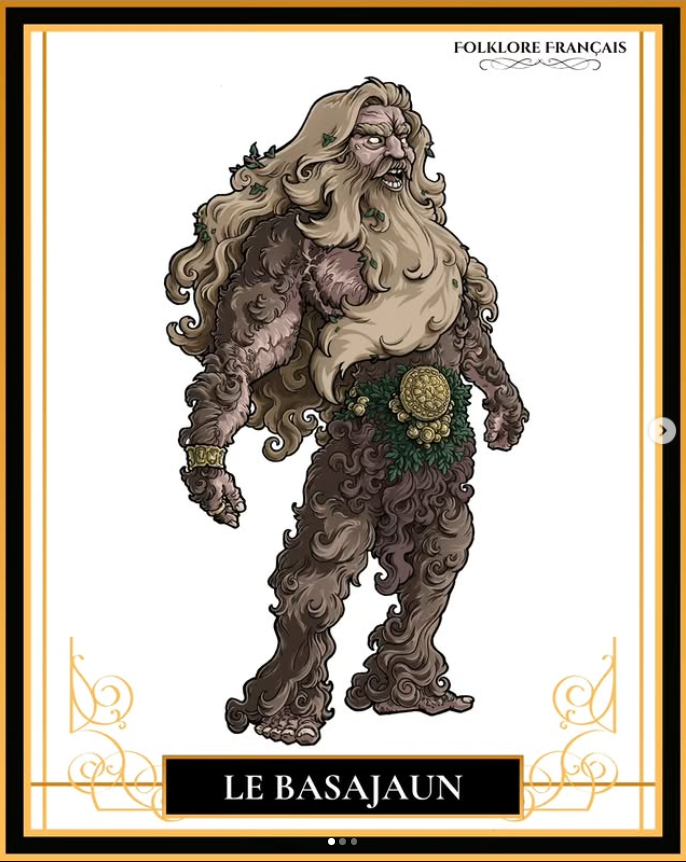
In the Basque Country, certain natural excavations are known as cisterns. These depressions in the ground, generally circular in opening, are striking because of their size and structure. Although descriptions remain imprecise, traditions report that they are vast enough to contain entire castles. Located on mountain slopes, these cavities may extend into long underground passages before opening out at another exit far from the main entrance. Their relatively sloping walls would allow people to move within them and even to exit without great difficulty.
These underground places were, according to tradition, inhabited by male figures known as Basa-Jaun, literally “wild lords.” Feared by the inhabitants of the surrounding area, these beings were reputed for their dangerous behavior, particularly toward women. They were said to watch for them, abduct them, and keep them in their underground dwellings.
One of these Basa-Jaun, named Ancho, one day surprised a shepherdess tending her flock near Elhorta. He abducted her and took her into his cistern, where she remained for some time. Later, she was seen at “Ancho’s hole,” located two leagues away, at the far end of the cavity. The inhabitants of Béhorléguy noticed that she spent her time arranging the hair of the wild lord. Determined to rescue her, they went there carrying a cross and sacred objects. Thanks to this intervention, they managed to free her. But as she was leaving, Ancho—forced to yield to a higher power—gave her one final piece of advice: to look back upon reaching her home. She obeyed… and immediately fell dead.
Another story tells of a Basa-Jaun who abducted a young girl from her family. The two of them lived in a magnificent castle at the bottom of a cistern. Each morning, by the light of a candle, the young woman would climb up to the entrance to comb her hair. A shepherd, having seen her, fell in love with her. After telling his story to his companions, they decided together to rescue her. When he spoke to her, she confirmed that she had been abducted and was living there against her will. They then devised a plan: the next morning, at a specific hour, she would stand at the entrance of the cistern. She kept her word. Taking advantage of the Basa-Jaun’s sleep, she fled with the shepherd, escaping her captivity forever.
15. Haunted Precipices
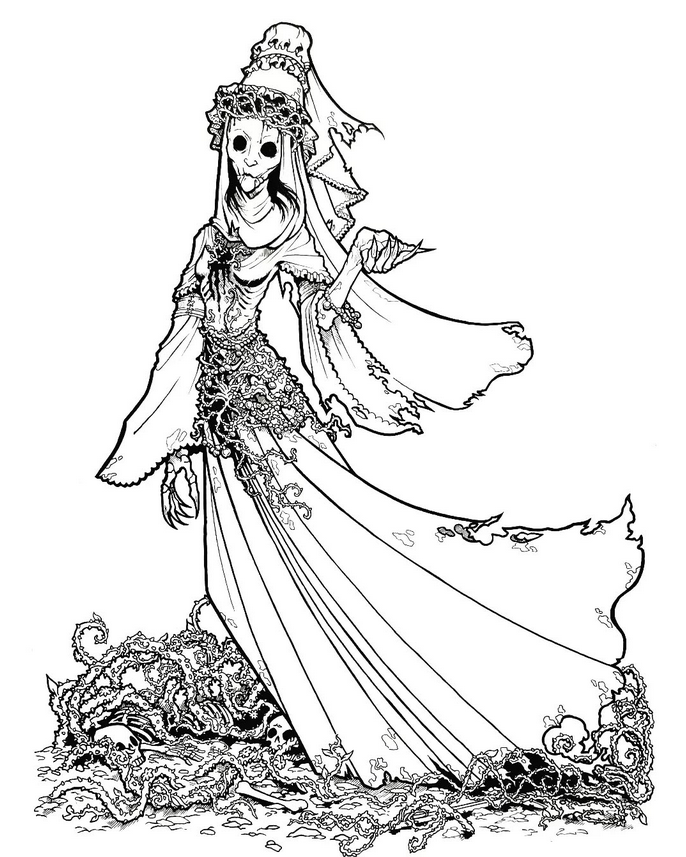
In Franche-Comté, chasms, crevices, or hard-to-reach precipices were often described as haunted, particularly to discourage children from approaching them. Stories passed down by elders maintained this fear, blending caution with imagination.
On the common land of Latette, a strange apparition is said to have been seen several times. On Sundays, at the moment of the elevation, a great lord on horseback would descend from the sky, borne on a cloud. He would then fly over the abyss before plunging into it. A troubling detail recurs in the accounts: this figure is said to have a goat’s foot.
At times, another figure appears at the edge of these precipices: a beautiful white lady. She wanders there, plays near the void… then ultimately throws herself into it. Yet when one descends to the bottom of the crevasse, no trace of a fall is ever found, deepening the mystery surrounding these apparitions.
Near Amancey, a deep chasm also draws attention. Usually dry, it fills with water during heavy rains. But according to tradition, it does not contain water alone. At certain times, especially on the eve of major feast days, this chasm is said to become populated by invisible goblins. These beings produce a distinctive sound, similar to the rolling of a drum. It is this phenomenon that is believed to have given the place its name, Tambourin. These goblins, it is said, thus express their anger as human celebrations approach.
16. Mardelles
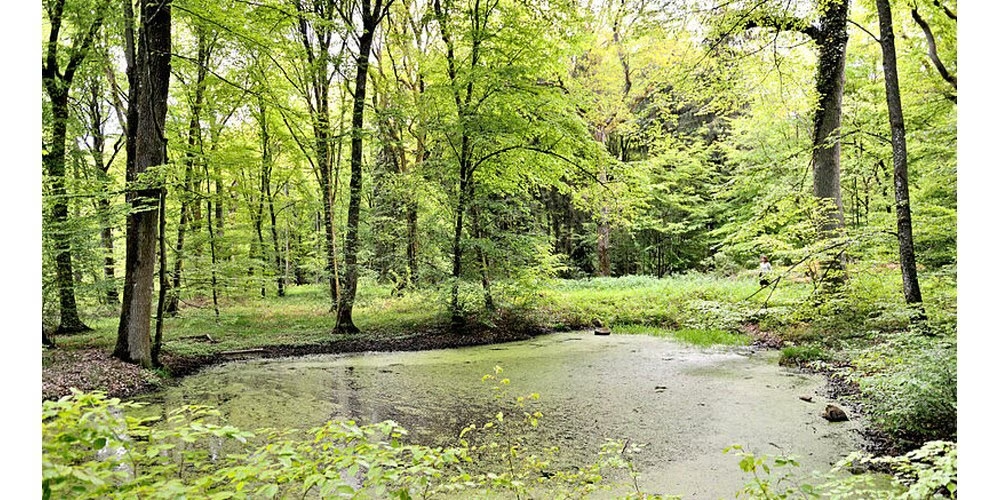
The ground is sometimes marked by open-air excavations, some of which are reputed to be of impressive depth. Although they do not lead directly to the infernal world, these natural formations have long fueled the collective imagination. They often take the form of gigantic pits or fissures considered bottomless.
In local beliefs, these openings are not seen as mere features of the landscape. The inhabitants of the surrounding areas associate them with the presence of supernatural beings. For fear of encountering these spirits—who are said to dwell in these depths or guard their entrance—many avoid approaching them at dusk, and sometimes even in broad daylight. Some formations, such as mardelles, descend only a few feet into the ground. Despite their shallow depth, they are the subject of similar beliefs.
In Berry, peasants regard certain mardelles with genuine superstitious fear. These intriguing formations, visible especially around Châteauroux and Issoudun, have attracted both scholarly interest and popular imagination. An archaeologist describes them as numerous excavations shaped like inverted cones, with contours so regular that they seem to have been fashioned by human hands. Tradition, moreover, considers them to be very ancient. Mardelles display several remarkable characteristics:
- rainwater does not accumulate in them, despite the clay soil
- no trace of the excavated earth can be seen nearby
- their structure suggests that they were deliberately dug
These cavities, also called margelles or simply marges, resemble true wells whose origin remains mysterious.
Some mardelles are particularly feared, to the point that inhabitants avoid approaching them at night. Several bear evocative names, such as: Fairy Hole, Wolf Pit, or Devil’s Hollow. According to belief, these places then become gathering points for supernatural beings: fairies, sorcerers, and werewolves. In the commune of Saint-Pierre-de-Jards, where fourteen mardelles are counted, one of them is even said to be visited by the devil. He is believed to wander there at certain times of the year in a grand carriage drawn by six black horses, breathing fire from their nostrils. A dominant figure in these legends, the devil has given his name to several of these sites, notably the Devil’s Hollow in Venesmes, in the Cher.
Not all stories connected to mardelles are so dark. In Allouis, in the Cher, a fairy was once said to appear by moonlight near the Spinner’s Hole, also called the Hemp-Beater’s Hollow. A steady sound could be heard there, similar to that made by women beating hemp in farmyards. This mysterious rhythm reinforced the impression of an invisible presence, active in the darkness.
Some mardelles are also associated with religious traditions. An annual pilgrimage takes place at the Holy Mardelle, where Saint Fausta is said to rest. According to legend, after her relics were stolen from the parish church, the thieves were struck by terrible pain. They then abandoned the saint’s body, which rose and went by itself to be buried at the bottom of the mardelle.
Like many other places of mysterious nature, certain excavations are believed to contain treasures: fairies have placed their riches in several very deep wells in a plain near Dieppe ; they often appear there, dancing nearby to enchant their vigil. A golden calf has been hidden in a kind of partially filled mardelle called the Lady’s Well, in Saint-Moré near Vézelay.
It is said that, according to many legends, bells lying at the bottom of the waters can be heard at certain times of the year; it is rarer still for these chimes to rise from beneath the very ground itself: however, in Vendée the bells of a church buried beneath the earth under circumstances now forgotten begin to ring at midnight on Christmas Day.
17. Tales in which heroes descend into the underworld