Forests: from their fairy-like births to their cataclysmic disappearances
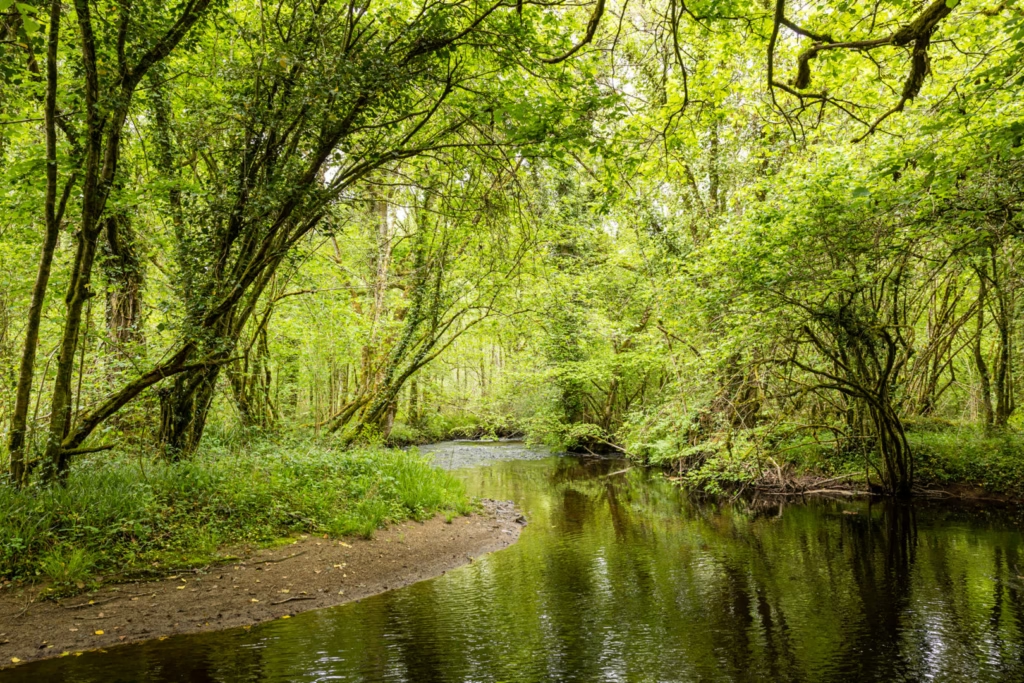
The Léguer, a river in the heart of the Coat-an-Noz forest, Côtes-d’Armor, photo by Emmanuel Berthier
1. Fairies or saints creating forests
Saint Eusebia, engraving from the Diocese of Cambrai
Forests, mysterious and unchanging, seem to have always been part of the landscape. For the inhabitants of the mountains and countryside, they have existed since the origins of the world, just like the sea or the rocks. Rare, then, are the stories that recount their creation. Yet, some traditions from regions of France and Belgium speak of woods born from the benevolent hands of fairies or saints, miraculously sown in the heart of the earth.
Near the Haute-Sève forest, in Ille-et-Vilaine, legend tells that once there stretched fertile fields, covered with wheat and oats. The Wandering Jew, passing through, remembered crossing these golden fields long before the ancient oaks raised their majestic forms there. According to the elders, it was the fairies themselves who made the forest appear. After building the castle of Montauban-de-Bretagne, they wished to give their creation a crown of shade and coolness. Thus was born the Haute-Sève, an enchanted forest, born of a magical gesture.
Other accounts attribute this creative power to saints. In Hainaut, near Battignies-les-Binche, the Bois de Prisches once belonged to the abbey of Saint-Rictrude of Marchiennes. At that time, it was just a simple thicket, until the day when Saint Eusébie, the daughter of Saint Rictrude, appeared with her sleeve full of acorns. She scattered them in the surrounding fields, and it is said that "the earth, by nurturing them in her womb, soon produced a new forest." From these blessed seeds grew the "Bois aux pelisses," a reminder of the cloak from which the saint took the miraculous acorns.
Further west, in Finistère, tradition holds that in Cranou, the hermit saint Saint Conval was welcomed by a poor but generous lord. To build his hermitage, the man offered him clods of earth, as there was no wood available. Touched by this kindness, the saint blessed the place. Immediately, a magnificent forest began to grow all around. Saint Conval then proclaimed: "There will never be a lack of wood in the forest of Cranou."
And, since that day, wood has never been lacking.
2. Forests growing after cataclysms
The hermit's forest in the Forest of Blanchefort, Corrèze
In the heart of the Limousin, it is said that the Forest of Blanchefort covers the ruins of the ancient city of the same name. Once, Blanchefort (adjacent to the current prefecture of Tulle) was a prosperous town, populated by rich and carefree inhabitants. One stormy evening, a weary traveler knocked on their doors seeking shelter. Everywhere, he was turned away without mercy. Only an old woman, living in a miserable hut with her goat, offered him refuge. No sooner had he crossed the threshold than the rack filled with bread, and bottles of wine appeared on the table. The stranger then revealed his true identity: it was Jesushimself. Before leaving the cottage, he said to the woman:
“Follow me quickly, and you will escape the punishment of your fellow citizens. But above all, do not look back as long as you can still see the city.”
They left together, the woman pulling her goat behind her. But no sooner had they reached the other side of the hill than a terrifying crash echoed. Frightened, the goat turned around — and was turned into a block of stone, which is still shown today at the Puy de la Roche. As for the city of Blanchefort, it vanished under a blanket of greenery:
“A forest grew to hide the ruins of the wicked city.” (see caption)
Over time, other forests have vanished under the hand of man, cleared to feed growing populations. But some, on the contrary, were swallowed up by sudden cataclysms: earthquakes, floods, or collapses. The memory of these vanished woods has faded from the landscape, but popular memory has preserved traces of it through stories. In tradition, the forest becomes a symbol of purification, covering places of sin to give new life, under its branches, to a redeemed land.
3. Punishments for Those Who Violate the Prohibition
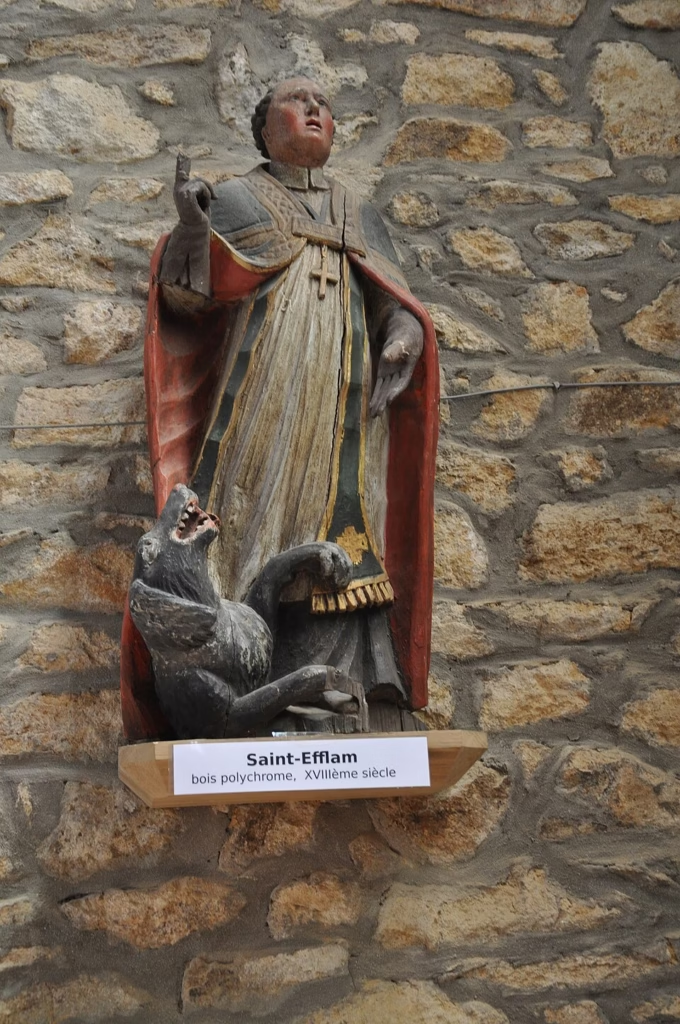
Saint Efflam (7th century), polychrome wooden statuette, Church of Carnoët (Côtes-d’Armor), 18th century
In his famous description of the Marseille forest, Lucan reports that the Gauls never dared to cut the trees, and that even the Romans carried the axe with fear. Local inhabitants claimed that the axe would strike anyone who dared commit the sacrilege:
“But strong hands trembled, and moved by reverence for the majesty of the place, if they struck the sacred oaks they believed the axe would return to their own bodies.”
Felling a sacred or protected tree could bring terrible consequences, sometimes of a supernatural nature. Around 1840, a lumberjack, acting on repeated orders from the forest administration, cut down the Married Oak, near which vows were traditionally exchanged. Legend has it that he was punished shortly thereafter, dying after falling from the top of a poplar he was pruning.
Before 1830, a now-vanished forest sheltered a dozen enormous oaks, called the Blessed Oaks. People would visit them in procession and on pilgrimage, and several were adorned with crosses and Madonnas. On Saint Peter’s Day, people even danced at their feet. Around 1832, the administration ordered the felling of these sacred trees. The women of Cuse, considering this decision an act of impiety, sadly said:
“They have cut down our Blessed Oaks, we will have poor harvests.”
The old women claim that after this event, the harvests and grape harvests were never as abundant or as beautiful as before.
In Switzerland, every village exposed to avalanches is protected by a rescue forest, designed to stop landslides. An old shepherd suffered paralysis of the hand for attempting to cut a branch. The tree’s sap flowed uncontrollably, as if it could not be stopped.
Each year, on the anniversary of this act, the shepherd hears a terrifying racket: the forest’s herd goblins avenge the trees. By morning, the goats and sheep bear a bloodstain, which he must erase with soil taken at midnight, from between the roots of the transgressed tree.
At the beginning of the 19th century, a oak in the Vernon forest was threatened with felling. A lumberjack assigned to the task refused to cut it down without additional axes, as ten had already broken in attempts to bring it down. In the end, the oak was spared.
n Saint-Michel-en-Grève, the trees of the submerged forest, revealed by the sea after storms, were so revered that, according to the Latin legend of Saint Efflam, no one would dare to cut a single one or take a rotten branch.
In the past, one could encounter traces of tree worship. These practices often focused on isolated or specific trees, rather than on the entire forest. Paul Sébillot covers this topic in detail in his chapter on Trees, to avoid redundancy.
4. Gargantua, Destroyer of Forests
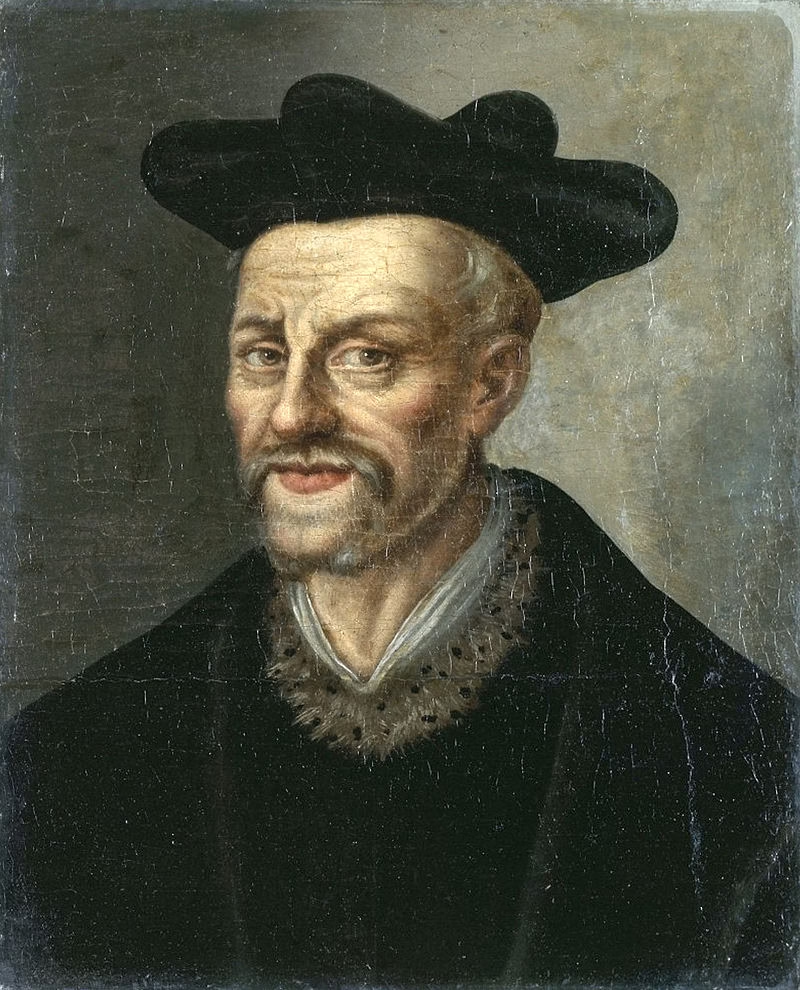
Anonymous portrait of François Rabelais displayed at the Palace of Versailles.
In the vicinity of Saint-Malo, popular memory attributes the disappearance of several forests to a figure as gigantic as legendary: Gargantua. This hero of French tradition, immortalized by Rabelais, is said, according to Breton tales, to have transformed the landscape of the northern coastline.
It is said that one day, Gargantua wanted to build an immense ship. To obtain the necessary wood, he used his colossal cane and uprooted with a single swipe the forest that stretched across what is now the bay of la Fresnaye. The bare ground, stripped of its trees, gradually transformed into this cove opening onto the sea, now bordered by Fréhel and Saint-Cast.
Another legend tells that the giant, in a burst of comparable strength, felled the forest that covered the peninsula of Fréhel. This story recalls a famous episode from Pantagruel by Rabelais, where Gargantua's mare, by flicking her tail, overturns part of the forest of Orléans. Here again, popular imagination blends humor, nature, and exaggeration, turning the giant's actions into poetic explanations of geography.
5. Places where forests grow poorly
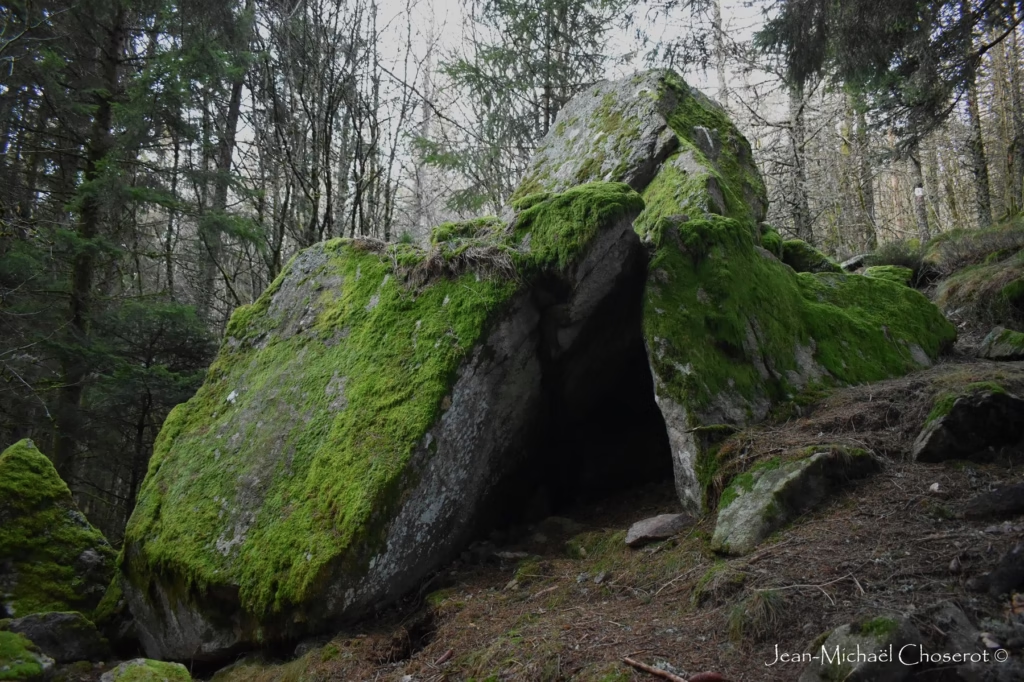
The Fairy Rock, lair of the terrible Fairy Agaisse (Photo credits: Jean-Michaël CHOSEROT for the BLE Lorraine Group)
In the Bois du Val, in Côtes-d’Armor, the trees have never regrown where Gargantua is said to have opened his path. The giant, according to tradition, would have uprooted the trees blocking his way with a single motion, leaving the land barren forever. This scar in the landscape remains to this day a living reminder of the mythical power of the colossus.
Further south, in the Bois de Coat-an-Harz, it is said that the words of a saint condemned the forest to sterility. Saint Leyer, who came to settle there to build a house of penance, had felled some oak trees without permission. The lord of the land, furious, chased him away, accusing him of causing the loss of precious wood for his carts. The saint, outraged, then uttered these legendary words:
"Since this is how it is, never again will one find in the Bois de la Haie the wood to shape a shaft!" Since then, the trees there remain dwarfed and misshapen, as if frozen under the curse.
In the Vosges, the forest of Rapaille also holds a strange tale. Every year, on the first Friday of the first moon following Trinity Sunday, the Fairy Dame Agaisse would visit these woods. Her piercing cry, similar to that of a magpie, announced her arrival. As she passed, men, beasts, and even the trees would bow to pay homage to her. But one day, the oaks of Hennefête refused to bend. Offended, the fairy flew into a dark rage and cast an eternal punishment: these proud trees would now be small, weak, and sickly. Centuries have passed, but the curse of Dame Agaisse still hangs over the forest (see legend).