What is the earth, according to French folklore?
1. Its original nature
In the countryside, the shape of the Earth concerned peasants much less than the nature of the sky. Their curiosity often remained limited to the particularities of their immediate environment: hills, valleys, rivers, or unusual rocks. Few questioned the whole globe, and even fewer pondered its place in the universe. Folk tales collected in Brittany and elsewhere mostly reflect a local vision, where the horizon represented a natural and almost impassable boundary.
The enquêtes menées hors de Bretagne – souvent concordantes avec celles de la région – donnent un aperçu assez homogène de ces croyances rurales. Selon ces conceptions :
2. Popular beliefs

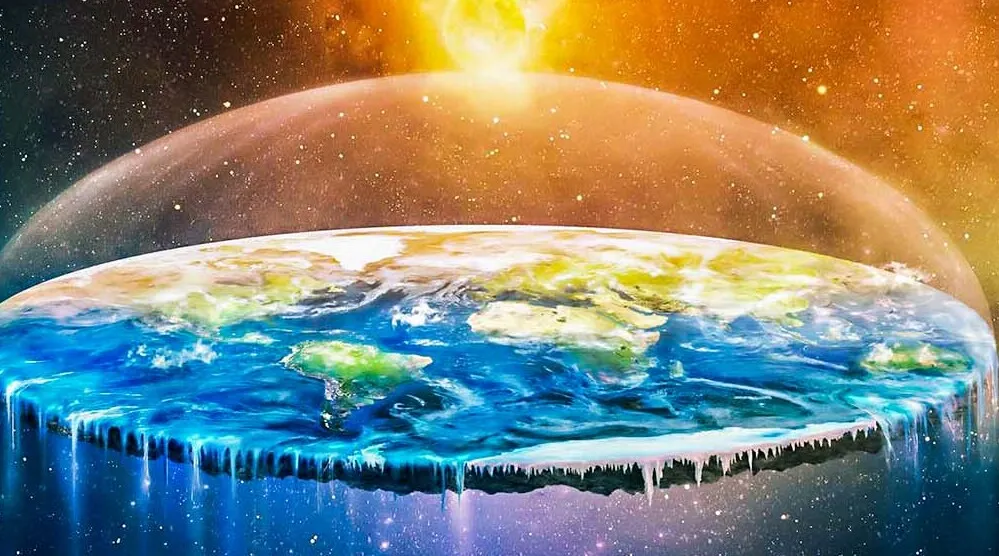
In the French countryside of the 19th century, many still ignored the revolution of the Earth. They remained faithful to the ancient belief that made it the immovable pivot of the universe. When told that the Earth was actually just a tiny speck in the vastness, smaller than many stars, some thought they were being mocked. The idea of a spinning globe seemed even more absurd: “If that were true, people would be walking upside down,” they said. This objection was not unique to France: peoples such as the Kamchadales made the same remark.
A widely shared idea held that the Earth is surrounded by the sea. In the Mentonnais, some went further and supported a theory similar to that of the philosopher Thales: the Earth would float on water like a ship. Others claimed that it rested on pillars. This vision is also found in Brittany in a legend according to which the city of Quimper is built on four elderberry columns.
Traditions about the origin of the globe, present among many peoples, seemed absent in France. Christianity had likely erased these stories, leaving only the biblical explanation of Creation. However, in Brittany, a nuance remained: God would have shaped the Earth, while the Devil, in contrast, would have created the waters in an attempt to submerge it.
Stories of changes after Creation are rare. A legend from Albret tells that the Earth was once flat "like a park" until a flood. When the waters receded, they left behind valleys, hills, lakes, and mountains. According to this belief, the Earth will become flat again at the end of time.
These popular ideas about the Earth reflect a rather vague general vision with little scientific interest. However, when it comes to landscapes, rivers, rocks, or natural phenomena, the traditions are countless. It is in these local stories that the full richness of the peasant imagination is revealed.
3. Regional particularities
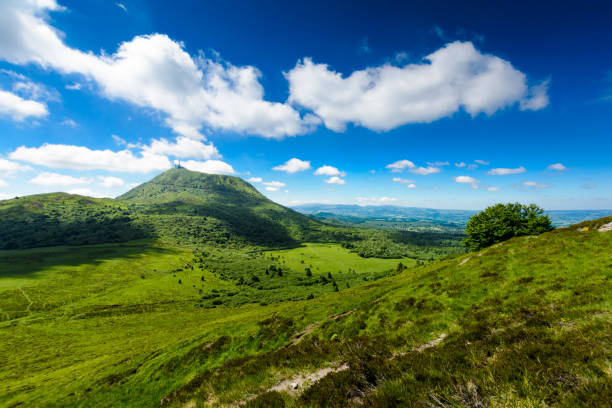
Popular explanations about the configuration of regions are rare, but they are full of imagination. In the Nivernais, it was said that Berry became a flat land thanks to the intervention of the giant Pousse-Montagne. He would have passed shortly after Gargantua, and in order to flatten the land, he filled the hollows left by the footsteps of the colossus with earth. This vision aligns with the playful imagination that La Fontaine portrays in one of his texts to explain the uniform appearance of the Beauce. Once again, the idea plays on a contrast between vast plains and neighboring mountainous regions. Here is an excerpt from this poetic version:
« La Beauce avait jadis des monts en abondance,
Comme le reste de la France ;
Mais ses habitants demandèrent au Sort
… de leur ôter la peine
De monter, de descendre et de monter encor… »
"The Beauce once had mountains in abundance,
As did the rest of France;
But its inhabitants asked Fate
… to spare them the trouble
Of climbing, descending, and climbing again..."
The Fate, a bit mocking, granted their wish in its own way: the mountains disappeared from the landscape, but the inhabitants became hunchbacked. And since the displaced mountains had to be placed somewhere, Jupiter decided to settle them not in Touraine, but in Limousin.
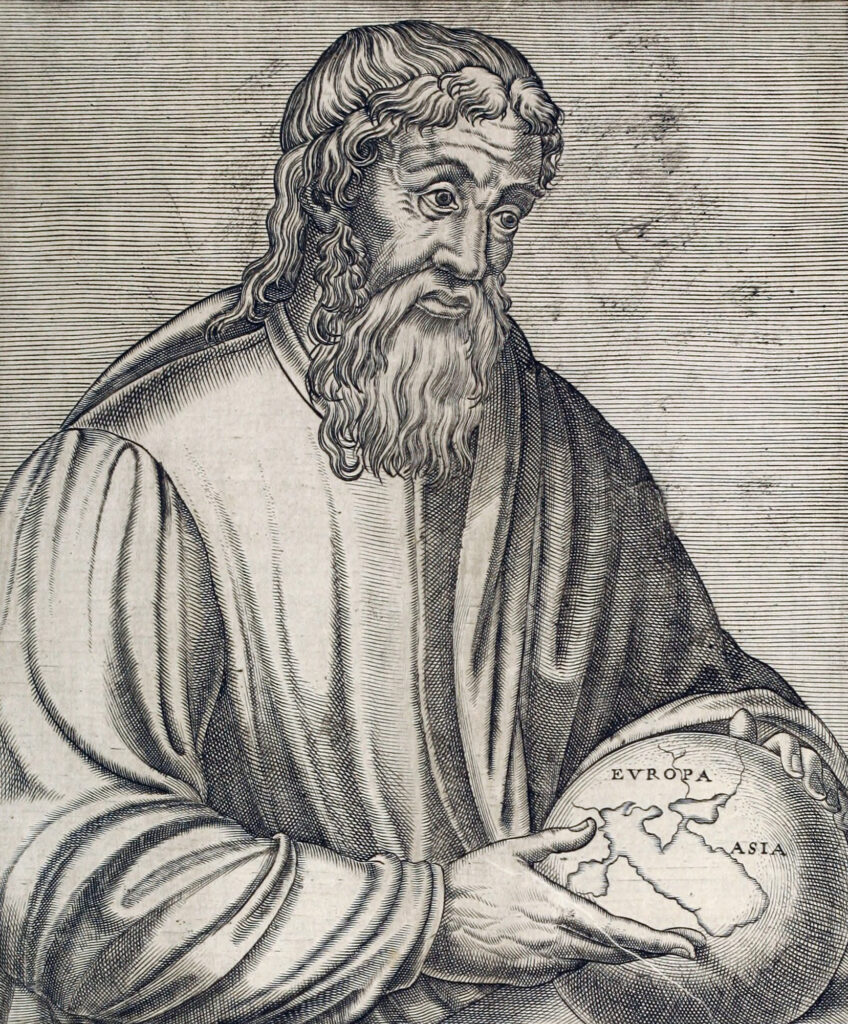
In other regions, it is the desolation of the land that has inspired legends. According to Strabo, in his book Geography, authors such as Aristotle and Posidonius offered rational explanations for the particular desolation of the plain of Crau; however, the memory of a fable by Aeschylus turned a simple remark into a future belief. Here’s what Aeschylus wrote:
« Puis tu rencontreras l’intrépide armée des Ligyens, et, si grande que soit ta vaillance, crois-moi, elle ne trouvera rien à redire au combat qui t’attend : à un certain moment (c’est l’arrêt du destin) les flèches te manqueront, sans que ta main puisse trouver sur le sol une seule pierre pour s’en armer, car tout ce terrain est mou. Heureusement, Jupiter aura pitié de ton embarras, il amassera au-dessous du ciel de lourds et sombres nuages, et fera disparaître la surface de la terre sous une grêle de cailloux arrondis, nouvelles armes qui te permettront alors de disperser sans peine l’innombrable armée des Ligyens. »
"Then you will encounter the fearless army of the Ligurians, and no matter how great your courage, believe me, it will find nothing to oppose the battle that awaits you: at a certain moment (this is the decree of fate), your arrows will fall short, and your hand will not find a single stone on the ground with which to arm itself, for all this land is soft. Fortunately, Jupiter will take pity on your predicament, he will gather heavy, dark clouds beneath the sky, and make the surface of the earth disappear under a hail of round stones, new weapons that will then allow you to easily scatter the innumerable army of the Ligurians."Strabon, Géographie, livre IV, chapitre 1, §7


Leave a Reply