Wonders, Legends, and Treasures of Fabulous Rock Formations

1. Vegetation on Stone
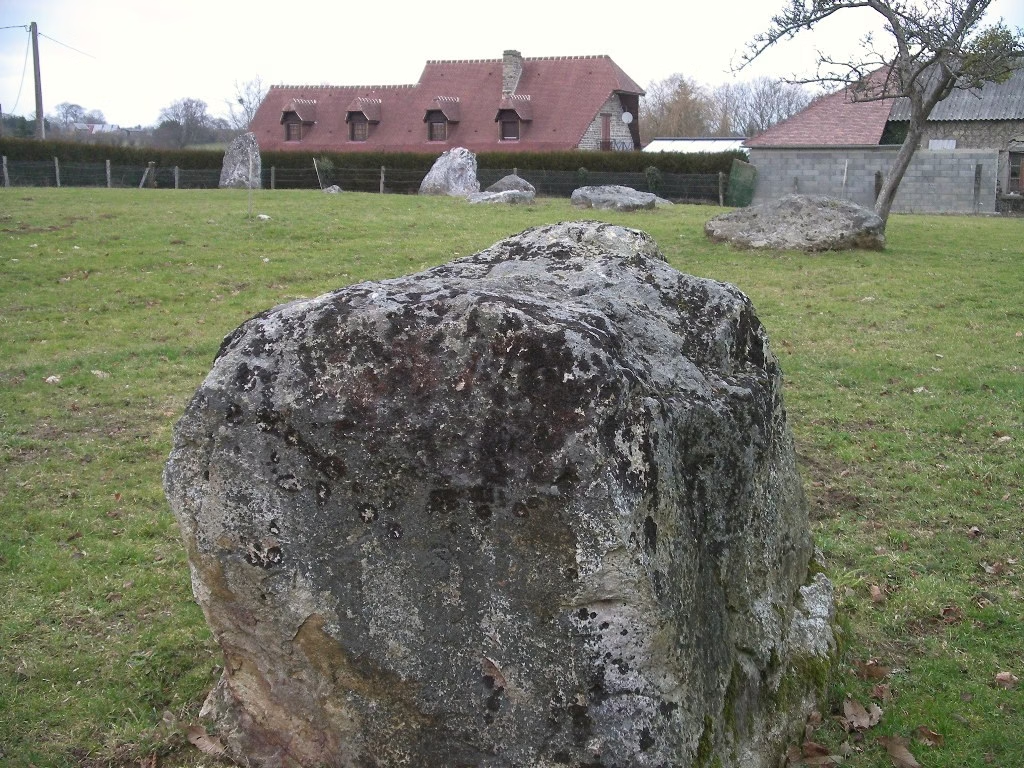
Il est dit que les pierres pouvaient autrefois pousser. En Upper Brittany, par exemple, elles conservaient cette capacité tant que leurs racines restaient dans la terre. Selon la légende, Dieu a interrompu leur croissance, de peur qu’elles ne couvrent entièrement le sol et empêchent les semences destinées à nourrir les hommes de pousser.
In the Norman bocage, many former stonemasons claim that stones retained this privilege until the moment when Saint Peter enchanted them. The veins visible in certain blocks are said, according to them, to be the channels through which sap once flowed, allowing these stones to grow. In Poitou, it is said that some rocks continued to grow until the day their growth was abruptly halted. This explanation is used to make sense of their current state: some stones have reached their maximum size, while others seem to be only just emerging from the ground.
In the Norman Bocage, many former stonemasons claim that stones retained this privilege until the moment when Saint Peter cast his spell on them. The veins visible in certain blocks are said, according to them, to be the channels through which sap once flowed, allowing these stones to grow. In Poitou, it is said that some rocks continued to grow until the day their growth was abruptly halted. This explanation helps account for their current condition: some stones have reached their maximum size, while others appear to be only just emerging from the ground.
It is, however, easy to understand these observations: many stones appear on the sides of hills. Rain, by washing away the light soil around them, can gradually expose them and give the impression that they have actually grown.
2. Animism of stones
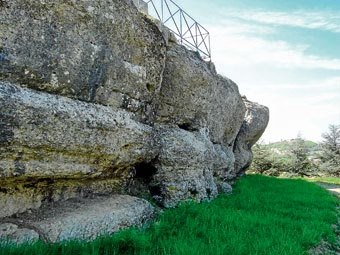
On the Montceix Plateau, three peaks each bear the name of a saint: Saint Nicholas, Saint Giles, and Saint Anne. According to local legend, these saints regularly met for secret councils. On one occasion, it is said, Saint Anne left her vigor to visit her brother, the Bishop of Clermont. To find her way back, she scattered grains of mica behind her, which turned into enormous blocks of granite, still visible today. A 17th-century traveler recounted a tradition surrounding the famous stones of Nerouse (today Naurouse):
A woman named Nerouse, passing through this place with seven small stones in her apron, threw them separately as far as she could and declared that they would grow and come together when women had lost all modesty.
The stones that can be seen today are immense, with a circumference of more than four fathoms, and almost close enough to touch.
A more recent version tells:
“I am Naurouse — and I will build Toulouse.”
But since Toulouse already existed, the passerby threw the stones, saying:
“These stones will grow — and when they touch, the end of the world will have come.”
According to the old local storyteller, the stones continue to grow even today. Some legends, less region-specific, attribute to the stones a true life and consciousness:
To reach a fountain with healing waters, one must pass between two enormous rocks that clash like rams in combat. Jean the Soldier, armed with a small staff bearing the inscription:
“Whoever holds me will pass through the rocks.”
He presents the staff, and the rocks then become motionless.
In Brittany, a little boy observes two rocks by the roadside that clash with such force that sparks and fragments of stone fly. On his return, he learns that these rocks were two enemy brothers, condemned to fight eternally.
3. Stones that open

Stones would miraculously open to protect persecuted heroines. After sheltering these women, they would return to their original appearance, as if nothing had happened. A maiden named Diétrine, pursued by a malicious hunter, found herself before a block now venerated: “Ah! stone, if only you would open and hide me in your bosom!” Immediately, the stone split open, received the young girl, and closed so perfectly that it still conceals her today.
In Sion-Vaudémont, a large rock opened to shelter a princess about to be caught by a seducer. She leapt into the void, and it is said that her cries can still be heard. In the Velay, a similar story involves a young girl pursued by her father, armed with a knife. As he was about to seize her at the foot of a rock, it opened and let her in, closing immediately behind her. As for Saint Odile, fleeing her father and the fiancé she had rejected, she fell to her knees on a rock, asking God to protect her. The rock partially opened and hid her until her pursuers gave up chasing her.
In the Valais, a stone known as the Angel’s Stone served as a refuge for a pilgrim stripped by brigands. She threw the child she was carrying against the rock, which split into four and allowed the baby to pass through. According to legend, an angel came to take him in its arms and carry him to heaven.
4. Moving rocks

Large stones are not only immobile: legends attribute to them the ability to move, to take revenge, or even to speak. The locals ascribe to the rocks the power to punish those who disrespect them. George Sand, in Contes d’une grand’mère, recounts the story of the rock called the giant Yéous, at the foot of the Pyrenees, which collapsed on a shepherd who wanted to destroy it and buried him under its debris.
Some legends go further and attribute speech to stones. Thus, at the request of Saint William, the rock of Lourdes rolled over the devil who was escaping along the Tarn riverbed. The rock of the Aiguille, located opposite, worried for its brother and shouted to him:
“Brother, do I need to come down?”
— “Oh no! replied the other, I’ve got him well.”
Folk beliefs about the movements of stones are close to those surrounding true megaliths. They turn, go drink at the river, or reveal the treasures they cover. Before these abilities were attributed to monuments, they were often ascribed to wandering or emerging stones. Several rock names testify to this animism:
Other rocks associated with witches or traditional festivals turn at specific times:
Even place names preserve the memory of these dancing stones:
5. Stones that go to drink
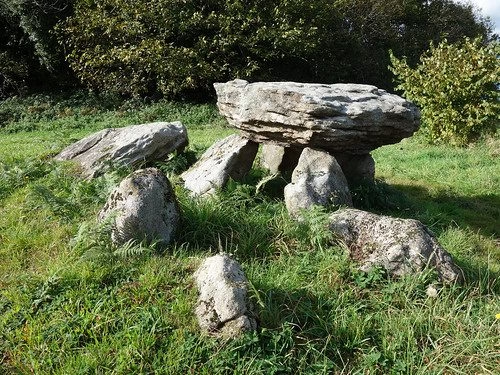
Some stones, like megaliths, are said to move to quench their thirst in streams and rivers. These legends, often linked to festivals and natural cycles, reflect the animism attributed to rocks. Every year, at Christmas, to the sound of the midnight bells:
Some rocks, notably amphibolite stones, produce a sound similar to that of bronze when struck with metal or a pebble. Among them:
These legends sometimes mingle with tragic and romantic stories:
These are the tears of the lady of Paladin Roland, invisible and inconsolable, who will weep for her beloved until Judgment Day, killed not far from there while trying to make his horse leap from one side of the valley to the other.
6. Fateful stones
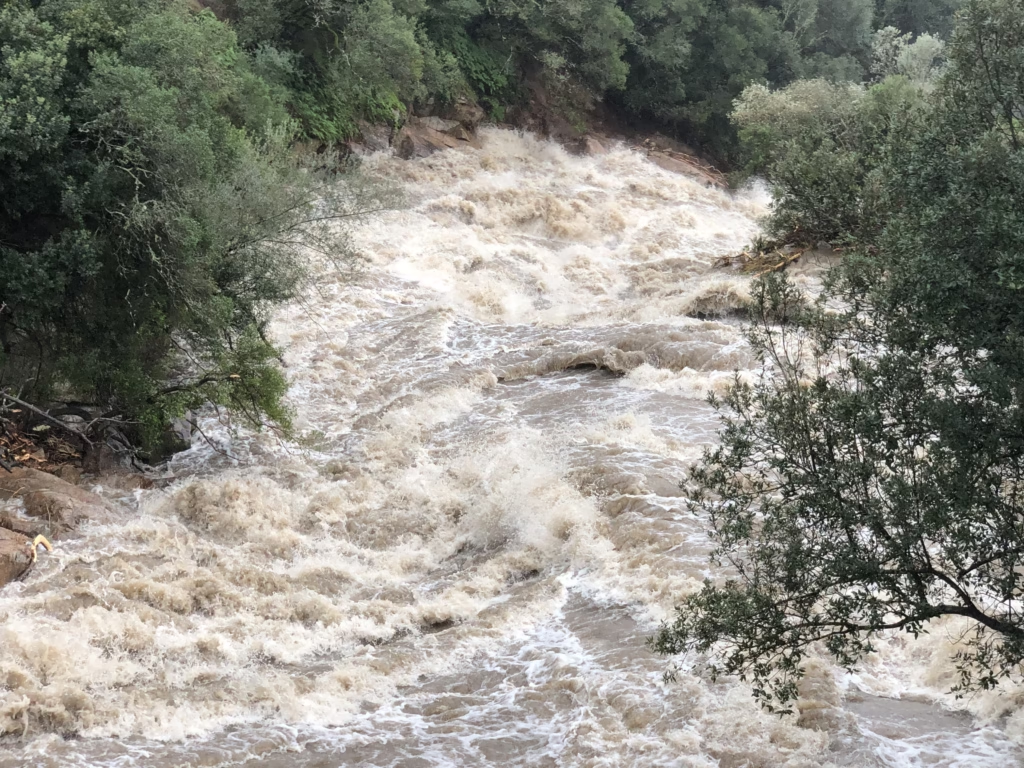
Some rocks are considered witnesses to the fate of the world: in Pleine-Fougères, the legend says, “When the Roche-Biquet falls, the world will end.” The Dripping Stone is also reputed to herald the Last Judgment. Near Villefranche (Haute-Garonne), the stones of Naurouse will continue to grow until the day their cracks close, signaling the end of the world.
It is believed that throwing stones into the cracks or driving in iron stakes can prevent the blocks from coming together. According to the elders: in a century, the stones of Naurouse have drawn so close that a large man can barely pass between them, whereas a rider could move through easily a hundred years ago.
Some stones play a protective role, preventing floods:
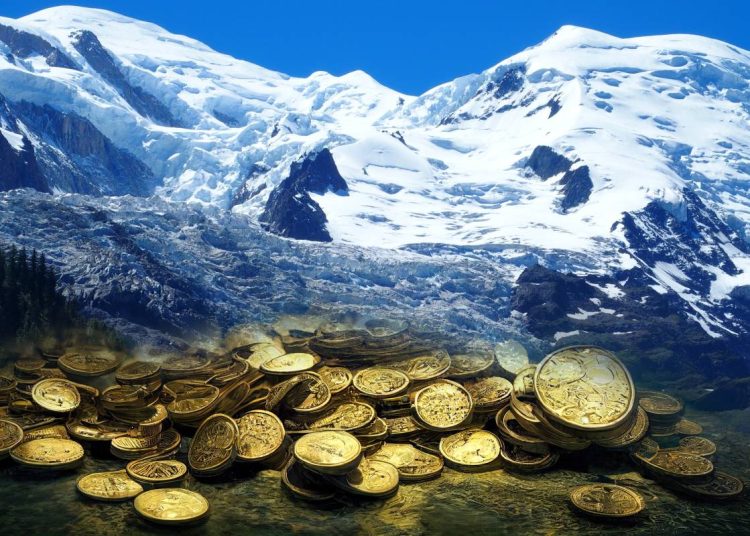
7. Inscribed stones hiding treasures
A Béarnese saying refers to a sum, modest but precious, buried beneath a rock:
« Qui Pèyrédanha Ihebara. Cent esculz y troubara. »
The stone only opens on Palm Sunday, when the procession enters the church and the priest sings l’Attolite portas. At that precise moment, a large black serpent, guardian of the treasures, emerges from the rock and goes to drink at the Fairies’ Fountain.
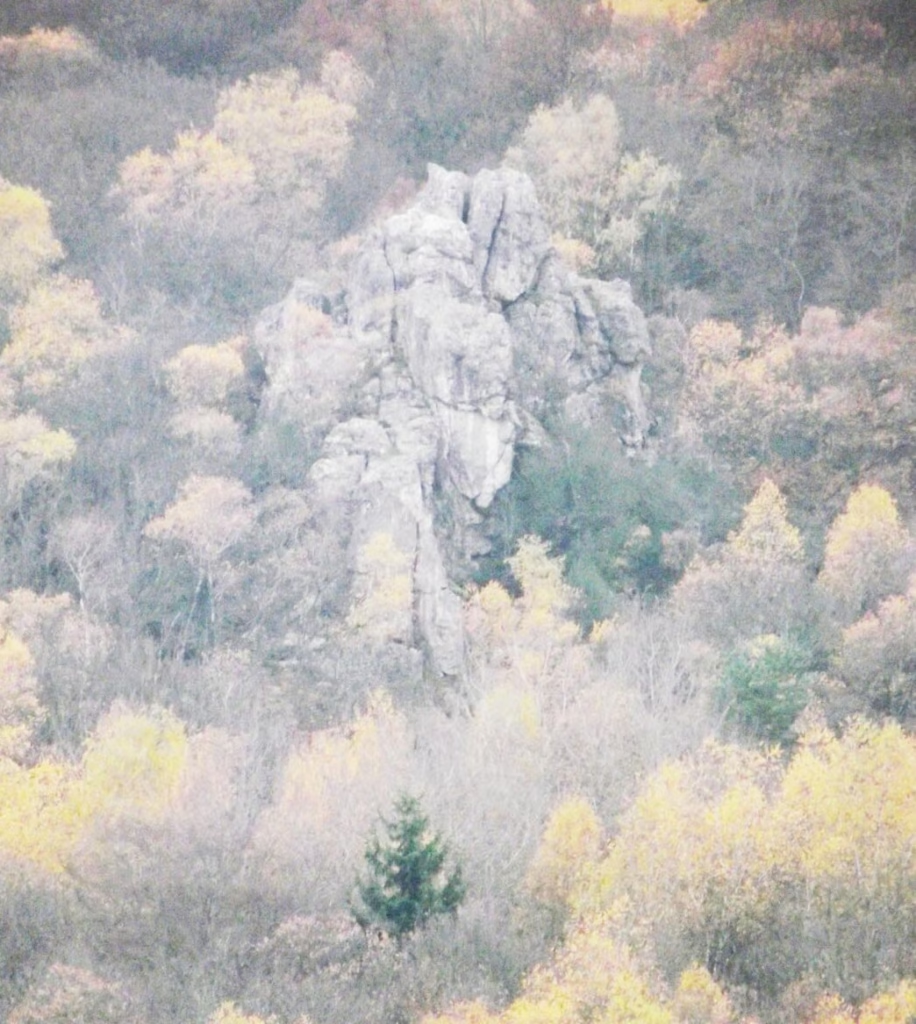
At the summit of La Roche du Jardon, a rocking stone in the commune of La Grande-Verrière, there is a wobbling stone called the “Balle” because of a shape reminiscent of the mannequin carried by traveling peddlers; at its very base, in a depression, emerges a small spring, called the Fairies’ Fountain, and a few steps further, another, much more beautiful, which enjoys no recognition. This rock is said to be the safe of immense riches, as this saying claims (more details on mondelégendaire):
“The Roche du Jardon is worth Beaune and Dijon."
In Langon (Ille-et-Vilaine), the Beillons de Fouesnard were reputed to hide treasures: to read their inscription, one had to have made a pact with the devil. In Bosquen (Côtes-d’Armor), a large stone bore the inscription: “Whoever turns me will win.” Those who turned it often read: “Whoever turned me has won nothing!” A bolder man broke the stone after loading it onto his cart, proclaiming: “Win or not, witch, you will come to my house!” The hollow stone contained gold.
In the 16th century, an abbot of Vienne attempted to turn an inscribed stone: “Whoever turns me will have great treasure.” But on the back, he read: “Virierje me veliens, parce que me doliens”. In Languedoc, treasure hunters turned a block and read: “Vira mé vouliéi, qué d’aquel cousta me douliêi.” In Boussac, the locals turned the largest stone, the jaumâtres or jomâtres, and discovered the inscription: “Torner mi volint Car lou couté mi dolint.” “They willingly turned me, for the side was causing me great pain.”
In Guernsey, a stone at Saint-André displayed: “Whoever turns me will not waste their time.”
But after the effort, one would read: “I wanted to turn, for I was weary.” In Béarn, the Cassières Stone bore: “Hurous sèra qui-m birera.” A giant eventually turned it and discovered: “Ja, b’at disi, qué bira qué-m bouli.” “Yes, I was saying that I wanted to turn.”
Some stones rarely open, revealing cavities filled with gold and silver:
At Saint-Mayeux (Côtes-d’Armor), a witch is said to climb the stair-shaped rocks to heap up her riches at the moment when midnight strikes.
In 1829, a quantity of coins was discovered near a large footprint-marked stone in the Bay of Pleinmont. Some inhabitants, convinced that the bulk of the treasure lay beneath the rock, decided to brave the danger threatening those who disturb stones placed by fairies. They worked all morning to dig and attempt to overturn the stone. At noon, they stopped their labor, and when they returned an hour later, the stone was as firmly fixed as ever, resisting all their efforts.
Although some stones shelter figures buried nearby or beneath them, it is rare for them to be regarded as official tombs. According to tradition, a queen is said to have her tomb beneath the enormous natural block known as the Gros Chillon at Luzé.
8. Children emerging from stones

Leave a Reply