One of the most intriguing rites is the use of throwing a stone to affirm a oath or a solemn decision. In the past, this gesture even accompanied formal legal acts. This symbol of commitment — simple, accessible, yet full of meaning — has persisted in popular culture far more than one might imagine. A trace of it can be found in a sailors’ tale:
“May the devil take me if I ever come back. If I had a stone, I’d throw one.”
The collector of this account adds an essential note: among sailors, it is common to throw a stone into the sea to express one’s determination not to return to a place or to avoid repeating an experience anytime soon. In 1890, an observer reported having seen an oyster fisherman in Cancale perform this symbolic gesture. Before leaving the bay, the sailor threw a pebble into the water and declared:
“Farewell, Cancale and its boats, I won’t come back next year — I’m throwing my stone.”
According to the studies collected on these practices, this appears to be the only documented example of this rite found in France. Nevertheless, everything suggests that it was not unique and that it may have existed in other regions, particularly within maritime communities where departure and return rituals carry strong symbolic meaning.
2. Stone throwing in the protection of people
Stone throwing was not used solely to seal an oath; it could also serve as an act of protection. This practice seems rare, but it has left traces in several French regions. In Bugey, people would throw or place a stone in a church, a cemetery, or any other blessed place to seek help or guard against danger. One account perfectly illustrates this belief. A young girl from Saint-Martin-du-Mont, frightened at the thought of going out alone at night for an urgent errand, was reassured by her mother:
“When you pass by the cemetery, you will throw a stone there, and you will be protected from all danger.”
Although the collector did not provide the exact origin of this rite, it is likely that he sought to understand it. The practitioners themselves, attached to a tradition inherited from their ancestors, may no longer have been aware of its original meaning. A plausible hypothesis is that the throwing of a stone in the realm of the dead represented a pious act, similar to the pebble added to the murgers (thick dry-stone walls that mark a vineyard, or a neatly stacked pile of stones in a plot). The souls of the deceased, sensitive to this gesture, could then avoid frightening the traveler… or even become invisible protectors.
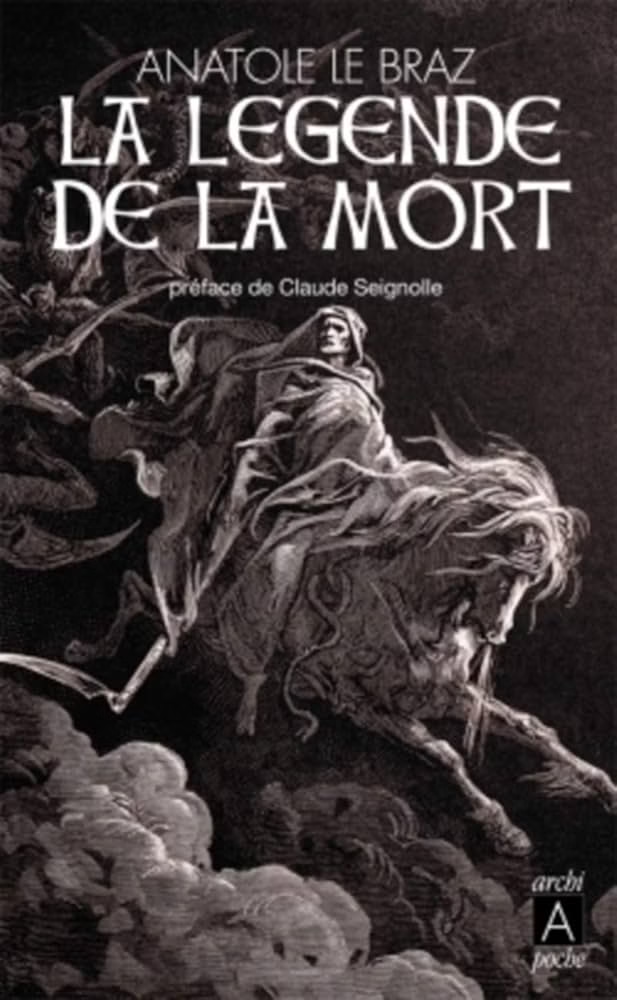
Some practices go in the opposite direction: not to protect oneself by throwing a stone, but rather to avoid throwing one so as not to disturb the dead. In Wallonia, a prohibition advises children not to throw stones into hedges on All Souls’ Day. According to a widely held belief, the deceased rise from their graves on that day. This prohibition may therefore exist elsewhere, notably in Lower Brittany, where it is believed that one can hear in the hedges the brushing of souls completing, after death, a pilgrimage they had failed to accomplish in life. In Légende de la Mort, Anatole Le Braz recounts that a rector warned a city dweller who amused himself by decapitating gorse with his cane: this gesture could disturb the souls in Purgatory undergoing penance.
In several mountainous regions of southwestern France, a recurring precaution is found: never throw stones into lakes. According to the locals, this action angers the spirits that inhabit these deep waters, and a storm soon follows. This taboo, recorded repeatedly by ethnographers, appears to be widespread enough to be considered general in these areas.
The belief in the protective value of a thrown or pushed stone is attested in several French regions. It is part of an ancient superstition, already mentioned by Theophrastus, according to which a bad omen can be neutralized by throwing a stone. The most common example is the encounter with a weasel, an animal reputed to be unlucky:
In Saintonge, if a weasel crosses a passerby’s path, the person expects “trouble with an ill-tempered woman” and pushes a stone to avert the misfortune.
In Dauphiné, one throws a stone after making the sign of the cross before stepping over the spot where the animal has passed.
In Poitou, one walks backward while pushing three stones, a gesture intended to nullify any harmful effect.
3. Stone throwing: its role in love
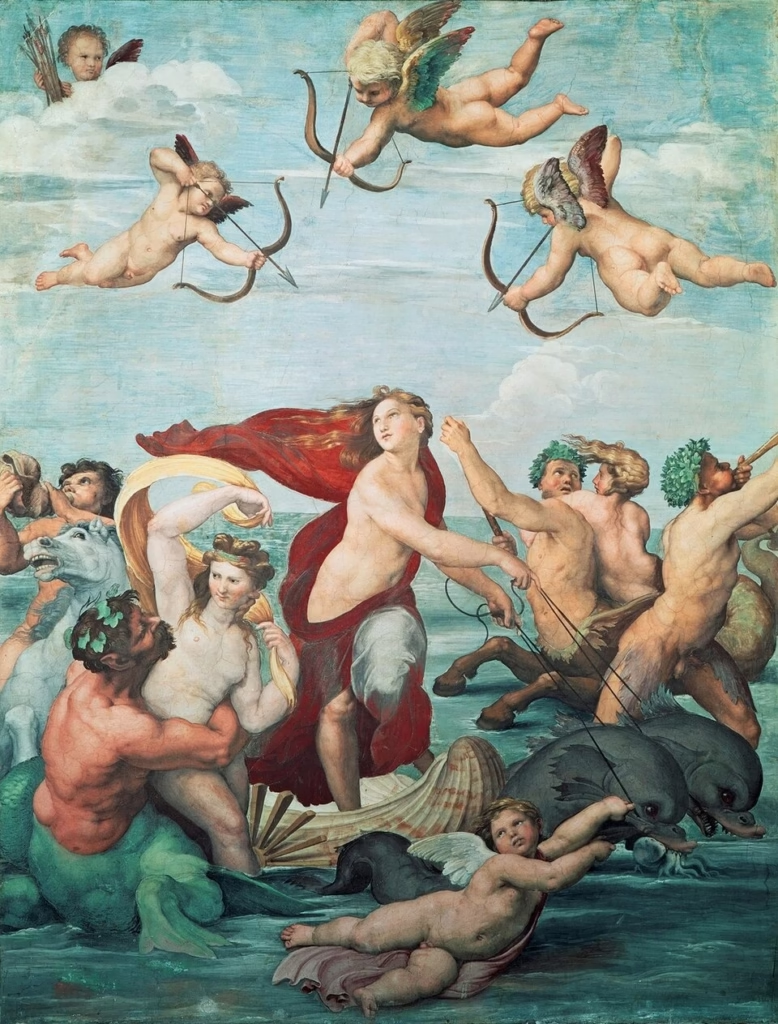
The Triumph of Galatea, fresco by Raphael, 1513
In several regions of southern France, an old custom surprisingly links stone throwing to romantic exchanges. Far from being a trivial act, this gesture is full of symbolism and refers to a discreet but perfectly coded language. A proverb from Béarn clearly attests to this:
Qui peyroutaye Amoureye. (He who throws little stones makes love)
According to the author who collected this expression, it applies to teasing between lovers. He even links this proverb to a verse by Virgil (Bucolics, III, 64):
Malo me Galatœa petit, lasciva puella.
(The mischievous Galatea aims a apple at me)
In Provence, this custom goes far beyond mere flirtation. In Le Beausset, in the Toulon district, young men take advantage of festive days or summer Sundays to sit near the young women they like. To declare their love, they throw small stones at them. This gesture, seemingly discreet, is immediately understood by those involved and by onlookers. The young woman’s response depends entirely on her mood:
If she rejects the advance, she moves and sits a little farther away.
If she welcomes the attention, she picks up a few small pebbles in return and throws them back at the young man, all in playful jest.
In this local culture, the message is clear: reciprocating the gesture is equivalent to a form of acceptance.
This romantic tradition is not unique to Provence. In the Mentonnais, during the procession of Saint Michael, boys also throw small pebbles at young girls to express their affection. In this festive and religious context, the gesture serves as a symbolic declaration—sometimes shy, sometimes theatrical, but always imbued with a meaning recognized by the community.
4. Marriage ordeals
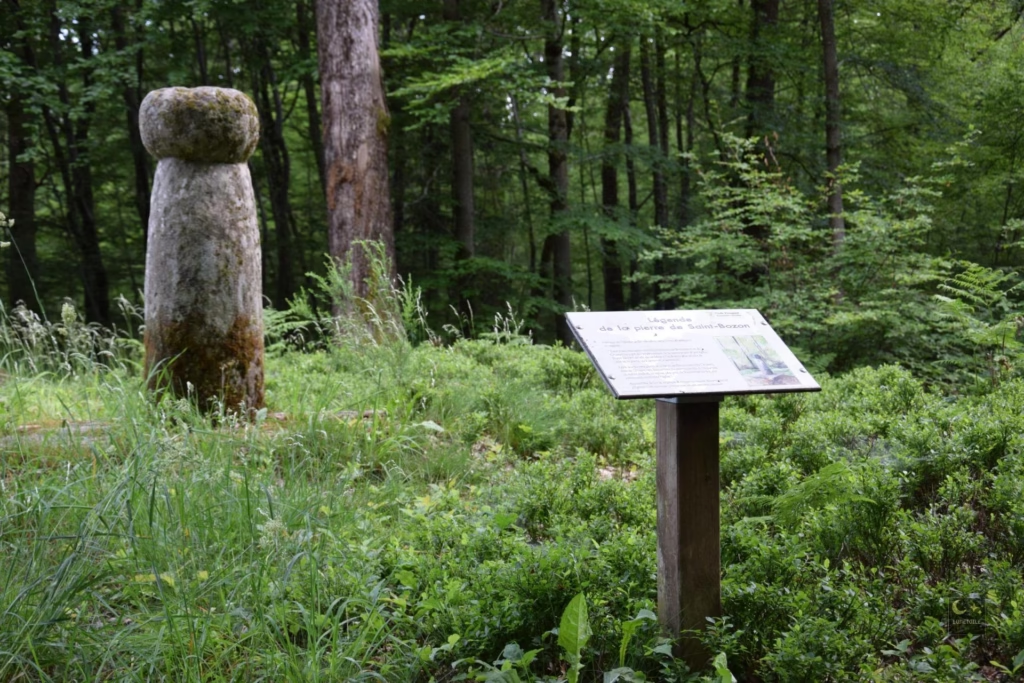
Saint-Bozon boundary stone, Bouzemont
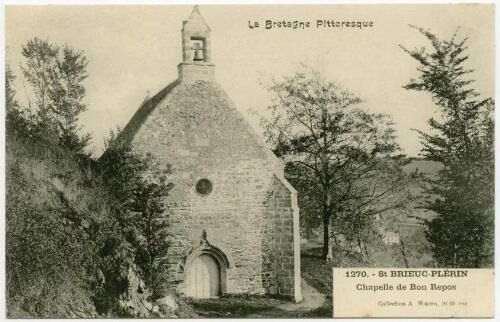
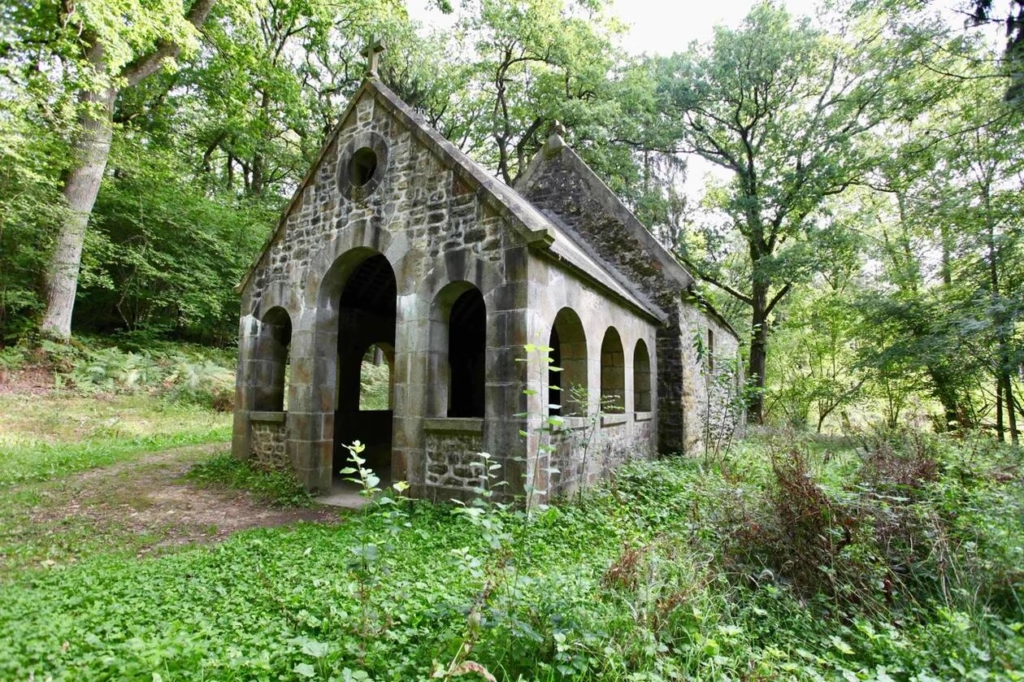
Near the chapel of Bon-Repos, on the road from Saint-Brieuc to Plérin, young women wishing to marry within the year perform a specific gesture: they throw a stone into a hole located in a wall above the gateway. The test is simple:
if the stone hits its target, marriage is guaranteed within the year;
if it misses, the omen is unfavorable.
The practice recalls other divinatory customs, notably those involving pins: success depends on the precision of the gesture.
On the island of Bréhat, young people considering starting a household make their way to the Peacock Rock, at the edge of the cliff. They then throw small stones into a crevice in the rock. The rule is strict:
if the stone falls straight into the chasm without touching the sides, the marriage must be celebrated immediately;
if the stone strikes the sides, the number of impacts is counted: that many years must pass before the wedding.
In Orcival, in the Puy-de-Dôme, a famous pilgrimage site, a similar custom exists. A stone is rolled down from the top of the mountain. The verdict comes quickly: as many bounces as the stone makes, so many years to wait before entering into holy matrimony.
In several legends, stone throwing is used to settle questions of sacred urban planning. It is said that a lord granted, for the construction of the Cathedral of Dol, all the land covered by a large stone thrown by Saint Samson. Likewise, during a dispute between Circourt and Beuzemont over the location of a shared church, Saint Bozon entrusted the decision to the verdict of a stone. He first threw it toward Circourt, then, picking it up again, toward Beuzemont. It landed in the same spot both times: that is where the church was built.
In the mountains, travelers systematically place a stone at the spot where someone has died. This pile, formed by successive passersby, serves to perpetuate the memory of the deceased. This custom is also common along roads, particularly in the Alpes-Maritimes region, where one encounters places called in Provençal Frémo mouorto (“dead woman”). According to local belief, failing to throw a stone on the Clapier dé frémo mouorto, located on the mule track between Grasse and Caussoly, exposes one to dying within the year.
In Entrevaux, near the road leading to the hermitage of Saint-Jean-du-Désert, another stone pile is called lou Clapier daou paour omé (“the poor man’s stone pile”). The legend tells that a brigand was heading to the hermitage intending to plunder it. He fell dead before he could succeed. He was buried by the roadside, and his grave was covered with a pile of stones. Moved by the severity of this sudden death, passersby continued the tradition: everyone must throw a stone onto it while saying: Requiescat in pace per lou paour omé.
At the beginning of the 19th century, when travelers encountered large stone mounds in the Alps shaped like prisms or cones—very ancient tombs—they always added a stone. Guides would tell long tragic stories about these primitive monuments. An old superstitious fear, probably very ancient, required not passing certain murgers without throwing a stone onto them. The practice seems unchanging. In Haute Cornouaille, when travelers come across a cross erected after an accident, they do not place the stone at the foot of the cross but throw it into the ditch beside it. This is likely a survival of the old practices associated with murgers, adapted to the symbols of another cult.
5. Conjuration stones
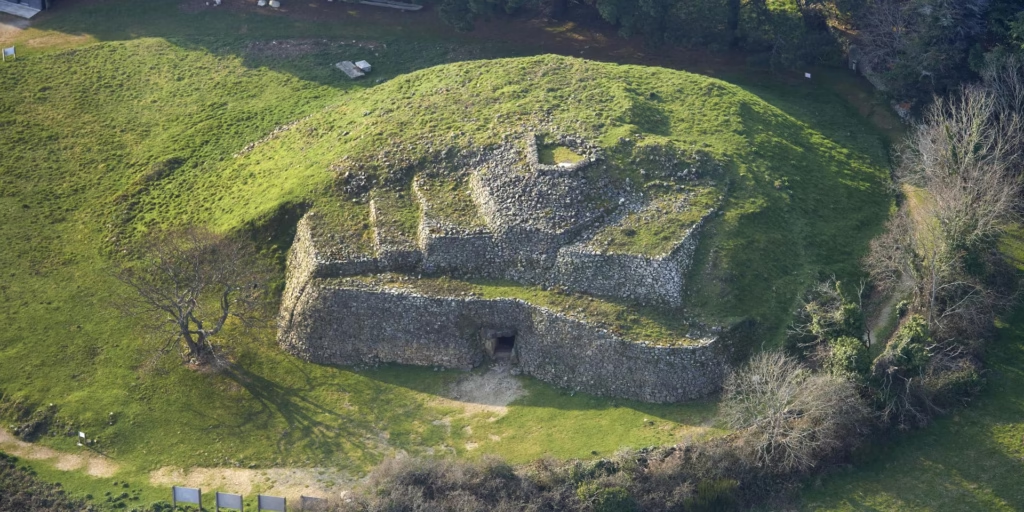
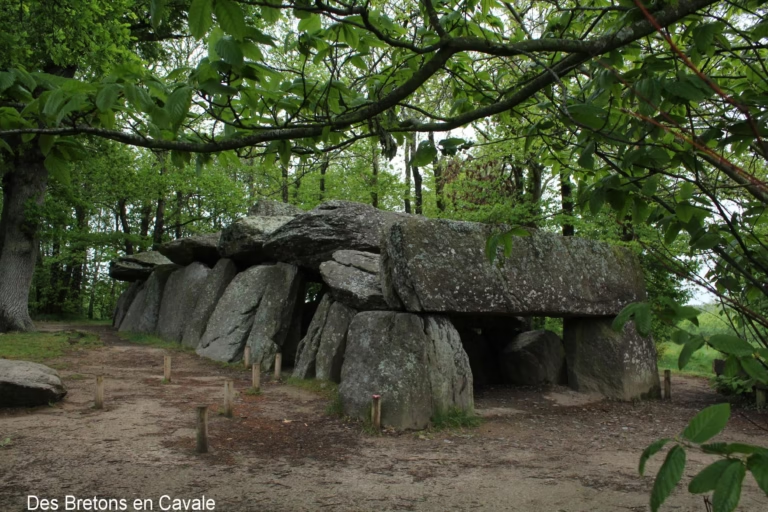
Gavrinis Cairn, Larmor-Baden, Morbihan
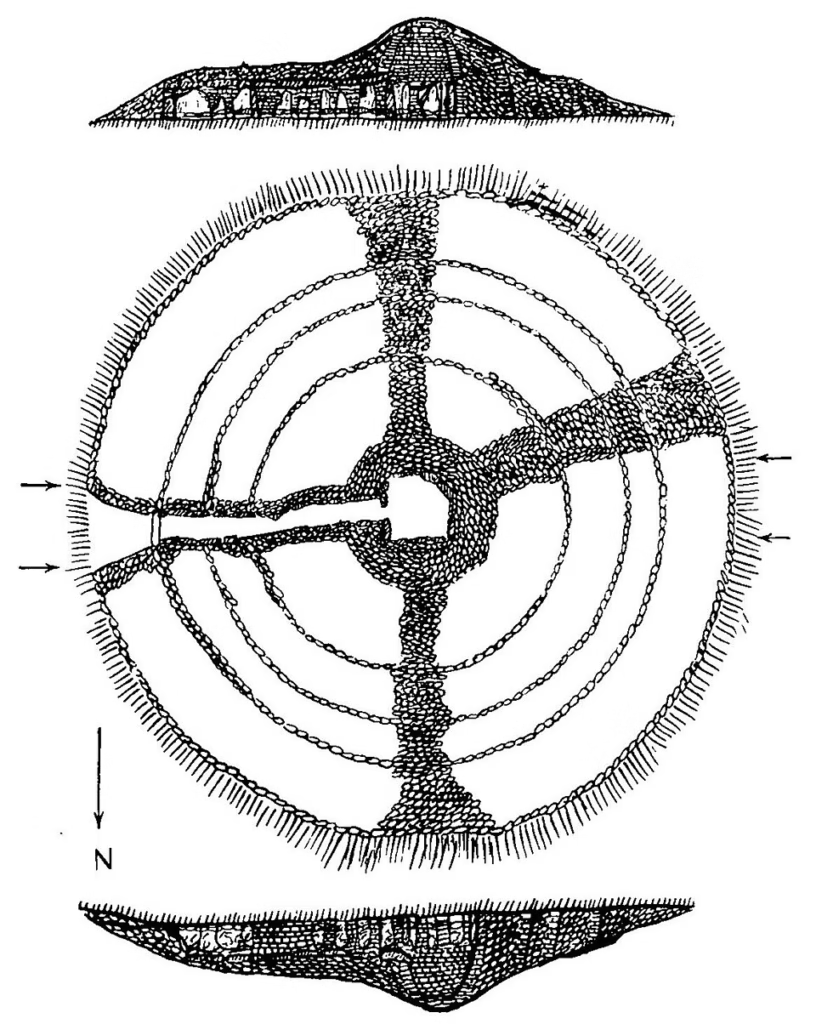
Plan of the galgal (cairn) of Gavrinis, in Larmor-Baden, Morbihan.
In eastern France, stone piles—sometimes called murgers—form a cultural landscape as discreet as it is fascinating. Their presence is so frequent that it is surprising how little research has been devoted to them. Around 1825, Désiré Monnier reportedly recorded twenty-two in a single forest. However, the information he obtained remained vague, which may have led him to associate them with an ancient cult. Yet, several archaeological discoveries show that some murgers likely served as burials. In the Yonne, skeletons were found beneath several of them. One, called la Chaumière des fées, is considered a funerary mound. The names vary depending on the region:
"merger" / "murger" in the East,
"clapas" or "clapier" in the South,
"chiron" in the central region,
galgal or cairn in Brittany.
In the Doubs, at Étouvans, a Franc-Comtois writer recounts the belief in a revenant named le Monsieur des Murgers, condemned to posthumous penance in a forest. His name suggests that he was linked to a murger that has since disappeared or been forgotten.
Some stone heaps served to perpetuate the memory of an injustice or a violent act, passed down from generation to generation. In the Yonne, a pile of stones formed over the centuries from pebbles thrown by locals to express their resentment toward Mélusine, who was said to have been present at this site during the siege of Arthenay, which she set on fire, causing the massacre of the inhabitants. For a long time, children going to a spring on Ascension Day continued the gesture, declaring: “Here, this is for Mélusine.”
In Lower Brittany, the rites of rainbow conjuration include a particular practice: as soon as the rainbow is seen, stones are arranged in a cross or piled up. This symbolic gesture was believed to “stop” the rainbow or divert its influence, according to ancient local beliefs. In many regions, one finds stones of modest size, light enough to be: moved, stacked, arranged in pyramids, or added to other existing piles.
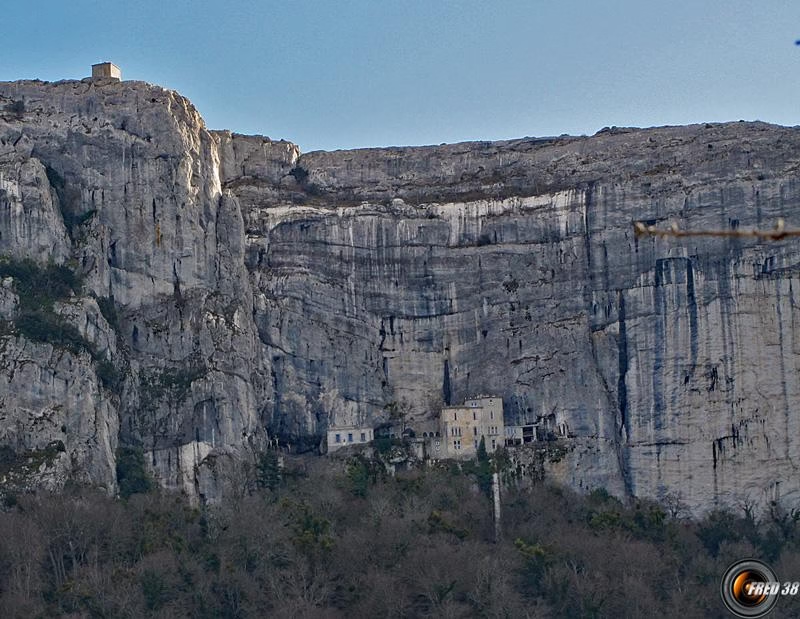
Around the Sainte-Baume, a major pilgrimage site for centuries, there are a multitude of small stone piles. The locals know their significance well: many of them represent testimonies of passage. Each visitor adds a stone to mark that they have reached these summits. Others, however, are linked to love and fertility. The stones then carry a wish: fertility, a marriage, or a happy union.
6. Stone piles and love
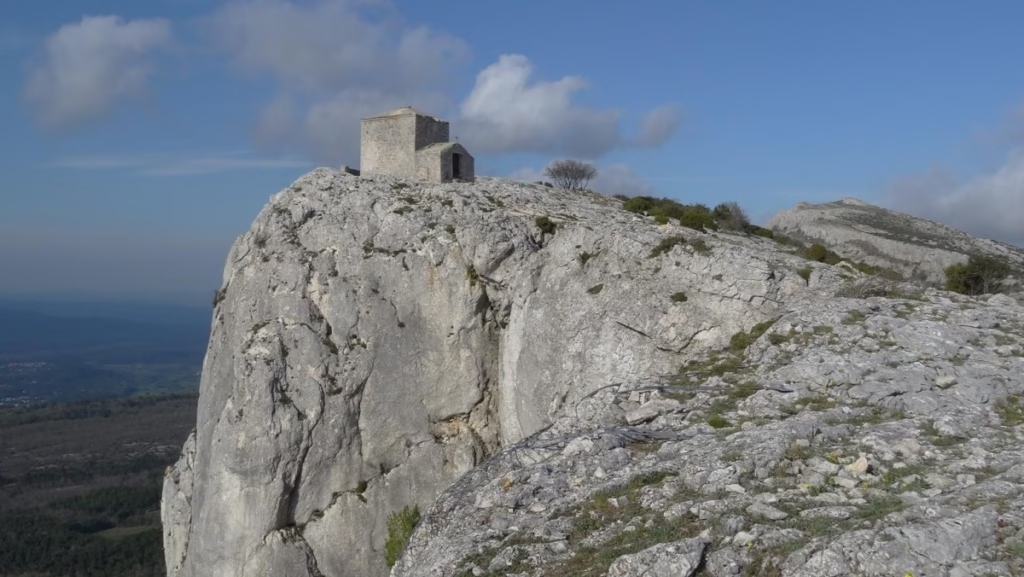
Mont Saint-Pilon, Sainte-Baume Massif, Bouches-du-Rhône and Var
Saint-Pilon Chapel, the oratory of the Sainte-Baume Massif, Bouches-du-Rhône and Var
In some villages in Provence, tradition held that young women seeking marriage would go to the oratory of the Sainte-Baume before climbing Saint-Pilon. Once at the summit, they would leave a small arrangement of stones: three flat pebbles forming a triangle, with a fourth placed in the center. If, the following year, they found this little castellet intact, the omen was favorable: the hoped-for husband was expected to appear within the year.
The custom did not concern only young women. Boys who were considering marriage also made a moulon de joye. While mentally praying to Saint Mary Magdalene, they sought divine confirmation of their romantic choice.
If the pile remained intact a year later, they considered their plan approved.
If the stones had been scattered, they interpreted it as a sign of disapproval and abandoned the idea of that marriage.
For them, the saint’s opinion mattered as much as the will of the families.
According to early accounts, such as that of Désiré Monnier in 1843, this practice went beyond mere individual superstition. Climbing the Sainte-Baume and erecting a pile of stones was a virtually mandatory rite before settling down or marrying. It was even said that, in some marriage contracts of the past, it was stipulated that “the young spouses had to build a castellet within the year.” Failing to perform this ritual could be considered a bad omen, resulting in:
the couple’s infertility,
a lack of affection from the husband,
or divine disfavor.
In a belief recorded in 1887, spouses had to build a castellet together and place as many stones in it as the number of children they wished for. The husband could enhance the effectiveness of the rite by placing a piece of mistletoe at his wife’s waist, a symbol of fertility.
The stones were not used solely to attract love: sometimes, they also marked its failure. In Leinhac, in the Cantal, a mound called Peyral de Martory served as a point of public humiliation. Men whose wives had been guilty of frivolity or infidelity were forced by other villagers to come and place a stone there. A mocking, almost punitive act, intended to remind everyone of the social dominance of the “railers of the village.” In some Alpine regions, notably in Savoie, stone piles took on a legal dimension. Stacked in pyramids at the entrances of plots, they served to:
mark the boundaries of the property,
forbid men from passing through,
or prevent herds from entering.
From pebbles thrown at young girls to castellets erected to seek the saints’ approval, stones have long expressed what words could not. They carried:
Placing stones on the branches of fruit trees follows an analogical logic: load the tree with stones so that it will bear fruit. Around Marseille, farmers place stones on the branches to encourage the harvest. In Gironde, a stone taken from the cemetery on Good Friday is placed at the base of apple tree branches, enhancing the sacred dimension of the gesture. In the Albret, if a tree does not produce, a stone from another commune is placed on it, hoping to trigger renewed fertility.
In Lower Normandy, a tradition is based on the belief that an ailment can be transferred to an object. In the Andaine Forest, one finds châteaux, piles of stones stacked in the forks of trees. The sick must: place a stone at the height of the ailment; recite a Pater and an Ave for each. The ailment is then transferred to the stone, but anyone who disturbs it would be struck by the same affliction.
In Upper Brittany, plusieurs croyances liées aux pierres relèvent explicitement du maléfice. Autour de Moncontour, on dit : « Voilà pour le chariot ! » en posant une pierre sur le chemin. Le premier véhicule qui passe est condamné à verser, et plus la pierre est petite, plus le risque est grand. Une fois l’accident survenu, une voix invisible vient réclamer : « Viens déverser ce que tu as versé ! » (Une manière de forcer le responsable à porter assistance). En Berry, the Pierres caillasses or Pierres sottes agissent sans intervention humaine. Selon George Sand, elles se déplacent la nuit pour provoquer chutes et accidents, à moins que les inspecteurs des routes ne les brisent rapidement.
In the Vosges, a child falsely accused of theft could prove their innocence by fetching a stone from the cemetery… walking backward. This gesture, now stripped of its original meaning, was once accompanied by an oath or an invocation to the dead.
In some children’s games, notably in Liège or Rennes, standing on a stone provides immunity, like a miniature sanctuary. In Tag, if the players lack perches, a simple carved stone becomes an inviolable spot. This is likely a survival of ancient practices where stones truly marked areas of asylum.
In several regions, stones are prepared so that invisible beings may come and sit on them. During the Midsummers’s fire:
One circles the bonfire three times.
Each person picks up a pebble and throws it into the fire.
At nightfall, the dead come to sit on the stones to warm themselves.
If the next day a stone has been turned over, its owner will die within the year. This ritual is attested in the 17th century and still in 1824 in the Morbihan.
In the Gironde, when the fire has died down, a large stone is placed at the center of the hearth: it is on this stone that the Virgin will come to sit at night to comb her hair. In Poitou, it is said that her beautiful golden hair sometimes sticks to the prettiest stone. In Béarn, three stones in the Midsummers’s fire protect:
against misfortune,
against the "male mort“ (evil death),
against witches
Elsewhere, as in the Deux-Sèvres, large stones are thrown into the bonfire to obtain big pumpkins or beautiful turnips. In the Creuse or Poitou, stones are chosen according to the size of the turnips desired, before dancing around the fire. Several accounts show that to drive away a supernatural being attached to a stone, it is enough to heat it:
a revenant burns on a stone heated to white-hot, ruining its 200-year penance;
the Fersé, a pony-like imp, never returns after burning itself;
a black sow—a bewitched young girl—disappears permanently.
Very old, naturally holed stones possess particular powers. Thiers reports that they are tied around the neck: for horses that neigh too much, for donkeys to prevent braying. Even in the 19th century: in French-speaking Switzerland, they protect horses from the foulta (an imp); in France, a stone found “by chance” wards off spells and makes barren cows fertile; in Wallonia, suspended under a pillow or above a door, it protects against nightmares.
Around the mid-19th century, the girls of the Pollet sought a particular white stone, called the Stone of Happiness. It was believed to have the power to:
protect from danger,
bring prosperity,
ensure a happy marriage.
In Plouezec, near Paimpol, the rector once blessed the white pebbles found on the shore. Sailors carried them in cloth bags on their chests, convinced that they could not drown.
8. Illnesses transferred to stones
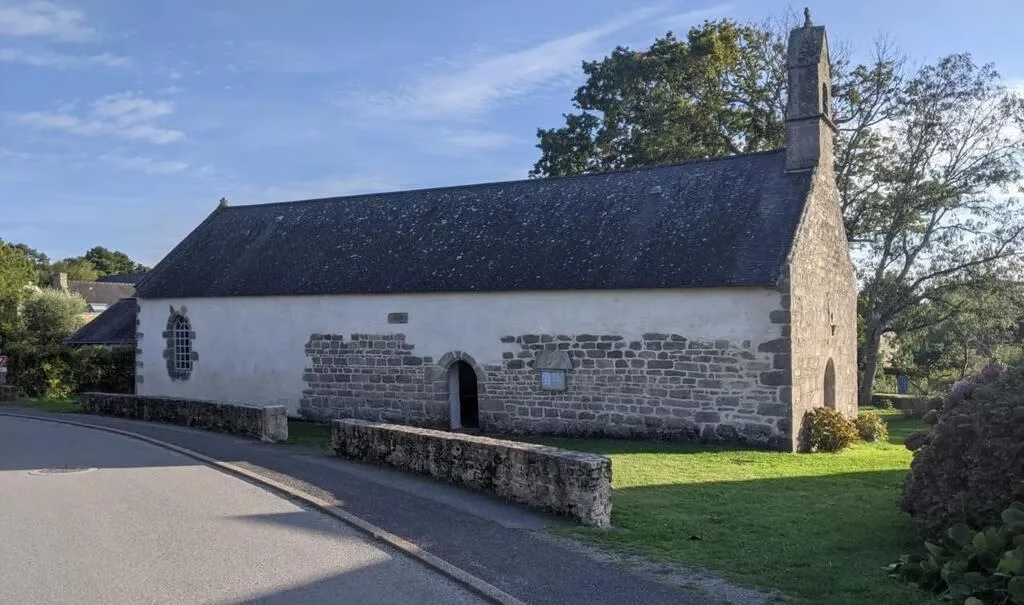
Saint-Mériadec Chapel, Baden, Morbihan
The idea of transferring an illness to an inanimate object—especially a stone—is a belief deeply rooted in many French regions. Stones served sometimes as a remedy, sometimes as a receptacle meant to “absorb” the ailment, or even as a vector of contagion for anyone who later handled them. In Saintonge, small round pebbles called pierres à migraines were once sold. Carried on the person, they were reputed to relieve headaches. In the Lozère, variolite pebbles were placed in bags hung around a ram’s neck to protect the flock from disease. This practice is also found among the shepherds of the Vivarais, who use:
the pigote stone against "clavelée",
the "veré" stone against smallpox.
At the Saint-Mériadec Chapel in Baden, three quartz pebbles once rested on the south altar. Locals rubbed their heads on them to cure migraines. In the Puy-de-Dôme, an old remedy for dysentery involved heating a quartz or feldspar stone until red-hot, then plunging it into milk. The milk thus “charged” was considered curative. In the Côtes-d’Armor, nine small white pebbles are collected from a path recently crossed by a funeral procession. Boiled in milk, they treat chest inflammations. In Anjou, the same process is used, but without the condition linked to the passing of the funeral procession. A traveler of the 17th century also reports that in the Dauphiné, the Sassenage Mountain produces small stones called precious due to their supposed virtue in curing eye diseases.
In the Girondine region, to treat marée, that is, swelling after an injury or surgery, a ritual is used combining:
nine pebbles
nine plants
a pot and a pitcher
The pebbles and herbs are boiled together, then the infusion is poured into a basin. The piché is placed upside down in the liquid, covered with a cloth, and the affected body part is placed on it. If one hears the water rising in the piché, it is a sign that the ailment is “leaving.”
The idea of transferring an ailment to a stone is found in several places. Fever sufferers place nine pebbles at the foot of menhirs, wrapped in their own handkerchief. Whoever picks up the bundle catches the fever in turn: the illness is believed to transfer to the object and then to the unfortunate person who handles it. In Poitou, as many small pebbles as there are warts on the skin are placed in a pouch. The pouch is left on a road. Whoever picks it up inherits the patient’s warts. The transfer is thus complete: the disease changes owner.




Leave a Reply