Avalanches and rockfalls: natural or supernatural causes?
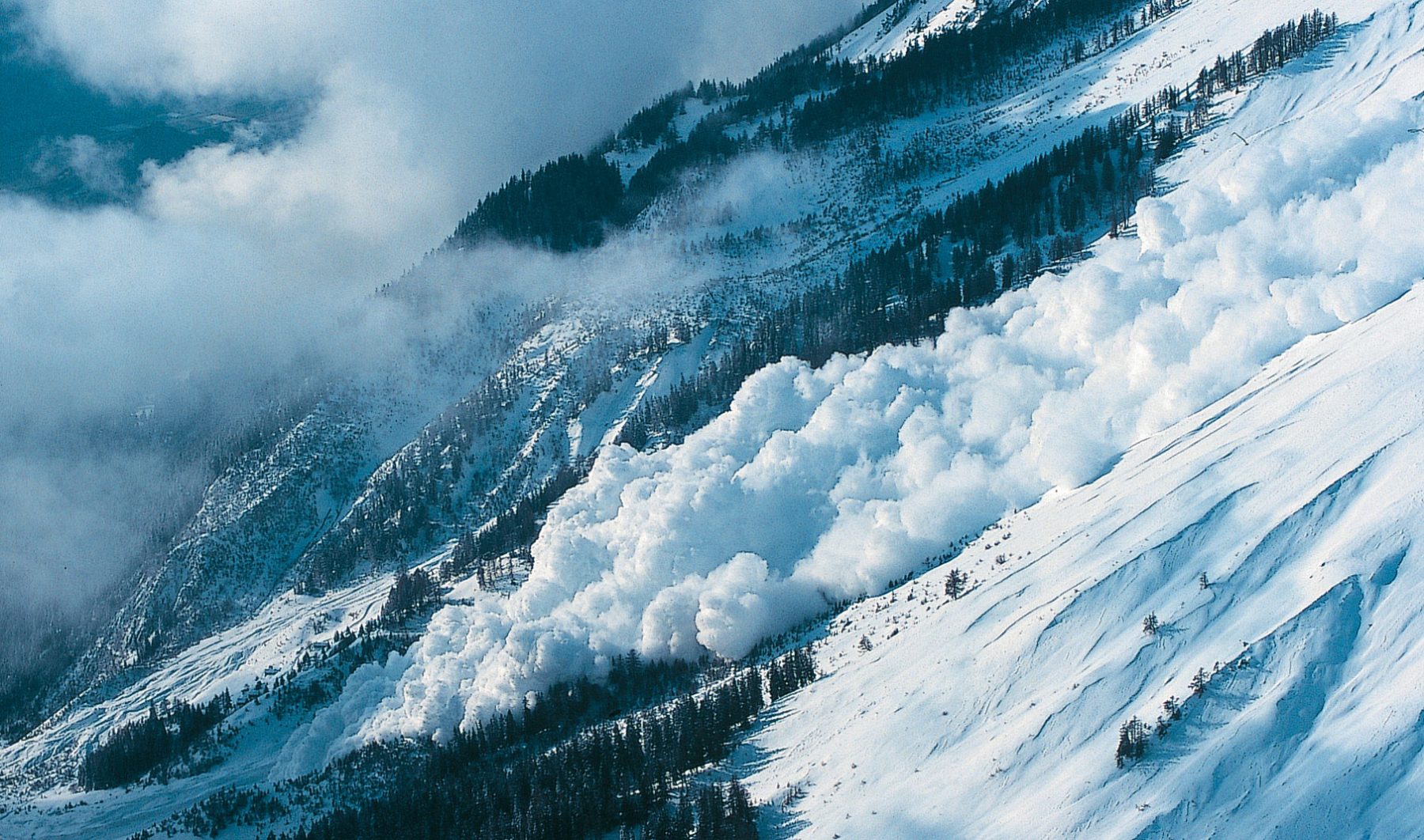
Mountain avalanche
1. The golden age of the mountains
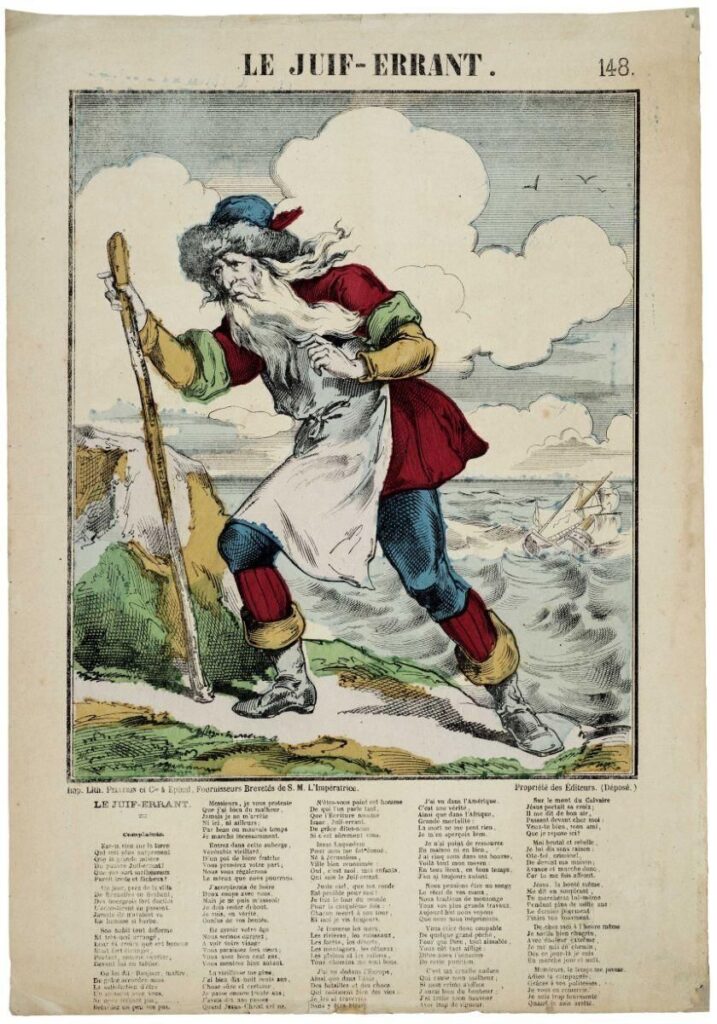
Iconography of the Wandering Jew, Musée de l’Image
According to many Swiss legends, the mountains, now austere and rocky, were once lands of exceptional fertility. This golden age of the mountains, passed down through oral tradition across French-speaking Switzerland, recalls a time when nature provided everything in abundance. The giant cows produced milk so plentiful that they had to be milked in ponds, quickly transformed into vast cream basins.
The dean Bridel, Vaud poet and scholar, recounted that a shepherd, capsized in his boat while churning cream, was found a few days later… buried in a churn as tall as a tower, at the heart of a cave filled with honey, whose honeycombs reached the size of city gates.
In this fabulous world, the wealth was such that the mountain dwellers played skittles with lumps of butter, and threw cheeses as pucks. Even the fruits reached enormous sizes: the stems of the pears had to be sawed off, they were so gigantic!
This time of supernatural prosperity came to an abrupt end. Legend has it that the Wandering Jew, condemned to walk without rest since Jerusalem, crossed the Alps to reach France. As he passed, the mountains were still covered with golden harvests. But God, angered to see the eternal traveler choose this path, turned the fields into fir forests. The Wandering Jew returned the following year, faithful to his favorite route. Then, God covered the firs with an eternal glacier.
— “Bah! The snow and ice will melt, I’ll pass by again next year,” said the Wandering Jew. — “Nothing will melt,” replied God. “And until the Day of Judgment, the snow will remain there.”
Thus, according to popular tradition, the glaciers of the Alps were born from this divine curse, and the Wandering Jew would never again cross the border between Italy and France.
2. Glaciers covering inhospitable or cursed lands
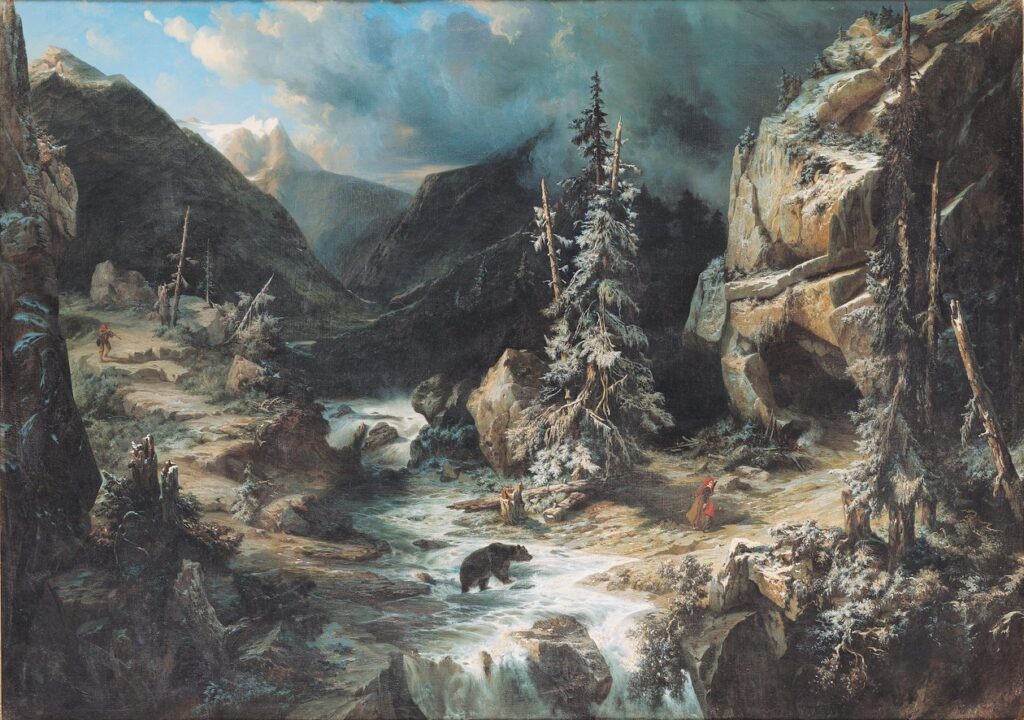
The Road to Maladetta, Leonard Alexis Dalige de Fontenay
In the legends of the mountains, it is said that many glaciers appeared not by chance, but to punish men. These stories, passed down from generation to generation, echo those of the sunken cities — but here, it is not the sea waves that punish, it is the eternal snow.
Partout dans les Alpes et les Pyrénées, les traditions affirment que les pays recouverts de glace furent jadis des vallées fertiles, verdoyantes et peuplées. Mais un jour, leurs habitants, devenus orgueilleux et inhospitaliers, refusèrent le secours d’un étranger. Leur châtiment fut immédiat : leurs villages disparurent sous un déluge de neige et de glace.
In the Pyrenees, it is said that the Maladetta, now a barren and icy mountain, was once a place of lush pastures and prosperous villages.
One day, God, disguised as a pilgrim, went door to door asking for hospitality. Everywhere, he was turned away — except in a humble cottage where a poor family welcomed him with kindness. Touched by their charity, God transported them to a nearby mountain and gave them a house. Then, turning His arm toward the Maladetta, He cursed the rest of the land:
Since then, no one ventures without fear on the slopes of the Maladetta.
“The inhospitable villages were swallowed under a heap of snow. The herds turned into rocks, and the mountain lost its greenery forever.”
Further north, another legend tells that a saint once descended into the upper valley of Chamonix. Learning that a beggar had gone around the village without receiving a piece of bread, he decided to test the villagers.
Disguised as a poor man, he knocked on every door — never being welcomed. Only one young girl, moved by compassion, secretly slipped under her apron an epogne (a small loaf of bread). Then the saint appeared to her in his true celestial form and said:
“Go, take what you hold most precious and leave this accursed village: the vengeance of Heaven is near.”
No sooner had the young girl walked away than the glacier surged, burying the entire hamlet under a sea of ice.
On the heights of Plan-Névé, an old woman begged for shelter as the storm raged. The herdsmen, though rich in butter and milk, drove her away mercilessly. The old woman — who was in fact a mountain fairy — turned around and cast a curse:
« Balla pllana ! Pllan-Névé, jamé terreina te ne te reverré ! » (« Belle plaine, Plan-Névé, jamais je ne te reverrai terrain. ») (“Beautiful plain, Plan-Névé, I shall never see you again, land.”)
Immediately, a hurricane of snow and hail struck. In a few moments, the beautiful meadow vanished under a thick layer of ice, which, it is said, has continued to grow ever since.
The same fate struck the Tsanfleuron Plateau, once a “flowering field,” which became a desert of ice after a shepherd refused a piece of bread to a beggar woman.
Finally, the legend of the Charbonnel Glacier, in Maurienne, tells that it arose following a curse uttered by a woman from the hamlet of Vincendières. One festival day, she left her herd to go dancing. Upon returning, she found her animals sick and exclaimed:
“Grass, little grass, you are killing my animals; the glacier will return here, and never again shall grass grow green!”
The next day, the glacier covered the entire mountain, which was then poetically named Blanche-Fleur.
3. Divine or fairy-caused rockfalls
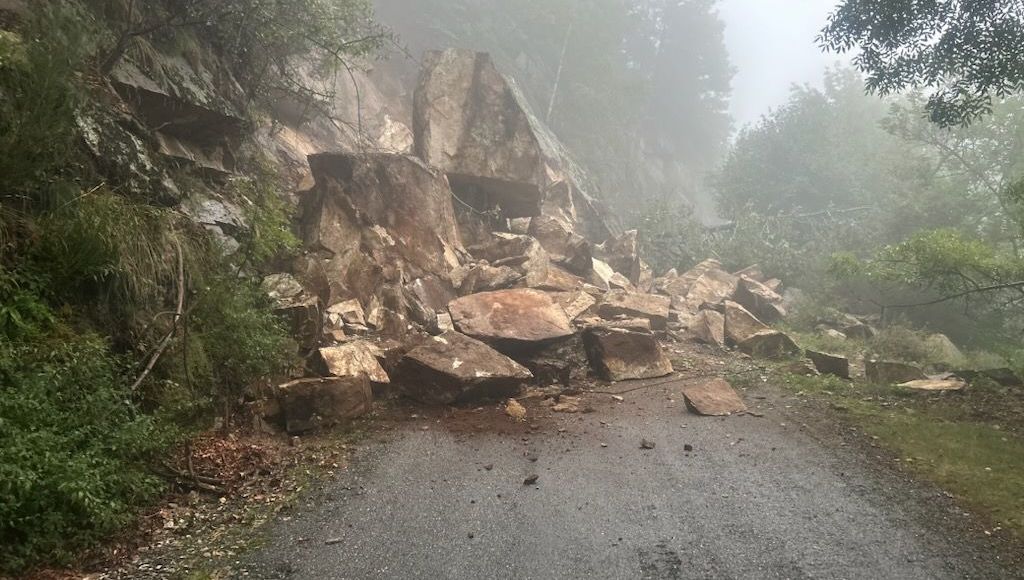
Rockfall on the Route des Conques, Pyrénées-Orientales
In the popular traditions of the Alps, rockfalls are never seen as mere geological accidents. They are perceived as divine punishments or supernatural interventions caused by the hardness of men’s hearts.
Ancient tales recount how entire villages were swallowed by stones and mud after refusing to offer hospitality to a stranger. This theme, omnipresent in Alpine folklore, highlights the sacred value of welcome and charity, virtues that the mountains ensure are remembered… sometimes brutally.
On 4 March 1585, the mountain overlooking the Cirque de Luan suddenly began to move. In a colossal slide of stones and mud, it buried the village of Corbeyrier before rushing down toward the plain and engulfing the beautiful village of Yvorne.
The elders tell that a mysterious woman had been seen in the region a few days before the catastrophe. She went from door to door, seeking shelter and a bit of food in vain. Only one charitable family took her in, and she warned them in a solemn voice: the ruin of the village was near. That family was the only one to escape the disaster.
A century earlier, in 1564, the thriving village of Thora in the Aosta Valley was destroyed by the collapse of the mountain of Becca France following an earthquake. The day before the tragedy, an old man walked through the village begging for a piece of bread and shelter for the night.
Everywhere he went, he was turned away — except by a poor widow who, though she had nothing left to offer, invited him to rest. Moved by her kindness, the beggar told her to go up to her attic, where she found plenty of bread. Before disappearing, he warned her:
“Tomorrow, at the same hour, Thora will be destroyed. Before daylight comes, take your children, leave the village, and bring yourself to safety.”
The widow followed his advice, and when the mountain collapsed, she and her children were the only survivors.
Other accounts speak of landslides caused not by inhospitality, but by corruption and impiety. Near the village of Vergons in the Lower Alps, a joyful and frivolous city was buried beneath the mountain of Chamasse, punished for its excesses.
More recently, at the beginning of the 18th century, the village of Pardines in the Puy-de-Dôme vanished following a landslide caused by heavy rains. But the local inhabitants saw it as a heavenly sign. According to them, the villagers had been warned by an angel:
« Pardines, Pardines, quand le soleil se lèvera, il ne restera plus de toi pierre sur pierre ! » “Pardines, Pardines, when the sun rises, not a single stone of you will remain!”
The prophecy came true during the night. At dawn, Pardines no longer existed.
3. Those caused by the Devil
Weapons of the Bonivard family
In the Alpine mountains, avalanches and landslides were not seen as mere whims of nature. For the ancients, these disasters were often the work of the devil, of demons, or of angry fairies, taking vengeance on humans guilty of pride, curiosity, or impiety. Every echo of falling rock, every rumble of a cracking glacier, was heard as a warning from the invisible world.
In Savoie, legend has it that one day, the summit of Mount Grenier broke away and destroyed the town of Saint-André along with sixteen surrounding villages. This disaster, dated 1240, was said to be a divine and demonic punishment linked to Jacques Bonivard, to whom the pope had granted the priory of Saint-André in exchange for his military assistance.
During the catastrophe, blocks of stone came to rest at the feet of the monks, and the devil was heard shouting to his demons:
“Push the stones further!” But they replied: “The Black Lady of Myans forbids us.” Thus, according to tradition, only the protective intervention of the Black Lady prevented the total destruction of the monastery.
Not far from there, another legend tells how the fairies of Perrausaz, formerly called la Verda, lost their verdant kingdom. This place was once one of the most beautiful pastures in the region, and the inhabitants used to leave a small pail of milk that the fairies would come to drink each night.
But one day, a greedy young boy wanted to uncover their secrets and discover the Rably gold mine. Entering the fairies’ cave with a torch, he saw two veiled figures signaling him to flee. He insisted, reciting a magic spell — and then the mountain shook, the sky lit up with lightning, and an entire spire collapsed, burying la Verda under the rocks. Since that day, the mountain has been nothing more than a field of rubble, a cursed reminder of punished curiosity.
Higher up, on the slopes of Mont Blanc, a Green Lake once shimmered, surrounded by flowering meadows where young fairies danced. But mischievous spirits, jealous of their beauty, decided to take revenge. They diverted the Nant Noir toward the lake, causing a flood that brought the mountain crashing down. The lake and its fairies disappeared beneath a heap of rubble, leaving behind only a barren, devastated plain — a mineral testimony of supernatural vengeance.
In the Valais, the mountaineers claimed that every creak of a glacier or falling rock signaled that the diablats — the little mountain demons — were at work. These infernal spirits were said to have toppled part of the prosperous hillside between Saillon and Leytron, before continuing their mischief by tumbling blocks of rock and heaps of earth onto the plain each spring. Desperate, the inhabitants called upon Father Maret, a holy man whose tomb is still venerated in Leytron two centuries later. He went to the site, conjured the demons, and trapped them in the ravines of the Pierraye, where, it is said, they still moan when the mountain rumbles.
4. Miraculously Preserved Figures
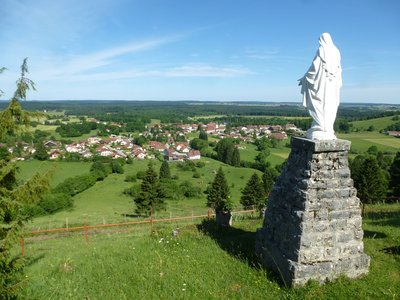
Village of Bonnevaux and its statue of the Virgin Mary
The mountains, often feared for their destructive power, have also been the stage for miraculous stories. Where all seemed lost — at the heart of a landslide or rockfall — some inhabitants were spared in an inexplicable way. These accounts blend the fear of catastrophe with divine protection, symbolized by the Virgin or the power of prayer.
Near the village of Bonnevaux, a huge block of rock once broke away from the mountain, rolling at full speed toward the valley. Nothing could withstand its path. But at the side of the road, a farmer asleep with his young child miraculously escaped the disaster. The rock, hurled like lightning, stopped dead just a few steps from them, without touching them. It is said that neither of them heard the deafening roar of the impact. To commemorate this event, a statue of the Virgin was placed in the rock itself, reminding all that faith could calm even the fury of the mountains.
Another story, in the Vaud Alps, recounts the salvation of a shepherd in prayer. As a landslide struck his chalet, two rocks broke loose just above him, forming a protective arch. All around, the earth shook and stones tumbled, but the shepherd, absorbed in his prayer, emerged without a scratch.
For the inhabitants of the region, this event symbolizes the power of faith and the heavenly goodness watching over those who pray in moments of danger.




Leave a Reply