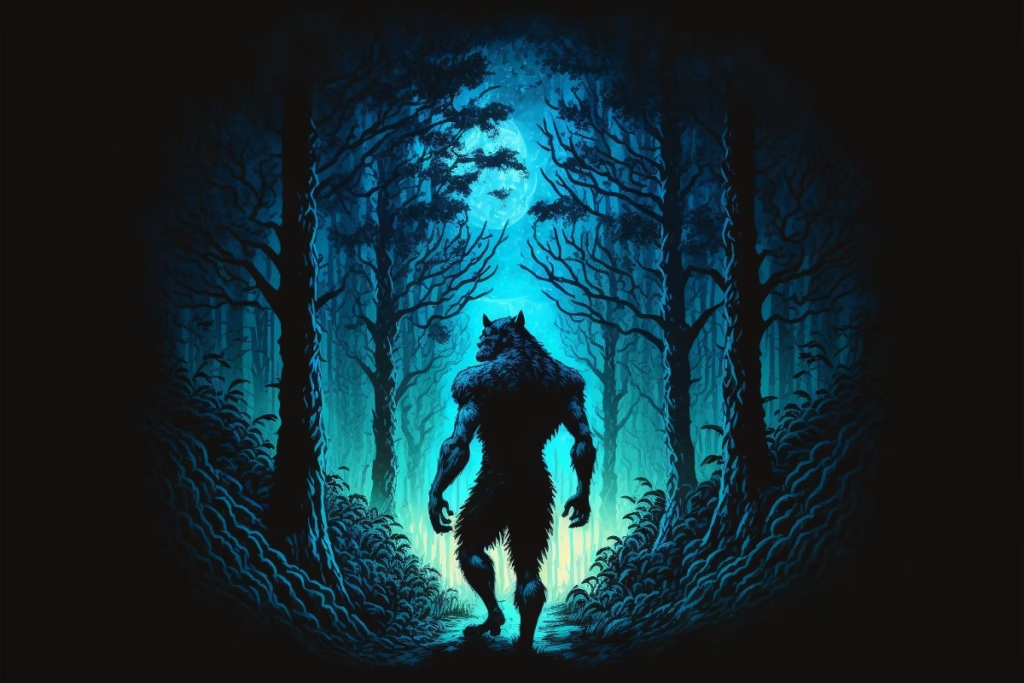
Werewolf in the forest. Source Midjourney, mondelegendaire.com
1. Werewolves
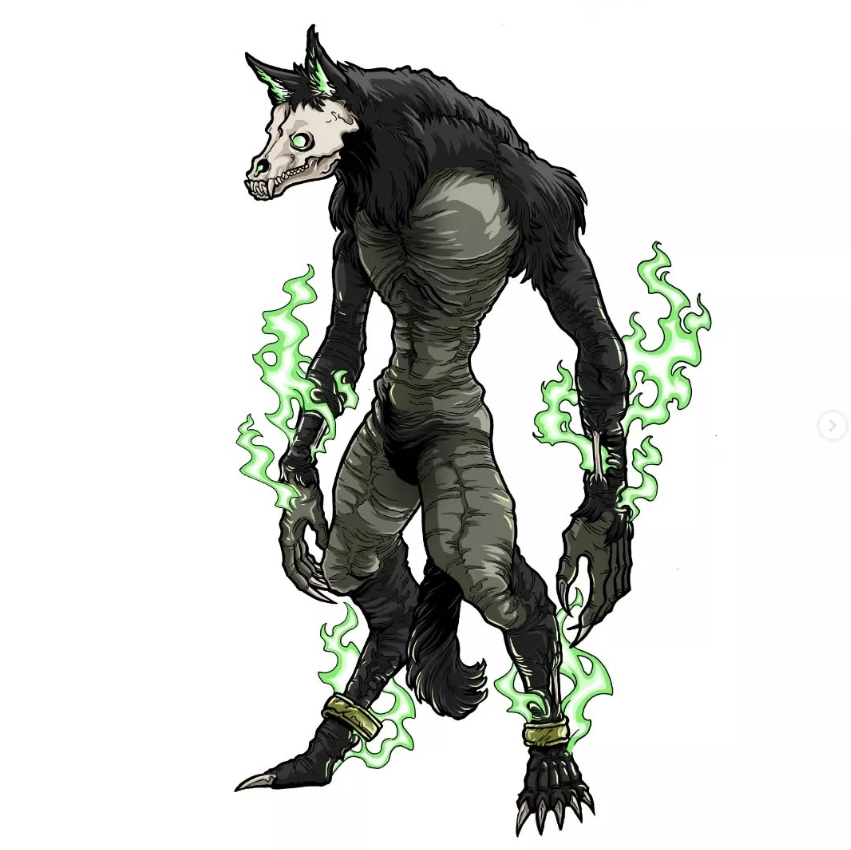
A Varou, drawning by Folklore Dracques
Au Middle Ages, the forests were regarded as places where werewolves naturally found refuge. The poet Marie de France, in The Lay of Bisclavret, even states that they were once numerous. She writes:
« Jadis le poët-hum oïr E souvent suleit avenir, Humes plusurs Garwall devindrent E es boscages meisun tindrent. Garwall si est beste salvage ; Tant cum il est en celle rage, Humes dévure, grant mal fait, Es granz forest converse é vait. »
“In former times, the poet could hear And often foresee, Many men became werewolves And dwelt in the forests. The werewolf is indeed a wild beast; As long as it is in that rage, It devours men, doing great harm, And roams the great forests.”
In this passage, the garwall—or werewolf—appears as a wild beast living in the great forests, ready to devour men when seized by its rage. This belief endured for a long time. In the 17th century, the musician Pierre Gaultier, whose very dark complexion drew attention, experienced this bitterly. While crossing a forest, he came across a group of peasants searching for a child they believed had been eaten by a werewolf. Seeing his dark complexion, they took him for the creature and demanded that he “return” the child. Gaultier protested, refusing to admit to an imaginary crime—but the peasants, convinced they were dealing with the monster, threw him from his horse and pounded him with blows.
Current accounts speak of pacified werewolves, behaving more like leaders of wolves. In many regions of France, especially in the West and the Center, it is still believed that certain individuals have the power to:
be accompanied by wolves,
guide them,
make them carry out their wishes.
Surprisingly, in the North and the East, despite being rich in forests, this belief seems almost absent.
In the mid-18th century, in Bourbonnais, it was said that werewolves lost their human form at midnight. They would then lead packs of wolves across the fields and make them dance around a great fire. A recurring theme appears in these legends: that of the reckless traveler. In many versions, a man arrives at the heart of this howling assembly. The wolf leader recognizes him and forces him to be escorted by two of his beasts, giving him only this advice: do not fall and reward the wolves upon arrival. But the traveler, panicked, forgets the reward. At his door, early in the morning, he finds the two wolves. He tries to shoot them: in vain. The bullets flatten on their skin, their eyes shine like lightning, their jaws emit flames. Terrified, he finally gives them a huge loaf of bread, which the animals carry away into the darkness of the forest.
2. Leaders of Wolves
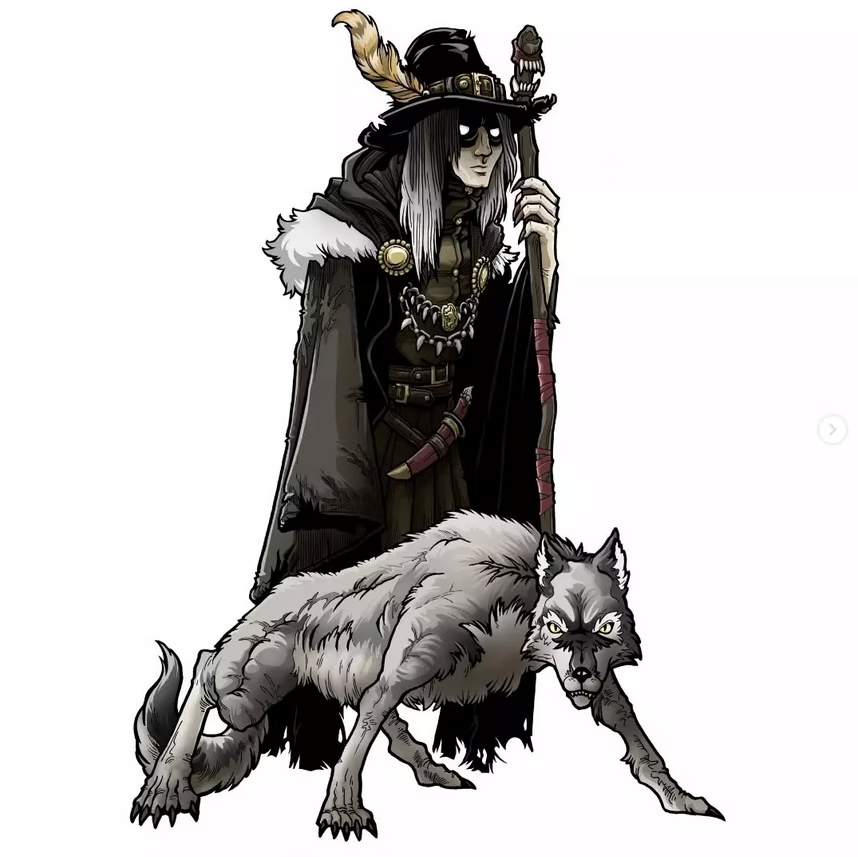
A Leader of Wolves, illustration from Folklore Dracques
In Upper Brittany, on croyait que l’homme capable de mener les loups pouvait parfois se transformer lui-même en bête. Cette métamorphose s’opérait grâce à une bouteille donnée par le diable. Dans ces cas, le meneur devenait un véritable loup-garou, et comme tous les garous, il ne retrouvait forme humaine qu’après avoir versé son sang. Dans d’autres régions du Centre, les meneurs de loups étaient également associés à la lycanthropie, montrant à quel point les frontières entre sorciers, garous et magiciens restaient floues.
In the forests of the Morvan, a peculiar suspicion hangs over flute players: any flutist is potentially a leader of wolves. It was said that they used their virtuosity to:
soften the wolves,
tame them
summon them at dark crossroads
Transformed himself into a wolf through some diabolical secret and invulnerable to bullets, the leader would take his place at the center of the circle. The wolves, sitting in a ring, listened to his commands in their own language. He would instruct them:
the poorly guarded herd
the properties of his enemies
the safe paths to avoid a hunt
and even the ways to erase their tracks in the snow.
In the Berry, sorcerers were reputed to fascinate wolves and summon them to forest crossroads for magical ceremonies. They were called wolf-keepers, as it was said they would lock their beasts in their attics during hunts. They, too, had the ability to transform into werewolves.
In Rustic Legends (pp. 97-98), George Sand recounts several stories about these mysterious leaders. One night, in the forest of Châteauroux, two men spot a large pack of wolves. Terrified, they climb a tree and watch the beasts surround a lumberjack’s hut, letting out terrifying cries. The man goes out, speaks to them in a strange language, walks among them… and the wolves leave calmly, without harming him. George Sand also reports the testimony of two “wealthy and educated” individuals. They describe observing an old forest guard at an isolated crossroads: he then makes strange gestures, and thirteen wolves rush to him. The largest comes to nuzzle him. The guard whistles to the others like dogs, and disappears into the forest, escorted by the entire pack. Frightened, the witnesses dared not follow him.
Not all wolf-leaders were werewolves. According to a Norman writer from the early 19th century, some were magicians allied with the Devil, capable of being followed by “faithful” wolves. They were accused of delivering their enemies’ livestock to these devoted beasts. In these regions, as soon as a wolf committed nocturnal havoc, it was immediately attributed to a wolf-leader. This belief was also widespread in Beauce.
In the Lower Maine, the wolf-leaders lived surrounded by their packs, which they trained to raid the surroundings. If a passerby was followed by one of these wolves, he was obliged to:
run home without falling
offer a piece of bread to the wol
and a welve-pound loaf of bread to his master
Celui qui refusait ou tentait d’échapper à cette taxe risquait, disait-on, d’être dévoré dans l’année. En Upper Brittany, les meneurs étaient obligés de transmettre leur rôle de père en fils. Dans les forêts, ils possédaient de grands fauteuils de chêne, garnis d’herbes, près desquels on voyait l’endroit où les loups faisaient cuire leurs viandes. Ils pouvaient même ordonner à leurs bêtes de raccompagner les voyageurs égarés, à condition qu’ils ne tombent pas et qu’ils offrent pain ou galette une fois rentrés.
In the Gennes region (Ille-et-Vilaine), certain individuals secretly raised wolves destined to ravage the lands assigned to them. The animals, highly loyal, would destroy everything in a single night. A priest, on his way to deliver the Blessed Sacrament, refused to promise silence after encountering a leader. The latter condemned him to remain motionless with his wolves, and the next day, the entire parish could still see them frozen in place on their way to mass.
Other people, on the contrary, had the power to make wolves harmless; in the Ardennes, a man would “charm” them by reciting a prayer, and they were forbidden to touch anything mentioned therein. A shepherd from the Franche-Comté also made them obey through a prayer: a woman, whose calf had wandered into the woods, had him recite it for her, and she found her calf in a clearing, surrounded at a distance by a pack of hungry wolves.
3. The Devil and Forest Pacts
The Devil willingly frequents forests and does not hesitate to make his presence known when invoked… even out of bravado. In French-speaking Switzerland, a syndic once imprudently cut wood in the communal forest for his own gain. When his work was done, he drained a few glasses and, bragging, toasted “to the Devil and all the witches of the area.” Immediately, a terrifying uproar erupted in the air: voices, cries, and thunder mingled together. Panicked, he fled, convinced he had awakened infernal powers.
At the beginning of the 14th century, in the forest of Chassagne (Doubs), an unfortunate servant complained about his fate. In a moment of despair, he declared that he would “willingly damn himself” to obtain a share of worldly goods. It was then that he saw, at the foot of a large oak where all the paths converged, a gentleman dressed in black. The man offered him a purse full of gold, on the condition that he return a year later, to the same place, to receive another reward. Instead of enjoying this fortune, the servant became sad, lost his appetite, and fell ill. He eventually confessed everything to his master. The local priests declared that the Devil himself had appeared to him. The purse, deemed cursed, was thrown into a torrent. On the appointed day, a solemn procession went into the forest. Several elderly witnesses claimed to have participated. Upon reaching the foot of the oak, the young man cried out: “Here he is! Deliver me from the evil that torments me!” No one else saw the Devil, but the priests recited sacred words while sprinkling holy water on him and the tree. The man, who had not slept for a year, collapsed into a deep slumber. Since then, the lumberjacks have called this great tree: the Devil’s Oak.
One November night, near Lectoure, a miller was crossing the Ramier Forest. Dozing on his horse, he suddenly awoke trapped: surrounded by fallen trees, tightly packed oaks, brambles, and thorns so dense “that not even a snake could find passage.” Around him, the leaves trembled, the branches snapped and broke. The miller realized he had fallen into the midst of an assembly of evil spirits, known to change shape at will. Without moving or pulling on the reins, he spent the night praying. Until dawn, he was tormented by a thousand strange phenomena. Then, at the cock’s crow, the spirits fled. The miller found himself, without understanding how, right in the middle of the main road.
4. The Devil’s Sabbath and the Witches
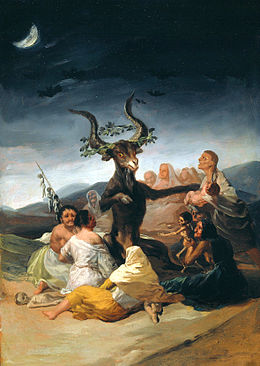
A witches’ sabbath, illustration from the Malleus Maleficarum
the Puisaye, the sabbath begins well before midnight. Those who wish to become witches go to the largest oak at the crossroads, bringing a black chicken. At the stroke of midnight, they sacrifice the animal while shouting three times: “Beelzebub! Come, I give myself to you!” The Devil then appears, and the one who signs the pact — a cross on a document binding them to give their soul — immediately gains “all power to do harm.”
In the Bouïe de los Mascos (Aveyron), the night of June 24 was reputed to host an extraordinary gathering: Satan presided over the assembly of fairies, accused of practicing witchcraft. Seated under the trees, he played the violin and made the fairies dance until dawn. Archives from 1652 also mention the nocturnal dances of witches in the Bois d’Enge, near Jodoigne. In French-speaking Switzerland, on a plateau of the Crau di Bouki, sabbaths were held on the night preceding Sundays and major holidays—especially Christmas. An elderly man claimed that, between 1830 and 1840, a disturbing uproar could be heard, but no one dared verify its origin. More recently, about thirty years ago, several witnesses say they saw sabbaths in the Châtillon Forest.
In Hautfays (Belgian Luxembourg), the thicket of Bricheau was known for hosting strange gatherings of witches dressed in white. One hunchback passing by heard their songs one evening and, intrigued, joined in their games. They found him likable… and removed his hump. But the story turned into misfortune for one of his companions: having tried his luck in the same way, he ended up with the hump that had been removed from his friend the day before.
In the villages surrounding the Clairvaux Forest (Aube), there is a story of a fiddler who, returning from a wedding, found himself lost in a low part of the undergrowth. There, around a large thorn fire whose flames lit up the night, people in surplices or shirts were drinking, dancing, and singing. They wanted him to play a waltz, but trembling with fear, he instead began a Inviolata. Immediately, he received a slap so violent that he was thrown to the ground. When he got up, everything had disappeared: only a pile of black, wet ashes remained.
In Aveyron, tradition holds that during storms, witches can be seen straddling a tree branch, dragged along the paths by a team of black cats. A terrifying sight, accompanied by the crash of thunder.