Some local traditions speak of elves who seem to play with fire and with humans’ fear. In the Vaud region, a discreet spirit named Nion-nelou hides among the trees. According to legend, no one hears him, but his presence is felt by those who venture too close to his domain.
In the Bernese Jura, the small forest of Montoie is said to shelter the foulla, a mischievous elf known for troubling both humans and animals. Locals tell that they see him as a fire moving through the woods, seemingly following them. So much so that many still avoid venturing alone into this forest, fearing the foulla’s mischief.
Other regions have their own leafy imps. In Argonne, the Hannequets appear at night, little men crowned with red flames. In Lower Brittany, the woodland imps are called Kornikaned, for they sing into small horns hanging from their belts. Some, like the Poulpicans, make themselves noticed by tricking young shepherds: they jingle bells beneath the trees to mislead the herders searching for their goats.
2. Others elves
Fouletot / Felteu
Imps sometimes appear mischievous and mysterious. In Cosnay, in the Ardennes, women washing clothes at the Goulets stream experienced a surprising phenomenon. When they were in large numbers, nothing happened. But when there were only three or four of them, they heard strange cries: “O Couzzietti! O Moule de Coutteni!”; quickly, the trees shook, branches snapped, and they saw, through the clearings, small grimacing dwarfs leaping near the stream. Frightened, they fled to the village, abandoning their laundry, and when they returned in greater numbers, the gnomes and the laundry had disappeared.
Another tale takes us to the Bois de Noyers, about two hundred years ago. A cook, returning from a wedding, was crossing the woods at nightfall. Suddenly, she discovered more than sixty felteus, little men, gathered around a large fire in three concentric circles. The outermost circle consisted of grooms tending the finest horses in the region. In the second circle, fiddlers played disorderly tunes, and closest to the fire, kitchen boys prepared the vegetables and poultry that the cook had lost at the wedding.
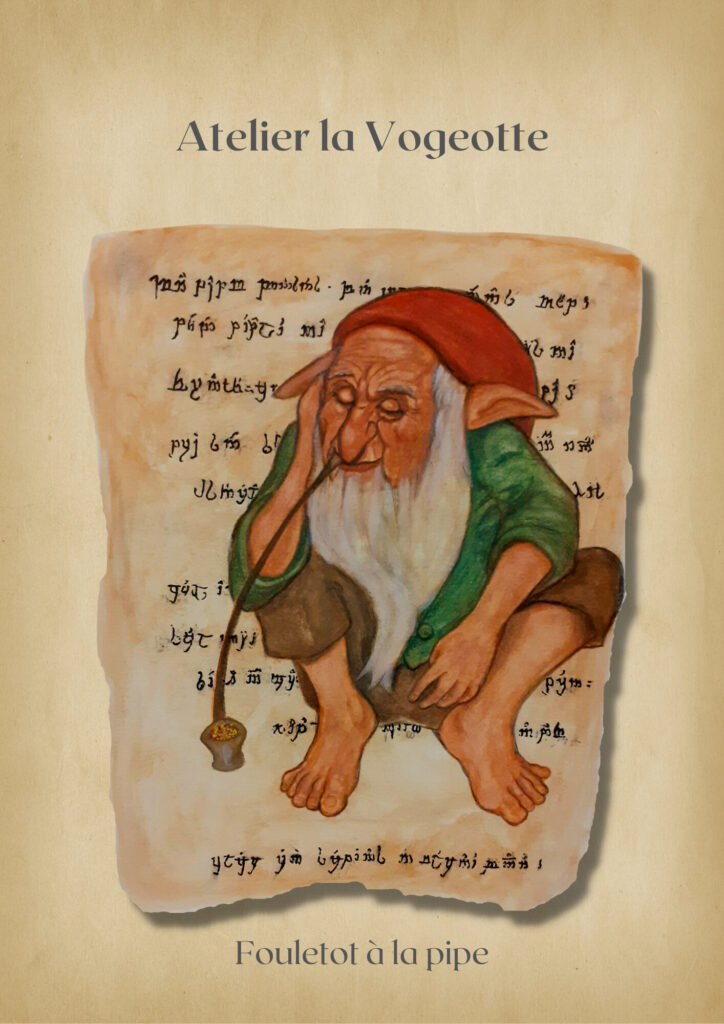
The elder felteu, a small old man with a long white beard, dressed in a red jacket, breeches, and cap, noticed her. The elves surrounded her and sang to the tune of Malbrough:
"Here comes the cook By the grace of God, To make a fine meal For the good little felteu."
Despite her initial fear, the cook realized that these mischievous imps were only reputed to be playful. She joined them in preparing the meal, and each felteu, as well as the old father, gave her gold coins as a reward. At dawn, the imps vanished, leaving no trace of their feast. According to tradition, the spirit of the Fiestre also liked to stop drivers at the edge of the woods or imitate animal cries to trick shepherds, driving them to run in search of their supposedly lost livestock.
3. Midsummer’s Eve Elves
Midsummer Fire
In Gascogne, la nuit de la Saint-Jean révèle une tradition particulière liée aux lutins et esprits des forêts. Un homme, s’étant endormi sous un sapin dans la forêt de la Grande-Lande, se réveilla à minuit en entendant des cris venant du haut des arbres et du sol. À sa grande surprise, il vit tomber des esprits de toutes sortes : mouches, vers luisants, mais aussi des créatures sortant de terre, parmi lesquelles des lézards, grenouilles et salamandres.
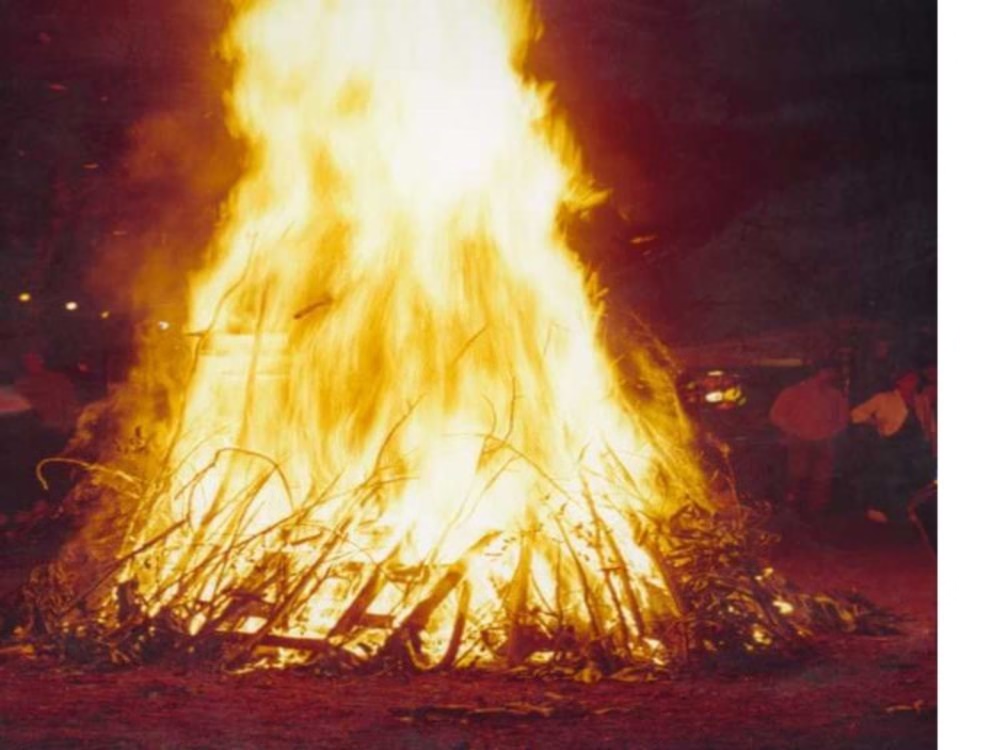
From these tiny forms, barely an inch tall, emerged men and women dressed in red, brandishing three-pronged golden forks. They all sang and danced until dawn:
"All the little herbs That grow in the fields Blossom and bear seed On Midsummer’s Day."