Blessings of sanctified land
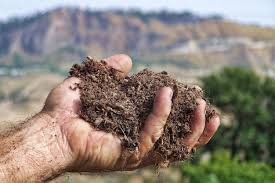
1. Holes in the ground and the transmission of diseases
In the French countryside and neighboring regions, animal diseases—and sometimes human illnesses—were once treated with astonishing practices, blending nature, religion, and folk magic. The central idea? Transmit the ailment to the grass or a tree by using the imprint left by the foot of the animal or the sick person.
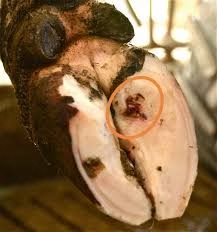
As early as the 17th century, people sought to cure cows affected by foulbrood—a swelling observed at the junction of the skin and the hoof. In certain regions, the diseased hoof was placed on a clump of grass, which was cut to the exact size of the imprint. This clump, dried on a hedge—often hawthorn—symbolized the transfer of the disease. In Sologne, the practice went even further: after taking the imprint of the paw, the turf was turned over and hung on the first hawthorn encountered: “One circles this spot carefully removed, and turns it over onto the first hawthorn found on the road, scrupulously avoiding any ill thoughts during the action. The grass attached to the circled and overturned portion of earth rots, the hawthorn dies, and the cow recovers.” reports the Mémoire de l’académie celtique, volume 2 (III, p. 205) regarding the Traité des superstitions by Jean-Baptiste Thiers. The resemblance between the word fourchet (the disease) and the fourchet formed by the branching of roads was likely no coincidence in this belief.
The practice is found elsewhere in Europe. In Malmédy (Rhenish Prussia), the portion of grass trodden by the sick cow was placed on a hedge; as it dried, the animal regained its vigor. In the Gironde, the same ritual applied… to humans! Those afflicted with fourcat—a swelling between the toes—had to place their bare foot on the grass at a crossroads before sunrise. The clump thus cut was hung, roots upward, on a hawthorn. The ailment disappeared as the grass dried.
Other regions adapted this ritual. In Mayenne, peasants would hang in the barn the clump of grass taken from the hoofs of cows afflicted with fil. In Saintonge, a more religious variant existed: at dawn, the shepherdess would place the sick ewe on a patch of grass isolated at a crossroads. On her knees, she opened her knife, blew on it three times while repeating: “In the name of the Father,” then traced the outline of the foot with the tip, praying to Saint John, Saint Fiacre, or Saint Riquier.
2. Healing earth
Since antiquity, earth has been considered a bearer of mysterious powers. In many regions, it was used not only as a natural remedy but also as a symbolic medium to transfer illnesses or attract divine protection. Over time, these pagan practices became Christianized, finding a place in churches, chapels, and at the tombs of saints.
As early as the time of Gregory of Tours, the sick would scrape the earth from the tomb of Saint Cassien in Autun to cure themselves “of every kind of illness.” Later, this belief became rooted in countless local traditions. In the Bernes Jura, pilgrims collect earth from a hole located in the nave of the Sainte-Croix church, considered sacred since the discovery of a relic. In Normandy, near Lisieux, the sick take a bit of earth each year from the hill of Saint Ursin, which they keep for nine days in a cloth bag tied to their wrist. In Rennes, earth taken from the foot of the cross of the “saint of the little pouches” was carried on the patient’s chest for eight days before being hung on the cross, marking the symbolic departure of the illness.
Practices varied by region. On Maudet Island, earth mixed with water cured children of worms, but was also used against insect stings and snake bites. In chapels dedicated to Saint Maudet, in Haut-Corlay or Plouézec, the faithful applied the earth as a compress on their feet, then purified themselves at the fountain. Elsewhere, as in Belgium, blessed earth collected near the chapels of Saint Brigitte protected both people and animals from misfortune. But earth was not used solely for healing: it could also serve as a symbolic offering. In Sainte-Savine, near Troyes, young girls would place a clump of earth on the Cross of La Motte in hopes of marrying within the year.
Finally, some miraculous imprints in the ground were associated with specific rituals. In Poitiers, a hole said to have been formed by the decapitated head of Saint Simplicien attracted pilgrims who would place their foreheads there to protect themselves from migraines. In Sainte-Germaine, young girls fearing spinsterhood planted pins at the foot of a cross, creating a barren patch where the grass never grew back. In Puisaye (Yonne), walking in mysterious footprints left in the grass was believed to bring good luck.
These practices show how the earth, a humble and everyday element, has been endowed with a sacred and healing power, oscillating between popular superstition and Christian ritual.
3. Power of the earth
The earth was not only perceived as a healing element: in certain traditions, it also possessed an occult power, capable of being used in witchcraft or protective rituals. According to a 16th-century work, a woman was accused of witchcraft after being caught at night collecting earth at a crossroads by candlelight. She was forced to wear a painted mitre, a symbol of infamy, to be publicly displayed. The act seemed suspicious because earth taken from specific locations—especially crossroads—was considered a potent ingredient in love spells or enchantments. In Lower Brittany, for example, it was combined with other ingredients to create spells intended to cause death.
But the earth was not always associated with black magic: it could also be used as a protective weapon against witches. In the region of Liège and the Ardennes, it was enough to take a handful of earth from a coffin. When scattered in front of a church door on a busy day, it forced any witch present to reveal herself. To leave the church, she had to call the person who scattered the earth and lift the curse she had cast.
4. People Between Two Lands
Dans les traditions populaires, se trouver « entre deux terres » conférait des pouvoirs singuliers. Concrètement, cela signifiait avoir les pieds posés sur le sol tout en tenant une grosse motte de gazon dans les mains ou sur la tête. En Upper Brittany, cette pratique permettait, lors d’une soirée sans lune, de voir des choses invisibles aux autres. C’était une manière d’accéder à un monde caché, peuplé d’êtres et de forces mystérieuses.
In Noirmoutier, this belief took a different form: it was said that witches could not see a person placed “between two lands.” When confronted with the appearance of a witch, real or imagined, the inhabitants would make the sign of the cross and quickly place a clod of turf on their head for protection. This simple gesture then became a barrier against witchcraft and curses.
Although contemporary tradition has not preserved any specific example of direct worship of the earth, associated practices can be found in other rituals. For instance, during the planting of apple trees or vines, the hole intended to receive the tree was watered with wine or other liquids, a gesture seen as an offering to the forces of the earth. In the past, blood or even living creatures could also be offered to the spirits believed to inhabit the soil.
5. Oaths by the Earth