Land Parched by Death and Monsters
1. Places where grass no longer grows back

full of milk at the entrance of the cavern. © Illustration credit: Araghorn
The French countryside is full of mysterious places where nature seems frozen by an invisible force. These barren lands, where the grass stubbornly refuses to grow back, still carry the memory of supernatural passages, curses, or forgotten miracles. Exploring popular tales, one discovers that these marks on the landscape are not mere coincidences: they bear witness to stories of fairies, saints, and even witches.
In certain regions, the mere presence of supernatural beings is enough to harm the crops. Near Argentan, the passage of the Villedieu serpent can be seen in a slightly greener hue and the exceptional height of the wheat (see caption). In Burgundy, between Orville and Selongey, the fields darken along the route supposedly taken by Saint Anne and Saint Gertrude. In the Ain, the grass yellows along the path once followed by fairies who had become Christian. But most often, it is the pagan fairies or witches who leave behind traces of sterility. In Saint-Cast, for example, the “fairy path” linking a farm to the Grouin Cave is still marked by stalks of wheat lower than elsewhere. In the Allier, fields over which witches passed on their way to the sabbaths became completely barren.
Other accounts associate the absence of grass with the traces left by holy beings or sacred objects. In Cesson, near Saint-Brieuc, the “Virgin’s Step” remains a bare path that Mary is said to have taken while climbing a cliff. In the Eure, on the meadow of the Forty Martyrs of Acquigny, no grass grows along the path followed by Saint Maure and Saint Vénérand as they fled their persecutors. Similarly, near Bains, the passage of Saint Convoyon remains forever bare, just like certain paths traced by Thomas Hélie between Biville and Nauville.
Some places bear the mark of miracles. In Kernitron, where the ground opened to hide Saint Mélar from his persecutors, no grass can grow, and even the snow melts as soon as it touches the ground.
The absence of vegetation can also recall darker episodes. In the large meadow crossed by the Burge, the ground has remained bare ever since thieves placed there a fragment of the True Cross, stolen from the chapel of Bourbon-l’Archambault. In Solliès-Pont, in Provence, the grass never grew back where the church statues were burned in 1793. Finally, in La Bouëxière, in Ille-et-Vilaine, a field has remained barren ever since an angry plowman broke the statue of a saint he had been using simply as a counterweight for his plow.
2. Passage of supernatural beings, crimes, or curses
Throughout France, certain fields, moors, and meadows still bear the marks of ancient legends. Where the grass refuses to grow back, popular memory tells stories of sorcerers, dragons, saints’ curses, or even bloody crimes. These barren places, forever marked, become silent witnesses to supernatural or tragic events.
Some soils remain barren after the passage of the devil or fabulous monsters. It is said that when Saint Armel dragged the dragon, chained by his stole, to the Seiche River, the path remained forever sterile. Similarly, no grass grows where the Theil Dragon (Ille-et-Vilaine) collapsed, nor on the “Devil’s Turning Path” near Toul, traced by the comings and goings of Saint Michael pursued by Satan. These mineral traces in the greenery still recall today the titanic struggles between good and evil.
A single word could be enough to condemn a field. In Villavard (Vendômois), Saint Martin, insulted by peasants, struck their field with sterility, leaving it uncultivated amidst fertile lands. In Auray, it was the anger of Gargantua, annoyed by a mere pebble, that supposedly cursed the meadow where he sat. In Montgermont (Ille-et-Vilaine), a missionary announced the Revolution and declared that the grass beneath his feet would never grow back: since then, the ground near the Calvary of La Mettrie has remained bare.
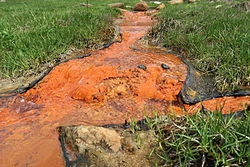
Even darker, the land seems to refuse to cover with vegetation the places where blood has been shed. In Laillé, near Poligné (Ille-et-Vilaine), the locality of Bout-de-Lande, bloodied during a battle, remains devoid of grass. In Hidéou (Landes), a reddish stain still marks the spot where Bernard de Pic was killed in 1760 (see the Research Report: the notion of oral work, pp. 51–52. Philippe Sahuc). In Gathemo, in the Pré Maudit, part of the field has remained barren since one brother murdered the other there in front of their beloved (see here).
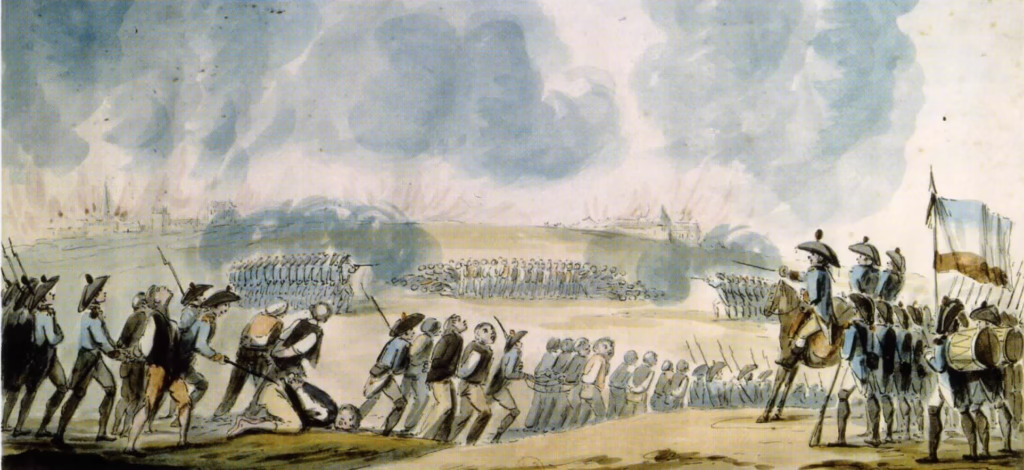
Even centuries later, the memory of executions and wars remains imprinted on the landscape. In Upper Brittany, it was believed that the grass would not grow back where Chouans and Bleus had perished. In Vendée, an episode of the 1832 uprising left similar scars: the clearing in the Grala forest where Val de Noir and his companions fell remains barren, as if frozen in an eternal bloody memory (see here).
3. Holes that cannot be filled
In several regions of France, traditions tell of holes impossible to fill. These depressions in the ground are not mere whims of nature: they are said to be linked to stories of martyrs, civil wars, curses, or even supernatural apparitions. Every time one tries to fill them with soil or stones, they reappear, as if the memory of the tragedy refuses to vanish.
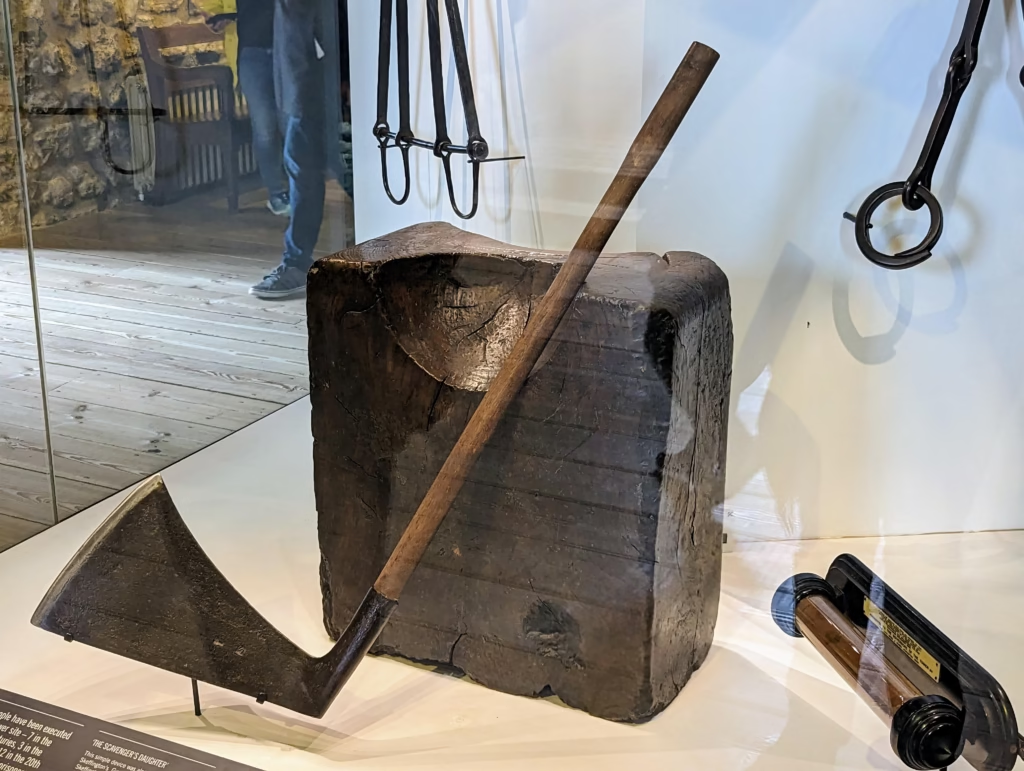
Near Poitiers, there was once shown a hole marked by the weight of the head of Saint Simplicien, beheaded at that spot. In Josselin, after a peasant guide was killed by the Bleus, a hole opened in the ground: despite multiple attempts to fill it, it always reformed. The same phenomenon occurred in Saint-Berthevin-la-Tannerie (Mayenne), where the knees of a executed priest left an indelible imprint, eternally dug into the soil.
Some legends associate these mysterious holes with diabolical beings or restless souls. In Saint-Jean-de-Bœuf, the “Path of the Dead Women” preserves three holes dug by their heads as they fell, which no one can cover. On the Clairay heath (Ille-et-Vilaine), the imprint of the black horse’s hoof, given by the devil to the lord of Changé, reappears every time one tries to hide it with stones.
Brittany is also full of tales of souls condemned to leave their mark. Near Saint-Gildas, at the foot of the cross of Kerienquis, late travelers say they have seen a priest at prayer. His knees and feet are imprinted in the ground, and despite all attempts to erase them, the imprint always reappears. Farm boys even reportedly drove stakes to hold down the grass meant to fill these marks, but each night, the restless soul would come again to tread its usual place.
4. Imprints on the ground
Throughout France, certain lands still bear the marks of ancient tragedies. These imprints on the ground are said to be linked to violent deaths, executions, or murders. Popular tales claim that the grass never grows back there, as if the earth refuses to erase the memory of spilled blood.
In Brittany, several accounts tell of indelible imprints left by priests executed during the Revolution. In Saint-Germain-sur-Ille and Chevaigné (Ille-et-Vilaine), bare spaces, where the shapes of human bodies are believed to be discernible, recall the sites where priests were shot. In Saint-Médard-sur-Ille, one can still see the marks of a priest’s feet, knees, and head, struck to death while carrying the Blessed Sacrament. A little farther on, the ciborium that fell from his hands is said to have also left an indelible trace in the ground.
In the Yonne, the commune of Treigny preserves the memory of an 18th-century tragedy. A woman, ordered to renounce the rights granted by a judge to her ailing husband, was shot dead after refusing to yield. Before dying, she managed to take nine steps, the imprints of which have remained visible in the ground. Since that day, the grass has never grown back there. This place still bears the name of the Nine Steps.
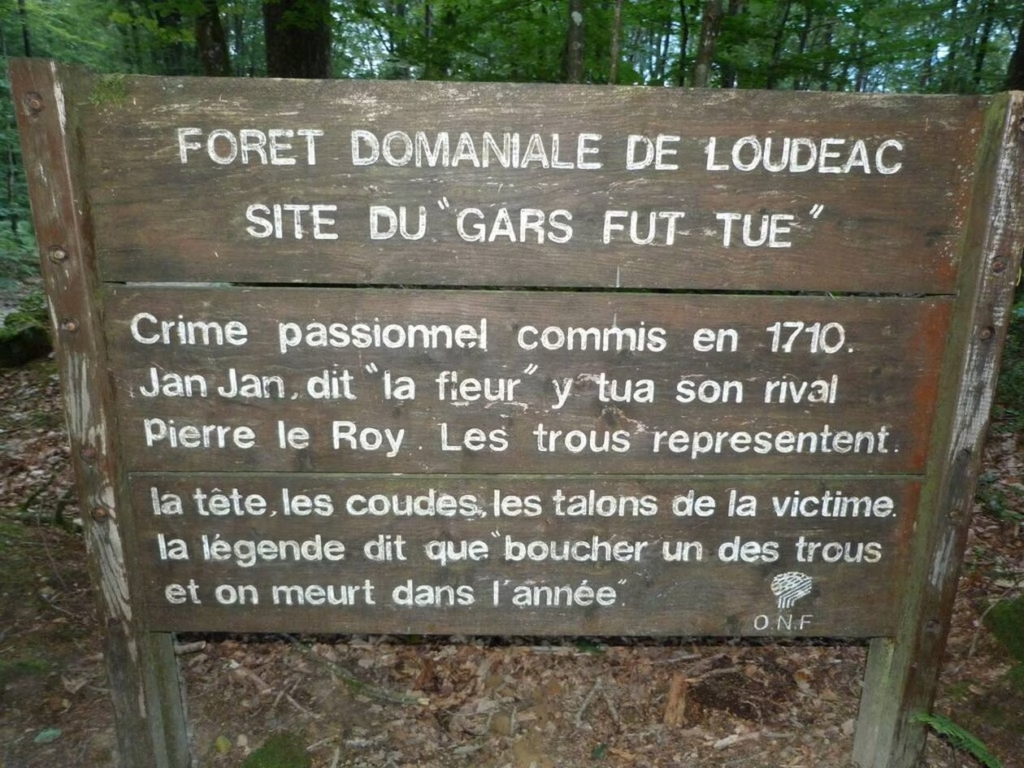
The Loudéac Forest (Côtes-d’Armor) contains a clearing where five bare patches are said to mark the head, hands, and knees of a priest executed during the Terror. Further south, in the Isère, near La Trinité, one can see a plot of field shaped like a grave, almost barren. It is said to mark the spot where the soldiers of Lesdiguières buried a man they had killed through brutal mistreatment.
5. Cursed trees and shrubs
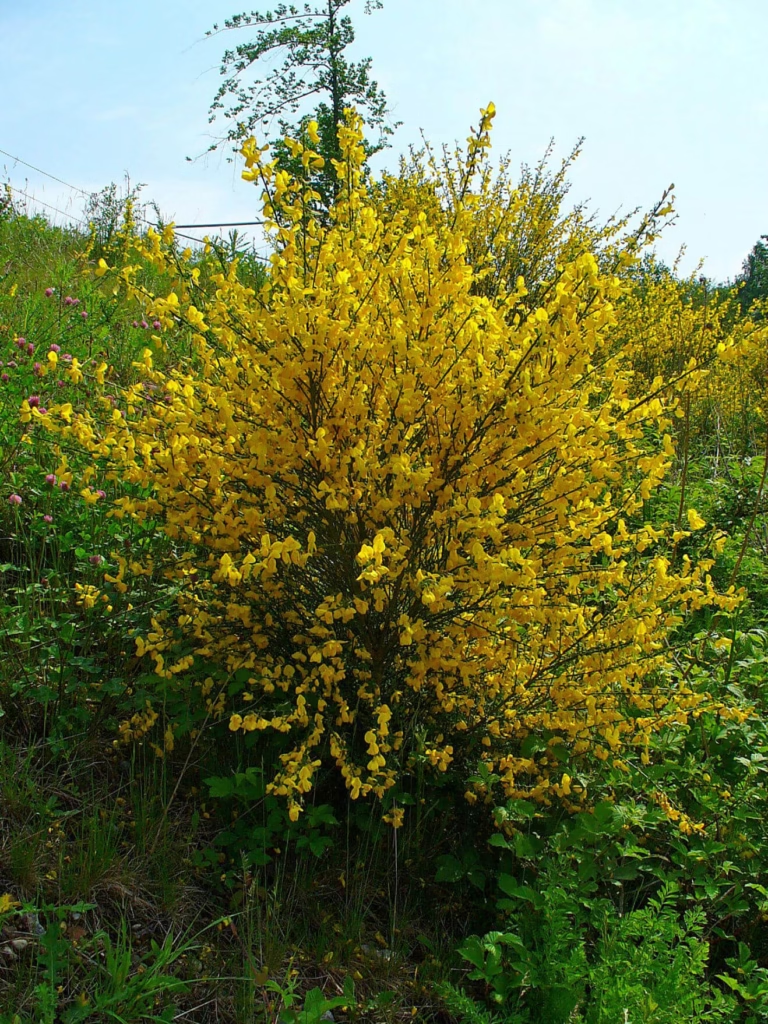
In France, certain woods, fields, and meadows are marked by strange prohibitions. Here, it is not only the soil that refuses to produce grass: entire trees and shrubs seem to be forever banished from certain lands. Popular traditions tell that these plants were cursed, often following religious acts, miracles, or divine punishments.
In several regions of Brittany, the fern is missing from certain places due to ancient curses.
In the Côtes-d’Armor, another plant is associated with the suffering of saints: the broom shrub. In the territory of Saint-Quay and Brain, this plant has not grown back since Saint Quay and Saint Melaine were said to have been whipped there with its branches.
6. Soil discolorations