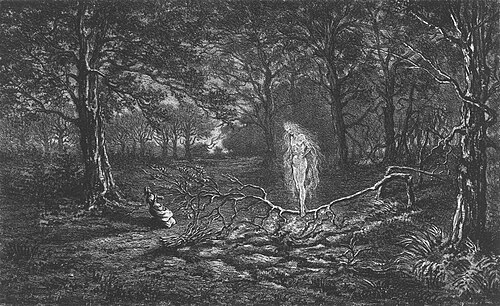
Many folklore tales take place under the moon or « that dim light that falls from the stars ». The shadows of the night then become the stage for strange encounters and supernatural events. In the work of Paul Sébillot, the night regularly appears as a central element, shaping and amplifying the stories passed down from generation to generation.
In Lower Brittany, it is said that the night was created by the Devil as a counterpart to the day shaped by God. This dualistic vision gives darkness a disturbing, almost malevolent quality.
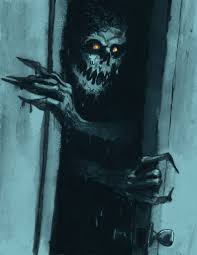
In Upper Brittany, the night takes the form of an Evil Bogeyman used to frighten children. Parents would issue warnings such as:
The Night will carry you away!
Mr. Night is coming to fetch you.
In Ille-et-Vilaine, there is talk of the Basour man (Late Hour, that is, late) who comes to fetch those who are tardy.
In Matignon (Côtes-d’Armor), the night even had an assigned residence, somewhere toward the west. Children were particularly afraid of the Great Night of Pléboulle, a town located to the west. In their imagination, if the family curfew was not respected, they could see between sky and earth the silhouette of a gigantic black woman ready to carry them away.
2. Dangers of the night
Mr. Night
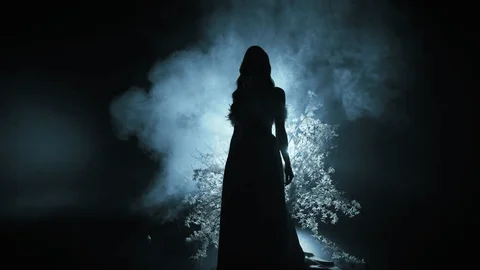
In Morbihan, when a child refused to go to bed, they were warned that Lady Night would come to take them. She was described as a tall, completely black woman. To stubborn little ones who refused to wash up, people would say:
“Your face will be as black as that of the Night.”
In Saint-Brieuc, Lady Night had her dwelling: a gaping cave formed by large rocks. Little boys, bold yet frightened, would secretly toss a pebble into it before running away.
If adults did not personify the night, they were nonetheless convinced that it concealed dangers of supernatural origin. Thus, to protect themselves, they multiplied religious safeguards, observances, and conjurations. These gestures and rituals were meant to shield people and their homes from the malice or anger of the spirits of darkness.
3. Nocturnal noises
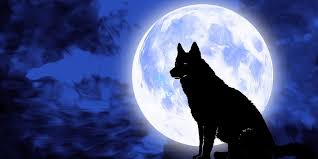
Night Dog
The mysterious sounds heard at night — cries, songs, or unexplained noises — are perceived as signs announcing imminent misfortunes. These omens, linked to Death, are part of deeply rooted folk beliefs.
An almost universal belief holds that the howling of dogs during the night is a sign that Death is approaching the home.
In Corse, dogs are said to act as messengers: they bark twice if Death threatens a woman, three times if it threatens a man; a loud noise heard at night is interpreted as a sign that someone in the household will soon die.
In Lower Brittany and Béarn, the crowing of the rooster before midnight is considered a bad omen, foretelling a serious accident, misfortune, or even a death.
In Mentonnais, all birds that sing at midnight carry the same ominous warning.
Unexplained nocturnal noises, such as dull thuds or muffled sighs, are attributed to the soul of a deceased person trying to attract the attention of the living. These audible manifestations are interpreted as a request for prayers to help the repose of the deceased.
4. Hours of the night and birth
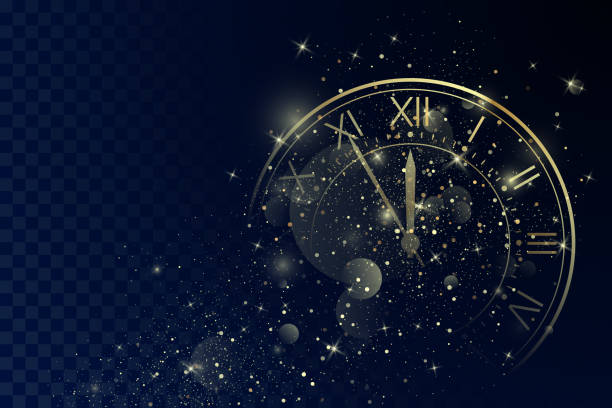
Clock showing 11:50 PM
Just like the phases of the moon or the state of the tides, the hours of the night have long been considered to influence the destiny of newborns. In several French regions, beliefs attribute more or less favorable fates to certain hours of birth.
In the Vosges and in Beauce, a child born between 11 PM and midnight is said to never have good luck. This prediction is even harsher if the birth occurs on a Friday. In Gironde, a birth at midnight suggests a tragic fate: whoever comes into the world at this hour, “like Christ,” is doomed to an unhappy life. In the Cantal, a child born between 1 AM and midnight is predicted to “turn out badly,” and in the same Gironde region, a baby born at 1 AM is said to experience misfortunes throughout their life.